15 Critical Lawsuits & Disputes Every Business Owner Must Avoid in 2026
Protect your business in 2026. Learn about 15 critical lawsuits and legal disputes every owner must avoid to save money, time, and reputation.
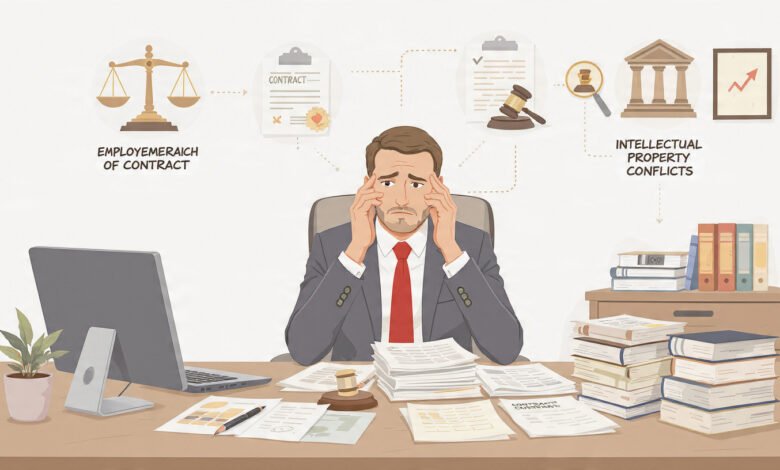
Running a business in 2026 means navigating a legal landscape that’s more complex than ever. Business lawsuits cost American companies billions each year, with an estimated 12 million lawsuits filed against small businesses annually. The financial impact goes beyond settlement costs—litigation drains resources, damages reputations, and distracts from growth.
The good news? Most business disputes are entirely preventable. Understanding the common types of litigation and implementing proper safeguards can save your company from years of legal headaches and financial stress. From employment discrimination claims to data breaches, intellectual property theft to contract disputes, the threats are real but manageable.
This guide breaks down the 15 most critical lawsuits and legal disputes that pose the greatest risk to businesses in 2026. You’ll learn what triggers each type of case, how much they typically cost, and most importantly, what specific actions you can take today to protect your business. Whether you’re a startup founder or running an established enterprise, these insights will help you avoid becoming another litigation statistic.
Understanding the Current Business Litigation Landscape
Before diving into specific lawsuit types, you need to understand how dramatically the litigation environment has shifted. Plaintiffs filed more than 13,000 class action lawsuits in federal courts alone in 2025, which equates to more than 36 new class action filings every single day. This represents a substantial increase from previous years and signals that businesses face constant exposure to legal claims.
The cost of defending business litigation has skyrocketed. Even winning a case can devastate a small business financially. Legal fees alone can run into six or seven figures, not counting settlements, judgments, or the opportunity cost of management time spent dealing with litigation instead of growing the business.
1. Employment Discrimination and Harassment Lawsuits
Employment discrimination remains the single biggest litigation threat for most businesses. Forty-seven percent of survey respondents cited discrimination and harassment as a major risk in 2026, making it the top employment law concern.
These lawsuits arise when employees claim they were treated unfairly based on protected characteristics like race, gender, age, religion, disability, pregnancy, or national origin. The financial exposure is substantial—compensatory and punitive damages range from $50,000 for companies with 15-100 employees up to $300,000 for employers with more than 500 employees.
How to Avoid This Dispute:
- Implement comprehensive anti-discrimination policies
- Provide regular training to all managers and supervisors
- Document all employment decisions with legitimate business reasons
- Create clear, objective criteria for hiring, promotion, and termination
- Establish a reliable complaint reporting system
- Conduct prompt, thorough investigations of any allegations
2. Wrongful Termination Claims
Wrongful termination lawsuits happen when employees believe they were fired for illegal reasons. While most employment is “at-will,” you can’t terminate someone for discriminatory reasons, in retaliation for protected activities, or in violation of public policy.


In 2026, wrongful termination cases are evolving, with quiet layoffs, retaliation dressed up as “performance,” and terminations following protected actions becoming disturbingly common. Employees are getting smarter about documenting their cases and finding lawyers willing to take their claims.
How to Avoid This Dispute:
- Never fire someone immediately after they file a complaint
- Document performance issues before termination
- Follow your own termination procedures consistently
- Avoid terminating employees who recently took FMLA leave or filed workers’ compensation claims
- Conduct exit interviews professionally and document reasons
- Consider severance agreements with releases when appropriate
3. Wage and Hour Violations
Wage and hour disputes represent a massive exposure area for businesses. These lawsuits involve claims of unpaid overtime, misclassification of employees as independent contractors, failure to provide meal breaks, off-the-clock work, and minimum wage violations.
Class action wage and hour cases can be particularly devastating because they often involve hundreds or thousands of employees seeking back pay, penalties, and attorney fees.
How to Avoid This Dispute:
- Properly classify workers as employees or independent contractors
- Accurately track all hours worked
- Pay overtime to non-exempt employees
- Provide required meal and rest breaks
- Ensure commissioned employees still receive minimum wage
- Audit your pay practices regularly
- Update policies to reflect current state and federal law
4. Intellectual Property Infringement Lawsuits
Intellectual property disputes can destroy businesses overnight. These lawsuits involve allegations of patent infringement, trademark violations, copyright infringement, or trade secret theft. More than 50 lawsuits between intellectual property owners and AI developers are pending in U.S. federal courts, highlighting how technology is creating new IP battlegrounds.
The stakes are enormous. Patent cases can result in injunctions shutting down your entire product line, plus damages that include lost profits and sometimes treble damages for willful infringement.
How to Avoid This Dispute:
- Conduct thorough trademark searches before launching brands
- File for trademark and patent protection early
- Implement non-disclosure agreements
- Train employees on respecting others’ IP rights
- Document your own creative processes
- Use proper licensing for software, images, and content
- Consult IP attorneys before launching products that might infringe
5. Data Breach and Privacy Violations
Data breach lawsuits have exploded as businesses collect more customer information than ever. Data privacy class actions totaled over 1,800 in 2025, with an average of more than 150 filings per month, representing more than 25% growth over 2024.
These cases arise when businesses fail to protect sensitive customer or employee data, resulting in breaches. Even if you don’t lose data, violating privacy regulations like GDPR, CCPA, or sector-specific laws can trigger regulatory investigations and class actions.
How to Avoid This Dispute:
- Implement robust cybersecurity measures
- Encrypt sensitive data
- Limit data collection to what’s necessary
- Train employees on data security
- Have an incident response plan ready
- Comply with notification requirements immediately after breaches
- Review third-party vendor security practices
- Consider cyber insurance coverage
6. Class Action Consumer Protection Lawsuits
Class action lawsuits from consumers can involve thousands of plaintiffs and expose businesses to massive liability. Courts granted more than 68% of all class certification motions they decided in 2025, meaning once these cases get certified, settlement becomes almost inevitable.
Common triggers include deceptive marketing, defective products, unauthorized fees, and unfair business practices.
How to Avoid This Dispute:
- Ensure all marketing claims are truthful and substantiated
- Clearly disclose all fees and charges
- Honor advertised prices and terms
- Test products adequately before launch
- Include mandatory arbitration clauses with class action waivers in agreements
- Monitor customer complaints for patterns
- Address product defects immediately
For more guidance on consumer protection compliance, the Federal Trade Commission offers extensive resources on advertising and marketing rules.
7. TCPA and Telemarketing Violations
The Telephone Consumer Protection Act creates massive liability for businesses engaging in marketing calls or texts without proper consent. Plaintiffs filed an increasing number of “quiet hour” suits targeting messages a few minutes outside the FCC’s 8 a.m.–9 p.m. window, even when they were sent with the recipient’s prior express consent.
Damages can reach $500 to $1,500 per violation, and class actions can involve thousands of calls.
How to Avoid This Dispute:
- Obtain written consent before sending marketing texts or robocalls
- Never call cell phones without prior express written consent
- Respect “quiet hours” (9 PM to 8 AM)
- Honor do-not-call requests immediately
- Keep detailed records of consent
- Use a reputable dialing system that maintains compliance
- Train sales and marketing staff on TCPA requirements
8. False Advertising and Deceptive Pricing
False advertising lawsuits target businesses that make misleading claims about products or pricing. Plaintiffs allege retailers inflate “original,” “compare at,” or MSRP prices, run perpetual or serial “limited-time” promotions, and use urgency claims that suggest meaningful savings when the “sale” price is effectively the everyday price.
These cases draw on FTC guidelines and state consumer protection statutes.
How to Avoid This Dispute:
- Base “compare at” prices on actual former prices
- Don’t claim discounts unless they’re legitimate
- Avoid perpetual “limited time” sales
- Substantiate all product claims with evidence
- Ensure email marketing complies with CAN-SPAM
- Review website and advertising for misleading statements
- Keep documentation supporting all claims
9. Disability Accommodation Failures
Disability discrimination lawsuits are surging. Forty-two percent of respondents pointed to disability accommodation issues as a major source of expected litigation in 2026, moving sharply up the list of employment law risks.
These cases arise when businesses fail to provide reasonable accommodations or terminate employees due to disabilities.
How to Avoid This Dispute:
- Engage in the interactive accommodation process
- Don’t assume what someone can or can’t do
- Document all accommodation requests and responses
- Train managers to recognize accommodation requests
- Ensure physical locations are ADA-compliant
- Provide accommodations unless they create undue hardship
- Never terminate someone who just requested accommodation
10. Trade Secret Misappropriation
Trade secret lawsuits typically involve former employees who allegedly took confidential information to competitors or used it to start competing businesses. These disputes can result in injunctions, substantial damages, and even criminal prosecution.
How to Avoid This Dispute:
- Use non-disclosure agreements with employees, contractors, and partners
- Implement non-compete and non-solicitation agreements where enforceable
- Clearly mark confidential information
- Limit access to trade secrets on a need-to-know basis
- Conduct exit interviews emphasizing confidentiality obligations
- Monitor for suspicious data downloads before departures
- Take immediate legal action if theft is suspected
11. AI-Related Litigation
Artificial intelligence is creating entirely new categories of business lawsuits. Thirty-two percent of respondents expect exposure tied to AI use in 2026, as courts examine how automated tools influence employment decisions and business practices.
Issues range from copyright infringement in AI training data to discriminatory outcomes from automated decision systems.
How to Avoid This Dispute:
- Audit AI tools for potential bias
- Understand what data your AI systems use
- Document AI decision-making processes
- Don’t rely solely on AI for employment decisions
- Ensure AI vendors provide legal indemnification
- Stay current with evolving AI regulations
- Consider human oversight for high-stakes AI decisions
12. Retaliation Claims
Retaliation lawsuits happen when businesses punish employees for engaging in protected activities like filing discrimination complaints, reporting safety violations, or participating in investigations.
Retaliation claims are often easier to prove than underlying discrimination claims because they focus on adverse actions following protected activity.
How to Avoid This Dispute:
- Train managers never to retaliate against complainants
- Separate decision-makers from investigation participants
- Document legitimate business reasons for adverse actions
- Avoid any negative action soon after a complaint
- Protect whistleblowers who report legal or safety violations
- Encourage complaint reporting without fear
- Take all complaints seriously regardless of the complainant
13. Partnership and Shareholder Disputes
Business disputes between partners, shareholders, or LLC members can tear companies apart. These lawsuits involve breach of fiduciary duty, oppression of minority shareholders, disputes over profit distributions, or disagreements about business direction.
How to Avoid This Dispute:
- Draft comprehensive operating agreements or shareholder agreements
- Include dispute resolution mechanisms and buy-sell provisions
- Document all major decisions in writing
- Maintain transparency in financial matters
- Follow corporate formalities and governance rules
- Address conflicts early before they escalate
- Consider mediation clauses for partner disputes
14. Breach of Contract Lawsuits
Contract disputes are among the most common business lawsuits. They arise when one party fails to fulfill contractual obligations, whether with customers, vendors, landlords, or service providers.
The key to winning these cases often comes down to what’s actually written in the agreement.
How to Avoid This Dispute:
- Put all important agreements in writing
- Clearly define obligations, timelines, and deliverables
- Include dispute resolution and attorney fee provisions
- Document contract performance and any issues
- Communicate proactively about potential delays or problems
- Review contracts with legal counsel before signing
- Keep detailed records of all contract communications
- Address breaches promptly through formal notice
15. Regulatory Compliance Violations
Government agencies like the SEC, FTC, EEOC, OSHA, and EPA can bring enforcement actions that function like lawsuits. The SEC continues its focus on public companies with accounting and disclosure cases, while other agencies pursue violations in their respective areas.
Regulatory violations can result in fines, injunctions, and mandatory compliance programs.
How to Avoid This Dispute:
- Stay current with regulations affecting your industry
- Implement compliance monitoring systems
- Conduct regular internal audits
- Provide compliance training to relevant staff
- Report violations promptly when discovered
- Work with regulatory attorneys proactively
- Document compliance efforts thoroughly
- Respond cooperatively to regulatory inquiries
For comprehensive employment law compliance guidance, the U.S. Equal Employment Opportunity Commission provides detailed information on federal anti-discrimination laws.
Conclusion
Business lawsuits and legal disputes represent one of the biggest threats to company survival in 2026, but they’re largely preventable with proper planning and proactive compliance. The 15 critical areas outlined above—from employment discrimination and wrongful termination to data breaches, intellectual property theft, and regulatory violations—account for the vast majority of litigation facing businesses today. By implementing proper policies, training employees, documenting decisions, and seeking legal counsel when needed, you can dramatically reduce your exposure to costly litigation. The investment in prevention is always far less than the cost of defending even one lawsuit, making compliance not just a legal obligation but a smart business decision that protects your bottom line and allows you to focus on growth rather than courtroom battles.