Leicester Immigration Solicitors: Spouse Visa Application Success Rates
Leicester immigration solicitors help boost spouse visa success rates. Learn requirements, common refusal reasons, and how expert help makes the difference.
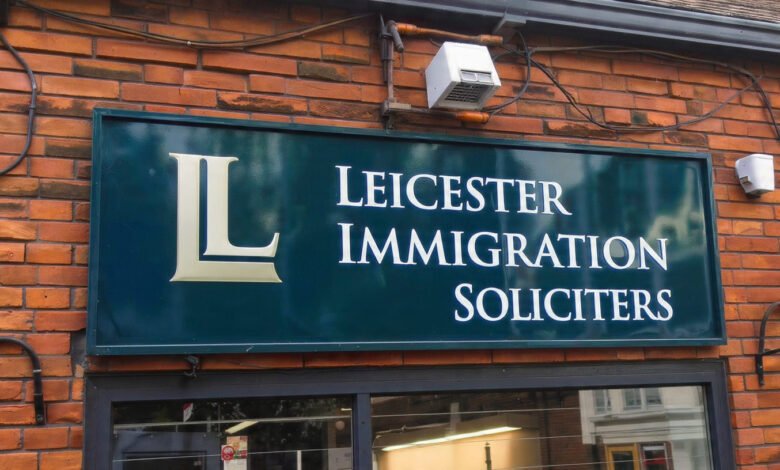
Leicester immigration solicitors play a critical role for anyone navigating one of the most emotionally charged processes in UK law — bringing a spouse or partner to live in the country. The UK spouse visa system, formally called the Family Visa (Partner Route) under Appendix FM of the Immigration Rules, is not simple. It involves financial thresholds, English language tests, accommodation requirements, relationship evidence, and strict documentation standards. Miss one element and the Home Office will refuse your application, often without giving you much room to explain.
Leicester has a large and diverse population, with many residents who have family ties overseas — particularly in South Asia, East Africa, and the Middle East. The demand for reliable, experienced immigration solicitors in the city is consistently high. Whether you are a British citizen hoping to bring your husband or wife to Leicester, or a settled person sponsoring a partner from abroad, understanding what separates a successful application from a refused one can save you months of stress, thousands of pounds, and significant heartache.
This article breaks down everything you need to know: what the current requirements are, what the success rate statistics actually show, why applications fail, and how working with qualified Leicester immigration solicitors genuinely improves your chances of approval.
Leicester Immigration Solicitors and the UK Spouse Visa: What You’re Actually Dealing With
The UK spouse visa — more formally the Family Visa (Partner Route) — allows the foreign national husband, wife, or civil partner of a UK citizen or settled person to enter and live in the UK. If granted, initial leave is usually given for 30 months (or 33 months if applying from outside the UK), after which you can apply to extend, and eventually apply for Indefinite Leave to Remain (ILR) after five years.
The process sounds straightforward. In practice, it is anything but. The Home Office applies strict evidentiary standards under Appendix FM and Appendix FM-SE. There is no room for “close enough.” Either your documents satisfy each requirement or they do not.
Here is what makes this route genuinely challenging:
- The financial requirement changed significantly in April 2024, rising from £18,600 to £29,000 per year
- Relationship evidence must be thorough, consistent, and cover the full period of your relationship
- Any gap or inconsistency in documentation can trigger a refusal
- Entry Clearance Officers make decisions based on paper files — they do not interview applicants in most cases
- The reasons for refusal are not always clearly explained, making appeals and reapplications harder without legal help
This is the environment that Leicester immigration solicitors work in every day. Understanding the rules is only part of the job — presenting your case in a way that anticipates Home Office scrutiny is the part that actually gets applications approved.
UK Spouse Visa Success Rates: What the Numbers Actually Say
Before looking at how solicitors improve outcomes, it helps to understand what the data shows about the UK spouse visa approval rate overall.
According to Home Office immigration statistics for the year ending June 2024, the overall success rate for family partner visas sits between 75% and 86%, depending on the source and how the data is segmented. A widely cited figure is that approximately 1 in 4 spouse visa applications — around 20% to 25% — are refused.


That refusal rate is not evenly distributed. <a href=”https://www.gov.uk/government/statistics/immigration-system-statistics-year-ending-december-2024/summary-of-latest-statistics” target=”_blank” rel=”noopener noreferrer”>UK Government immigration statistics</a> show that outcomes vary significantly by nationality. For example, applicants from Pakistan — who account for the largest single national group applying for family partner visas in the UK — see higher volumes but also higher scrutiny. Success rates for Pakistani applicants in earlier years were recorded at around 93%, but ongoing document scrutiny has affected results for many Commonwealth nationalities.
What is clear from the data is this: well-prepared applications with complete, accurate documentation consistently achieve higher approval rates than poorly prepared ones. The refusal rate for applications submitted with professional legal support is substantially lower than for those submitted without it.
The April 2024 income threshold increase to £29,000 has also had a measurable impact. Partner visa applications dropped by around 14% in the year following the rule change, largely because some sponsors no longer met the new financial floor. For those who do meet the threshold, the focus has shifted even more sharply to evidence quality.
The 7 Core Requirements for a Successful Spouse Visa Application
Any immigration solicitor in Leicester will tell you that success starts with meeting every single requirement before you even begin assembling your application. Missing any one of these is usually fatal to the application.
1. The Financial Requirement
Since April 2024, the minimum income requirement for a spouse visa is £29,000 gross per year. This must be met by the UK-based sponsor (the British citizen or settled person), not the applicant. The income can come from:
- Employment (payslips covering at least 6 months)
- Self-employment (SA302 tax returns and supporting evidence)
- Non-employment income (rental income, pension, dividends)
- Cash savings above £62,500 held for at least 6 months
- A combination of the above
The Home Office applies these rules under Appendix FM-SE. This annex sets out exactly which documents are required and in what format. If your payslips do not match your bank statements, or if your employment letter does not confirm your salary in the required form, the officer processing your application may refuse it.
2. Relationship Requirement
The applicant and sponsor must be in a genuine and subsisting marriage or civil partnership. The Home Office will want to see evidence that the relationship is real — not just the marriage certificate. Useful evidence includes:
- Chat logs and call records spanning the period of the relationship
- Photographs together at different points in time
- Evidence of visits (flight bookings, hotel stays, visa stamps)
- Letters and emails
- Evidence that you know each other’s families
For unmarried partners applying under the partner route (which requires two years of cohabitation), the evidential burden is even heavier. Gaps in cohabitation evidence are a common reason for refusal.
3. English Language Requirement
The applicant must meet the English language requirement at CEFR A1 for the initial application. This is usually demonstrated by passing an approved Secure English Language Test (SELT) from a provider approved by UK Visas and Immigration (UKVI). The requirement increases to A2 at the extension stage.
Certain exemptions apply — for example, nationals of majority English-speaking countries like the USA, Australia, Canada, and New Zealand, or applicants with a degree taught in English.
4. Accommodation Requirement
The sponsor must have adequate accommodation for themselves and their partner — and any dependent children — without overcrowding or breaching public health regulations. The Home Office follows the Housing Act 1985 standards. Evidence typically includes a tenancy agreement, mortgage statement, or a letter from the property owner.
5. Immigration Status of the Sponsor
The sponsor must be a British citizen, a person with Indefinite Leave to Remain, a person with Settled Status under the EU Settlement Scheme, or a person on a qualifying immigration route. Their status must be current and documented.
6. No Suitability Concerns
The applicant must not have any suitability bars — prior deportation orders, serious criminal convictions, previous visa violations, and similar issues can all affect the outcome, sometimes regardless of how strong the rest of the application is.
7. Correct and Complete Documentation
The application itself must be filled in accurately, and every supporting document must match the information in the form. Inconsistencies — even minor ones — can lead to refusal. A good spouse visa solicitor in Leicester will conduct a thorough document check before submission to catch errors before the Home Office does.
Why Spouse Visa Applications Get Refused: The Most Common Reasons
Understanding refusal reasons is, in a practical sense, understanding what solicitors spend most of their time preventing. The most frequently cited causes of spouse visa refusal include:
Failure to meet the financial requirement. This is the single most common reason. According to Home Office data, more than 40% of refusals relate to financial requirement failures. The income calculation rules are technical. Many applicants make errors in how they count bonuses, self-employment income, or savings.
Insufficient relationship evidence. Officers need to be convinced the marriage or partnership is genuine. Applications that rely only on a marriage certificate and a few photos rarely satisfy Entry Clearance Officers reviewing hundreds of applications.
Missing or incorrect documentation. A wrong version of a payslip, a bank statement with an address that does not match, or a missing letter of employment can all result in refusal. The Home Office does not typically ask for clarification before refusing.
English language test issues. Using an unapproved test provider, submitting an expired certificate, or failing to provide the original test certificate are all grounds for refusal.
Incorrect form completion. The application forms for spouse visas are long and complex. Mistakes in dates, passport numbers, or travel history are surprisingly common.
Prior immigration history. If the applicant has previously overstayed a visa, been refused entry, or had issues with immigration in any country, this must be disclosed and carefully addressed.
How Leicester Immigration Solicitors Improve Your Success Rate
The case for using a qualified immigration solicitor in Leicester is straightforward: professionally prepared applications have materially better outcomes than self-prepared ones.
Here is why the difference is real, not just marketing.
Document Preparation and Review
Solicitors understand exactly what Appendix FM-SE requires from each document type. They know that a payslip needs to show your name, your employer’s name, your National Insurance number, the gross pay, and the payment period. They know that a bank statement must show your name, the account number, and three months of transactions. When something is missing or inconsistent, they find it before submission.
Covering Letter and Legal Representation
A well-written legal representation letter (often called a solicitor’s covering letter) is one of the most underappreciated parts of a successful spouse visa application. It presents your case in a structured, legal format, addresses potential areas of concern proactively, and explains any unusual circumstances — gaps in employment, period of living apart, unusual financial arrangements — in a way that prevents misunderstanding.
Knowledge of Current Rules
Immigration rules change frequently. The April 2024 income threshold change, ongoing updates to Appendix FM, and evolving Home Office guidance all affect how applications should be structured. Solicitors who specialise in immigration stay current on these changes. An advisor who last checked the rules two years ago may give you guidance that is already out of date.
Appeal and Reapplication Support
If your application is refused, the clock starts ticking. Appeals to the First-tier Tribunal (Immigration and Asylum Chamber) must usually be lodged within 14 days (if you are in the UK) or 28 days (if you are overseas). Solicitors can assess whether an appeal or a fresh application is the stronger option, and can represent you at any hearing.
First-tier Tribunal statistics show an overall immigration appeal success rate of around 30-35%. However, well-represented applicants working with experienced immigration solicitors consistently outperform this average.
Finding the Right Leicester Immigration Solicitors for Your Spouse Visa
Not all immigration advice is equal, and this is an area where the wrong advice can cost you a great deal. Here is what to look for when choosing a solicitor.
Regulation and Credentials
All immigration advisors in the UK must be regulated. Solicitors must be registered with the Solicitors Regulation Authority (SRA). Non-solicitor immigration advisors must be registered with the Office of the Immigration Services Commissioner (OISC). You can verify both on their respective websites. Using an unregulated advisor — sometimes called an “immigration consultant” with no formal registration — is a risk not worth taking.
Experience with Family and Spouse Visa Applications
Immigration law covers many different routes. A solicitor who primarily handles asylum cases or Skilled Worker visas may not be the best choice for a spouse visa. Look for firms that list family visas, spouse visas, and partner routes as a specific area of expertise.
Transparency on Fees and Prospects
A good solicitor will give you an honest assessment of your case before you instruct them. If someone tells you your application is guaranteed to succeed without reviewing your documents, that is a red flag. Similarly, solicitors should be clear about their fees upfront. Fixed-fee arrangements are common for spouse visa applications and help you budget accurately.
Track Record and Client Reviews
Reviews on Google, the SRA website, and legal directories like the Legal 500 give you a sense of how a firm operates in practice. Leicester has several Legal 500-recognised immigration law firms, which is a meaningful indicator of quality.
Local Offices vs. Remote Service
You do not necessarily need a solicitor with a physical office in Leicester — many excellent firms operate nationally and handle cases remotely via video and telephone. However, if you prefer in-person meetings, particularly for complex cases with a lot of documentation, choosing a firm with a local presence can be helpful.
The Spouse Visa Application Process: Step by Step
For anyone going through this for the first time, here is how the process typically works when you are working with a Leicester immigration solicitor.
Step 1: Initial Consultation. Most firms offer a free or low-cost initial consultation to assess your situation. The solicitor will review your circumstances, the sponsor’s financial position, and any potential complications.
Step 2: Eligibility Assessment. The solicitor will check each requirement under Appendix FM — financial, relationship, accommodation, English language — and confirm you meet all of them before advising you to proceed.
Step 3: Document Collection. You will receive a checklist of required documents. The solicitor will review everything you submit, cross-check documents for consistency, and advise you if anything needs to be replaced or supplemented.
Step 4: Application Preparation. The solicitor prepares the online application form (submitted via the UK Visas and Immigration portal), organises the supporting documents, and drafts a covering letter.
Step 5: Submission. The application is submitted. The applicant overseas will then need to attend a UKVI appointment to submit biometric data.
Step 6: Decision. Standard processing time from the country of application varies. Many applications from major processing centres like Pakistan, India, and the Philippines can be decided within 60 working days. Priority services, where available, can reduce this to approximately 30 working days.
Step 7: Entry and Arrival. If approved, the applicant receives a visa vignette in their passport allowing entry to the UK. They will then be issued a Biometric Residence Permit (BRP) within 10 days of arrival.
Spouse Visa After Refusal — What Happens Next
A refused application is not the end of the process. You have several options, and the right one depends on the reason for refusal.
Administrative Review
If the refusal is based on a caseworking error — for example, the officer made a mistake in applying the rules to your specific circumstances — you can request an administrative review. This is not a new application; it is a request for the decision to be looked at again. It must be requested within 14 or 28 days of the refusal, depending on your location.
Appeal to the First-tier Tribunal
Most spouse visa refusals carry a right of appeal. This goes to the First-tier Tribunal (Immigration and Asylum Chamber). You will have the opportunity to submit new evidence and, in most cases, have a hearing where your case is presented in person. Legal representation at a tribunal hearing significantly improves outcomes.
Fresh Application
In some cases — particularly where the refusal was due to missing documents or a straightforward financial shortfall that has now been resolved — the simplest route is to submit a fresh, stronger application. Your solicitor will advise you on which approach gives you the best prospects.
The Impact of the £29,000 Minimum Income Requirement on Leicester Applicants
The increase in the minimum income threshold from £18,600 to £29,000 in April 2024 has had a real effect on family reunification in the UK. <a href=”https://www.davidsonmorris.com/unmarried-partner-visa-uk-success-rate/” target=”_blank” rel=”noopener noreferrer”>Davidson Morris, a specialist immigration law firm</a>, notes that applications decreased by around 14% following the rule change, and that the increase has disproportionately affected applicants from lower-income households.
For Leicester specifically, this matters because the city has a significant proportion of workers in sectors like hospitality, retail, manufacturing, and social care — areas where average wages have historically sat closer to the previous £18,600 threshold than the new £29,000 level.
There are legitimate ways to meet the threshold even if your employment income alone does not reach £29,000:
- Combining income sources: You can combine employment income with rental income, non-employment income, and in some circumstances, income from the applicant’s employment if they are already in the UK on another visa.
- Savings: If the sponsor holds cash savings of at least £62,500 (the £16,000 savings threshold above the £16,000 minimum, held for at least 6 months), this can be used to supplement income — or in some cases, to meet the requirement entirely.
- Self-employment income: Directors of limited companies can count salary and dividends. Sole traders can use their net profit. The documentation requirements are more complex, which is another area where professional advice pays off.
What you cannot do is rely on projected income or promised pay rises. The Home Office will only consider income that is already being earned and can be evidenced at the time of application.
Leicester Immigration Solicitors — Frequently Asked Questions
How much does a Leicester immigration solicitor charge for a spouse visa application?
Fixed fees for a spouse visa application, including document review and a covering letter, typically range from around £800 to £2,500 depending on the complexity of the case. More complex cases — those involving prior refusals, self-employment income, or complications in relationship history — will generally cost more. This is separate from the Home Office application fee (currently £1,846 for an entry clearance spouse visa from outside the UK, as of early 2026) and the Immigration Health Surcharge (currently £1,035 per year).
Can I apply for a spouse visa without a solicitor?
Yes. There is no legal requirement to use a solicitor. However, given the refusal rate of 20-25% and the financial and emotional cost of a refusal, many applicants choose professional help. If your case is straightforward — you have clear employment income above the threshold, a marriage of several years with good evidence, and no complications — you may be comfortable applying without a solicitor. If there is any complexity, professional guidance is worth considering.
What happens if my spouse visa is refused and I appeal?
You have the right to appeal to the First-tier Tribunal. You can submit additional evidence at this stage, and you will have a hearing. Many appeals succeed where the original refusal was based on insufficient evidence rather than ineligibility. Working with an experienced immigration solicitor in Leicester for your appeal gives you the best chance of overturning the decision.
How long does a spouse visa take to process?
Outside the UK, standard processing times vary by country. From most countries, you can expect a decision within 12 weeks. Priority services (available in some countries) can reduce this to 4-6 weeks. Super Priority, where offered, aims for a decision within 3-5 working days.
Does a spouse visa allow my partner to work in the UK?
Yes. A spouse visa allows the holder to live, work, and study in the UK without restriction. There is no requirement for the visa holder to have a job offer before arriving.
Conclusion
Leicester immigration solicitors are a practical and often essential resource for anyone navigating the UK spouse visa application process. With national success rates hovering around 80-86% overall — and refusal rates of 20-25% for those who are unprepared — the difference between an approved application and a refused one often comes down to documentation quality, legal knowledge, and case presentation.
The April 2024 increase in the minimum income requirement to £29,000 has added another layer of complexity, particularly for working families in Leicester where wages in key sectors may require careful calculation to meet the threshold. By working with an SRA-regulated immigration solicitor who specialises in family visas, applicants can significantly reduce their risk of refusal, navigate the rules confidently, and give themselves the strongest possible foundation for a successful outcome — and ultimately, for life together in the UK.