Best Divorce Lawyers in Swansea: Complete Guide to Family Law Proceedings
Find the best divorce lawyers in Swansea with our complete guide — covering top firms, costs, legal processes, and how to choose the right family law solicitor.
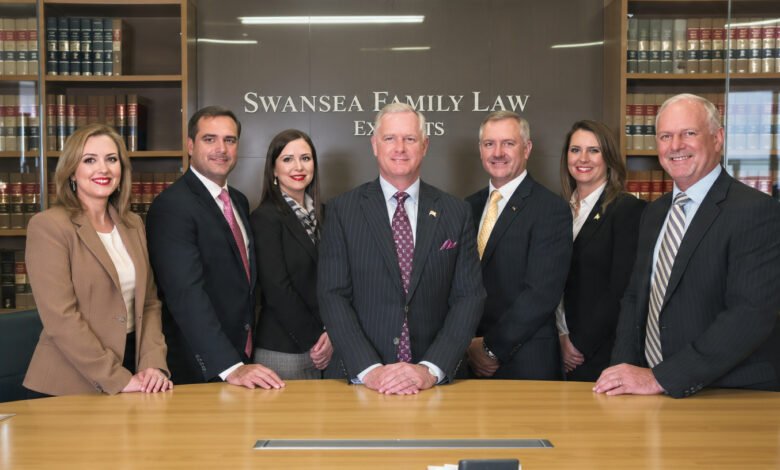
Best divorce lawyers in Swansea are not hard to find — but finding the right one for your specific situation is a different challenge entirely. Whether you’re dealing with a straightforward separation or a complex financial dispute involving property, pensions, and business assets, the solicitor you choose will shape the entire experience.
Swansea has a well-established legal community with firms ranging from nationally recognized specialists to well-respected local practices rooted in South Wales. Some focus exclusively on high-net-worth cases. Others are built around accessible, cost-effective representation. A few offer legal aid for those who qualify. The range is wide, which is genuinely good news — but it also means you need to know what to look for before you pick up the phone.
This guide walks you through everything: the top-rated divorce solicitors in Swansea, what to expect from family law proceedings under the current no-fault divorce system, how fees work, and what separates a truly skilled family lawyer from an average one. By the time you finish reading, you’ll have a clear picture of your options and the confidence to make a smart, informed decision during what is, without question, one of the most stressful periods of anyone’s life.
Best Divorce Lawyers in Swansea: Top Firms to Know
When people search for the best divorce lawyers in Swansea, they’re usually looking for a combination of things: strong credentials, transparent pricing, a good track record, and someone who won’t make an already difficult situation worse. Here’s a breakdown of the most reputable firms operating in the area.
Stowe Family Law — Swansea Office
Stowe Family Law is the UK’s largest dedicated family law firm, and their Swansea office carries that reputation well. The practice is led by Marjha Golding-Evans, who holds a “Next Generation Partner” ranking in the Legal 500 UK 2026 and is recognized specifically for handling complex matrimonial finance matters, including divorces involving farming assets, landed estates, and high-net-worth portfolios. The firm is listed as a “Leading Firm” by Legal 500 and has been serving clients since 1982.
Their Swansea team includes Joanna Newton, Zoe Carter, Elizabeth Lacey, Georgina Nelson, and Amy Langford — all noted as Key Lawyers in industry rankings. Lauren Roche handles child law and custody matters. If you’re dealing with a financially complex divorce or need someone with real clout in negotiations, Stowe is a serious option.
Areas of expertise: High-net-worth divorce, financial remedy proceedings, child arrangements, pension sharing, cohabitation agreements, domestic abuse cases.
Sally Goldstone Family Law
Sally Goldstone Family Law has built a strong reputation as one of the leading names in South Wales for specialist divorce and separation advice. Sally herself has extensive experience with complicated cases — farming assets, family businesses, multi-asset structures, and public and private sector pensions are all in her wheelhouse.
The firm’s approach is deliberately non-adversarial. They actively encourage dialogue and negotiation wherever possible, recognizing that ramping up hostility rarely serves either party’s long-term interests. For clients who want professional, confidential advice delivered with genuine empathy, this firm comes up consistently in recommendations.


Areas of expertise: Financial disputes, civil partnership dissolution, complex asset cases, cohabitation rights, pre-nuptial agreements.
JCP Solicitors
JCP Solicitors is one of the larger regional firms in South Wales, with a strong family law team led by Jill Bulteel, Director and Head of Family Law. The firm is accredited by the Law Society in Family Law Advanced, which covers complex matters including international divorce, cohabitation disputes, complex financial settlements, and domestic violence cases.
A notable strength is their commitment to Welsh-speaking clients — they have Welsh speakers on the team and a dedicated Welsh language coordinator. For clients in Swansea and across South Wales who prefer to communicate in Welsh, that’s a meaningful differentiator.
JCP offers fixed-fee arrangements for certain services, giving clients cost certainty upfront — something that’s genuinely helpful when financial anxiety is already running high.
Areas of expertise: Divorce proceedings, financial remedy orders, child arrangements, international divorce, Welsh-language services, domestic abuse.
Graham Evans & Partners
Graham Evans & Partners is a well-established South Wales firm with multiple offices, including Swansea. Their family law department includes members of the Law Society’s Children Panel and Resolution — the national network of family legal professionals committed to non-confrontational, constructive dispute resolution.
The firm holds a Legal Aid Franchise, meaning they can conduct both private and legal aid work. For people who don’t qualify for legal aid but want a firm with that kind of breadth and community roots, Graham Evans is worth a conversation.
Their approach to collaborative law is worth noting. When appropriate, they use four-way negotiations where both parties sit down with their respective solicitors to work through financial settlements and child arrangements without the cost and delay of court proceedings.
Areas of expertise: Divorce and separation, child residence and contact disputes, collaborative law, financial settlements, legal aid cases.
Peter Lynn & Partners
Peter Lynn & Partners runs what is arguably the largest divorce and family law team in the Swansea region — 14 specialists at last count. The team handles everything from straightforward separations to complex cases involving business assets, company shares, forensic accountants, and external valuation specialists.
Where they stand out is in high-value divorce cases with business interests. They combine their family law team with their company and commercial division when needed, which is a practical advantage most smaller firms simply can’t offer.
Areas of expertise: Complex financial divorce, business asset division, pension sharing orders, spousal maintenance, high-net-worth cases.
Grant Stephens Family Law
Grant Stephens Family Law is a specialist family law firm with a strong presence in South Wales. Kayleigh Jones, one of their leading solicitors, has over 12 years’ experience in divorce, separation, financial disputes, and child matters. She’s a member of Resolution and is known for her non-confrontational approach — practical, approachable, and focused on getting results without inflaming conflict unnecessarily.
For clients who want efficient, no-nonsense legal advice without the premium price tag of larger national firms, Grant Stephens comes up regularly in positive reviews.
Redkite Solicitors — Andrea Williams
For cases involving social services intervention, public law children proceedings, or complex safeguarding matters, Redkite Solicitors and in particular Andrea Williams — who has practised family law for over 25 years — is a respected name. She handles complex matters involving child arrangements, special guardianship, and cases where parents are involved in proceedings brought by local authorities.
Understanding Family Law Proceedings in England and Wales
Before you hire anyone, it helps to understand what you’re actually dealing with legally. The landscape shifted significantly in April 2022, and many people are still working from outdated assumptions.
The No-Fault Divorce: What Changed in 2022
The Divorce, Dissolution and Separation Act 2020 came into force in April 2022 and fundamentally changed how divorce works in England and Wales. Under the old system, you had to prove one of five grounds: adultery, unreasonable behaviour, desertion, two years’ separation with consent, or five years’ separation without consent. In practice, this forced many couples into an adversarial blame-based process that increased conflict and costs.
Under the current no-fault divorce system, neither party needs to assign blame. You simply state that the marriage has irretrievably broken down. That’s it. You can also file jointly — something that wasn’t possible under the old rules — which sets a more cooperative tone from the start.
Key timeline under the current system:
- Application filed — begins the process; court fee of £593 applies
- 20-week reflection period — mandatory waiting period; use this time to sort finances and child arrangements
- Conditional Order — previously called Decree Nisi; court confirms no reason the divorce shouldn’t proceed
- 6-week wait — further mandatory period
- Final Order — previously Decree Absolute; the marriage is legally ended
The minimum time from filing to Final Order is approximately 26 weeks (six months). In practice, most divorces take between 7 and 10 months. If financial or child arrangement disputes go to court, it can stretch to 12–18 months or longer.
Financial Remedy Proceedings
The divorce itself is one process. Sorting out the money is entirely separate — and usually the more contested, expensive, and emotionally charged part of the whole thing.
Financial disclosure is mandatory. Both parties complete a Form E, which is a detailed financial statement covering all assets: property, bank accounts, investments, pensions, business interests, and liabilities. This gives the court (and the other side) a full picture of the financial landscape.
From there, the process typically involves:
- First Appointment — sets the scope of the financial proceedings
- Financial Dispute Resolution (FDR) Hearing — the judge gives a non-binding indication of what a fair settlement might look like; most cases settle here
- Final Hearing — if no agreement is reached, a judge decides
A Consent Order formalizes any agreed financial settlement and makes it legally binding. Without one, financial claims technically remain open even after the divorce is finalized — which can create serious problems years down the line.
Child Arrangements
If you have children, their welfare takes priority over everything else. The court’s primary concern is always the best interests of the child, not the preferences of either parent.
A Child Arrangements Order specifies where children live and how much time they spend with each parent. Courts strongly prefer parents to reach their own agreements — whether through direct negotiation, mediation, or collaborative law — rather than having a judge decide.
If you genuinely cannot agree, you’ll need to apply for a court order. The process involves a CAFCASS (Children and Family Court Advisory and Support Service) officer who will speak with both parents and often the children, and provide a report to the court.
How Much Does a Divorce Cost in Swansea?
Cost is usually the first practical question people ask, and the honest answer is: it varies enormously depending on complexity and cooperation.
Mandatory Court Fees
Regardless of who handles the paperwork, you’ll pay:
- Divorce application fee: £593 (same whether sole or joint)
- Consent Order (financial): £53 if both parties agree
- Financial proceedings: £275 if you can’t agree and need a judge to decide
- Child Arrangements Order: £232 if required
Solicitor Fees — What to Expect
For the divorce process itself (excluding financial and child disputes): typically £500–£1,500 plus VAT, depending on the solicitor’s seniority and the amount of work involved.
For financial settlements:
- Simple consent order: from around £400 plus VAT
- Moderate complexity: £3,000–£5,000 plus VAT
- Contested financial proceedings going to First Appointment: £5,000–£10,000
- From First Appointment to FDR: a further £10,000–£15,000
- If it reaches Final Hearing: an additional £10,000–£20,000 or more
For contested divorces where everything is disputed and the case runs to a Final Hearing, total costs can easily reach £30,000–£50,000+ for each party.
The reality is that the biggest cost driver is conflict. The more you can agree outside of court — through negotiation, mediation, or collaborative law — the less you’ll spend.
Fixed Fees vs. Hourly Rates
Many Swansea solicitors offer fixed fees for defined services (e.g., the divorce application, drafting a consent order). These give you cost certainty, which is valuable when finances are already under strain. For more complex or unpredictable cases, solicitors charge hourly rates — typically ranging from £150 to £350+ per hour depending on the firm and the seniority of the solicitor handling your matter.
Always ask for a clear fee estimate and costs agreement before instructing a solicitor.
What to Look for in a Divorce Solicitor in Swansea
Not all family lawyers are equal, and the cheapest option isn’t always the best one. Here’s what actually matters.
Resolution Membership
Resolution is a national organisation of over 6,500 family law professionals committed to a constructive, non-confrontational approach to resolving disputes. Most of the well-regarded Swansea firms have Resolution-accredited solicitors on their teams. Membership isn’t just a logo — it represents a genuine commitment to minimizing conflict and focusing on long-term outcomes for the whole family, including children.
You can check Resolution’s member directory at resolution.org.uk to verify a solicitor’s membership.
Law Society Accreditation
The Law Society Family Law Panel accreditation — and specifically the Family Law Advanced accreditation for more complex cases — signals a higher level of specialist expertise. JCP Solicitors, for example, holds this accreditation, which covers international divorce, complex financial settlements, domestic violence, and cohabitation disputes.
Legal 500 and Chambers Rankings
For higher-stakes cases, the Legal 500 UK and Chambers directories are useful reference points. They’re based on independent research and client feedback, and rankings like “Leading Firm,” “Recommended Lawyer,” and “Next Generation Partner” carry real weight. Stowe Family Law Swansea and several other local firms appear in these rankings.
Communication and Fit
This sounds obvious but it’s genuinely important: you need a solicitor you can actually talk to. Divorce proceedings can last months. You’ll be sharing sensitive financial and personal information. The relationship needs to work on a human level.
Most reputable firms offer an initial consultation — sometimes free, sometimes charged at a reduced rate. Use it to assess whether the solicitor listens, explains things clearly, and gives you a realistic picture of your situation rather than just telling you what you want to hear.
Alternatives to Court: Mediation, Collaborative Law, and Arbitration
Going to court is expensive, slow, and stressful. It’s also unnecessary in the majority of cases. Here are the main alternatives.
Family Mediation
Family mediation involves both parties meeting with an independent, trained mediator who helps facilitate discussions around finances and child arrangements. The mediator doesn’t make decisions — they help you reach your own agreement.
Mediation is generally faster and cheaper than court proceedings, and it tends to produce more durable agreements because both parties have actively shaped the outcome. Attendance at a Mediation Information and Assessment Meeting (MIAM) is now mandatory before you can issue most court applications.
Collaborative Law
Collaborative law is a more structured process where both parties and their solicitors attend a series of four-way meetings to negotiate a settlement. It’s particularly effective in cases with significant assets or ongoing co-parenting relationships, where maintaining a workable relationship after the divorce matters.
Both Graham Evans & Partners and Stowe Family Law have collaboratively trained solicitors in Swansea.
Family Arbitration
Arbitration puts the decision in the hands of a qualified arbitrator — a private judge, effectively. It’s faster and more flexible than court, while still producing a binding outcome. Costs typically range from £3,000 to £5,000 shared between the parties, though complex cases cost more.
Legal Aid for Divorce in Swansea
Legal aid for divorce was largely removed in England and Wales in 2013. However, you may still qualify in specific circumstances:
- Domestic abuse cases where you can provide evidence (police reports, medical records, court orders, refuge correspondence)
- Cases involving a risk of child abduction
- Forced marriage situations
Graham Evans & Partners holds a Legal Aid Franchise, and Redkite Solicitors also has experience with legally aided public law children proceedings through their family law legal aid department.
If you’re on a low income, you may also qualify for help with court fees through the Help with Fees scheme (Form EX160). This can reduce or eliminate the £593 application fee.
For free initial advice on whether you qualify, Citizens Advice Swansea offers outreach services — though they cannot act as your solicitor or represent you in proceedings.
Swansea Civil Justice Centre: Where Proceedings Take Place
Most family law proceedings in Swansea are heard at the Swansea Civil Justice Centre, located in the heart of the city adjacent to the A4067. It handles divorce applications, financial remedy hearings, and child arrangement proceedings. If you’re heading to court, your solicitor will guide you on what to expect, but knowing the venue in advance can reduce at least one layer of anxiety.
FAQs About Divorce Lawyers in Swansea
How long does a divorce take in Swansea?
Under the current no-fault divorce system, the minimum timeline is 26 weeks (six months). In practice, most divorces resolve in 7–10 months. If financial or child arrangement disputes end up in court, expect 12–18 months or longer.
Can I get divorced without a solicitor?
Technically yes — you can handle the divorce application yourself using the HMCTS online portal, paying only the £593 court fee. But if you have shared assets, children, pensions, or a mortgage, getting at least some legal advice is strongly recommended. What looks simple at the start can have significant financial consequences years later.
What’s the difference between a divorce solicitor and a family lawyer?
In practice, very little. Both terms are used interchangeably. A family lawyer typically handles the broader range of issues — divorce, child arrangements, financial settlements, cohabitation, domestic abuse — while the term “divorce solicitor” is more specifically associated with the dissolution of a marriage. Most Swansea firms handle all of it.
What is a clean break order?
A clean break order is a court order that severs all financial ties between divorcing spouses, preventing either party from making future financial claims against the other. It’s particularly important to get one even if you think your financial settlement is clear and agreed — without it, claims remain technically open.
What should I bring to my first meeting with a divorce solicitor?
Bring any documents you have relating to: your marriage certificate, mortgage statements, bank account details, pension information, property valuations, and any correspondence from your spouse or their solicitor. The more information you come with, the more productive the initial consultation will be.
How to Choose the Right Divorce Lawyer in Swansea: A Quick Checklist
- Does the firm specialize in family law, or is it a general practice firm with a family law department?
- Is the solicitor a member of Resolution?
- Does the firm hold any Law Society accreditations in family law?
- Do they appear in Legal 500 or Chambers rankings?
- Do they offer a transparent fee structure — fixed fees, hourly rates, or both?
- Do they have experience handling cases similar to yours (high-net-worth, business assets, international elements, domestic abuse)?
- Do they offer services in Welsh if that matters to you?
- Do they have access to legal aid if you might qualify?
- How responsive are they? Do they return calls and emails promptly?
- Did you feel genuinely listened to in the initial consultation?
Conclusion
Finding the best divorce lawyers in Swansea comes down to matching the right firm to your specific situation. For complex, high-value cases, firms like Stowe Family Law and Peter Lynn & Partners bring serious firepower. For accessible, non-confrontational representation, Grant Stephens Family Law and JCP Solicitors both have strong track records.
For public law children cases or legally aided work, Graham Evans & Partners and Redkite Solicitors stand out. Whatever your circumstances, the most important things are to act early, be honest with your solicitor about the full picture, explore alternatives to court wherever possible, and make sure any financial settlement is properly formalized in a court order. The right legal support won’t just get you through the process — it’ll help ensure the outcome genuinely works for your life going forward.