Truck Accident Wrongful Death Claims in Ohio: What Families Can Recover
Truck accident wrongful death claims in Ohio explained: who can file, the damages families can recover, filing deadlines, and how trucking laws apply.
Truck accident wrongful death claims in Ohio give families a way to hold a driver, a trucking company, or another responsible party accountable after a fatal crash. Nothing about that process brings a person back, and most families aren’t thinking about lawsuits in the weeks after a funeral. They’re thinking about the mortgage, the kids, and how to get through the next day. Those practical worries are exactly what Ohio law tries to address.
The Ohio wrongful death statute, found in Chapter 2125 of the Ohio Revised Code, lets the estate of the person who died seek compensation for the family’s losses. That covers lost income, the value of help around the house, funeral costs, and the personal loss of companionship and guidance. Ohio does not put a dollar cap on these damages.
Truck cases add another layer. Commercial carriers follow federal safety rules, carry much larger insurance policies than ordinary drivers, and often send their own investigators to the scene within hours. Evidence like electronic logging data and maintenance records can disappear if nobody asks for it early.
This guide covers who can file, who shares in the money, the specific wrongful death damages in Ohio, the two-year deadline, and the steps that protect a family’s claim. It’s written for families rather than lawyers, so you can understand your options before you sit down with one.
How Truck Accident Wrongful Death Claims in Ohio Work
A wrongful death claim exists when someone dies because of another party’s wrongful act, neglect, or default, and the person who died could have sued for their injuries if they had survived. That standard comes from Ohio Revised Code 2125.01. In a trucking case, it usually means showing that a driver, carrier, or other party was negligent and that the negligence caused the fatal crash.
Common examples include a tired driver who ran past federal hours limits, a carrier that skipped brake repairs, a trailer that was overloaded or badly secured, or a driver who was distracted or impaired.
Who Files the Claim
The family does not file in their own names. Under Ohio Revised Code Section 2125.02, the case is brought by the personal representative of the person who died. That’s the executor named in a will, or an administrator the probate court appoints if there’s no will.
This step matters more than it sounds. Until a probate court appoints someone, nobody has legal authority to file suit or sign a settlement. Families often open the estate in the county probate court within the first few weeks, even before deciding whether to bring a claim, so that someone can request records and send preservation letters.
Wrongful Death vs. a Criminal Case
A truck accident wrongful death claim is a civil case. It’s separate from any traffic citation or criminal charge against the driver. The two can run at the same time, and the civil case can succeed even if the driver is never charged or is found not guilty. Civil cases use a lower burden of proof, so the question is whether negligence is more likely than not, not whether it’s proven beyond a reasonable doubt.

Who Can Recover in an Ohio Wrongful Death Claim
The personal representative files the case, but the money belongs to the family. Ohio law says the claim is for the exclusive benefit of specific people.
Spouse, Children, and Parents
The surviving spouse, children, and parents are rebuttably presumed to have suffered damages. In plain terms, the law assumes they were harmed by the death. The defense can try to argue otherwise, but the starting point favors the family.
Two details are worth knowing:
- A child who was conceived before the death and born afterward counts as a beneficiary.
- A parent who abandoned a minor child cannot benefit if that child dies. “Abandoned” means failing, without good reason, to communicate with, care for, and support the child for at least one year before the death.
Other Next of Kin
Siblings, grandparents, and other close relatives can also share in an Ohio wrongful death claim, but they don’t get the presumption. They must show they actually suffered a loss. Since the 2023 amendments, “other next of kin” means the nearest surviving relatives after the spouse, children, and parents are accounted for.
There’s also a timing trap here. If a settlement is submitted to the probate court more than two years after the death, other next of kin generally lose their right to notice unless they filed a written notice of claim with the probate court within that two-year window.
How the Money Gets Divided
The recovery isn’t split evenly by default. The probate court approves the distribution based on each person’s actual loss. A young child who lost a parent’s support for years may receive more than an adult sibling. Families can agree on a division, but the court still has to sign off.
7 Damages Families Can Recover in Truck Accident Wrongful Death Claims in Ohio
Ohio lists five categories of compensatory damages for wrongful death, plus funeral and burial costs. A related survival claim adds a seventh category for what the person went through before they died. Here’s what each one covers.
1. Loss of Support
This is the income the person would reasonably have earned and contributed to the family. It’s based on earning capacity, not just the last paycheck. A 35-year-old electrician’s claim would look at likely raises, overtime, retirement contributions, and health insurance over a full working life. Economists are often hired to calculate the present value of those future earnings.
2. Loss of Services
People do a lot of unpaid work for their families. Childcare, cooking, home repairs, driving relatives to appointments, managing finances. When that person is gone, the family either goes without or pays someone else. Loss of services puts a dollar value on that work.
3. Loss of Society
This is often the largest part of a claim. Ohio defines it broadly to include loss of companionship, consortium, care, assistance, attention, protection, advice, guidance, counsel, instruction, training, and education. It recognizes that a child who loses a parent loses far more than income.
4. Loss of Prospective Inheritance
If the person who died would likely have saved money and left it to their heirs, the heirs can recover what they lost. This category matters most when the person was young, earning well, or building a business.
5. Mental Anguish
The grief, emotional pain, and suffering of the surviving spouse, dependent children, parents, and next of kin is a separate category of damages. Testimony from family members, friends, counselors, and clergy often helps show how deeply the loss has affected them.
6. Funeral and Burial Expenses
Reasonable funeral expenses and burial costs are recoverable, and the jury or court must list that amount separately in the verdict.
7. Medical Bills and Conscious Pain and Suffering
If the person survived for any period after the crash, the estate can recover emergency and hospital costs plus compensation for the pain they experienced before death. These are recovered through a survival action, covered in the next section.
Does Ohio Cap Wrongful Death Damages?
No. Chapter 2125 has no dollar cap on wrongful death damages. The jury awards what it finds proportioned to the family’s losses. A few factors can still affect the number:
- The court may consider all relevant circumstances that existed at the time of death.
- Either side may present the cost of an annuity as evidence of the value of future damages.
- Evidence that a surviving spouse has remarried may be considered for that spouse’s damages.
Survival Actions and Punitive Damages
Most fatal truck cases in Ohio involve two claims filed together. They sound similar, but they compensate different people for different harms.
Wrongful Death Claim vs. Survival Action
| Wrongful death claim | Survival action | |
|---|---|---|
| Whose loss | The family’s | The person who died |
| Legal source | ORC Chapter 2125 | ORC 2305.21 |
| Typical damages | Lost support, services, society, inheritance, mental anguish, funeral costs | Medical bills, lost wages before death, conscious pain and suffering |
| Where money goes | Divided among beneficiaries by the probate court | Paid to the estate and passed through the will or inheritance law |
A survival action is essentially the personal injury claim the person would have filed if they had lived. If the crash caused instant death, this part of the case may be small. If they lived for hours or days in the hospital, it can be significant.
Can Families Get Punitive Damages?
Punitive damages punish especially bad conduct rather than compensate a loss. Ohio courts have long held that punitive damages aren’t available in the wrongful death claim itself, but they can be sought through the survival action when the defendant acted with actual malice or conscious disregard for safety.
In trucking, that might look like a carrier that knowingly let a driver falsify logs, kept a driver with a long record of violations on the road, or ignored repeated warnings about failing brakes. Ohio law generally limits punitive damages to twice the compensatory damages, with lower limits for some small employers and individuals. Because these rules are technical, families should ask a lawyer whether the facts support a punitive claim.
Why Truck Cases Are Different From Car Crash Claims
A fatal crash with a semi is not just a bigger car accident. The rules, the defendants, and the insurance picture are all different, and those differences shape what a family can recover.
Federal Safety Rules Set the Standard
Interstate trucking companies and drivers must follow the Federal Motor Carrier Safety Regulations. Violating them is strong evidence of negligence. The FMCSA hours of service rules are a good example. Property-carrying drivers generally can’t drive more than 11 hours after 10 consecutive hours off duty, can’t drive past the 14th hour after coming on duty, and must take a 30-minute break after 8 hours of driving.
Other FMCSA regulations that come up often in Ohio wrongful death cases include:
- Driver qualification files and medical certification
- Drug and alcohol testing requirements
- Vehicle inspection, repair, and maintenance records
- Cargo securement and weight limits
- Electronic logging device (ELD) requirements
More Than One Party May Be Responsible
Trucking company liability is often the heart of the case. A carrier is usually responsible for a driver’s negligence on the job, and it can also be directly liable for negligent hiring, training, supervision, or maintenance. Depending on the facts, other defendants may include:
- The truck driver
- The motor carrier operating the truck
- The owner of the tractor or trailer, if different
- A shipper or loading company that overloaded or improperly secured cargo
- A maintenance shop that did faulty repairs
- A manufacturer of a defective part, such as brakes or tires
- A freight broker, in some circumstances
Naming every responsible party matters because each may carry separate insurance.
Bigger Insurance Policies
Federal law requires interstate carriers hauling general freight to carry at least $750,000 in liability coverage, and more for hazardous materials. Many carriers carry $1 million or more, plus excess policies. That’s very different from a typical car policy, and it’s one reason commercial truck insurance companies fight these claims so hard.
Evidence Disappears Quickly
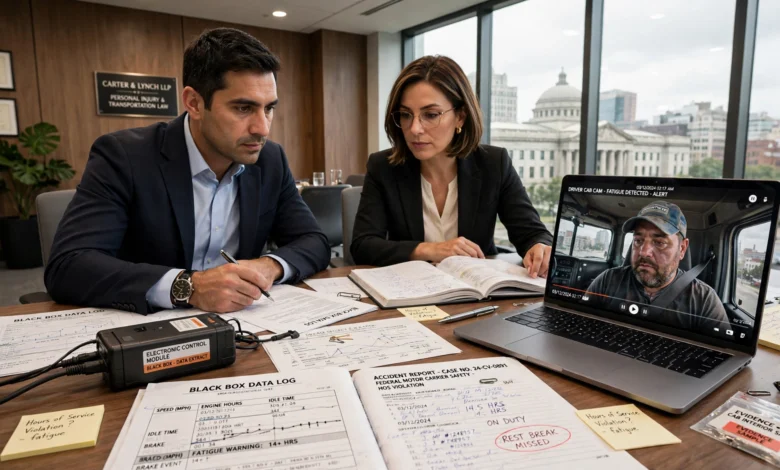
Carriers aren’t required to keep some records for long. ELD data, dashcam footage, dispatch messages, and engine control module data can be overwritten or discarded. A preservation letter sent early puts the company on notice that it must keep this evidence.
Deadlines and Legal Rules That Affect Truck Accident Wrongful Death Claims in Ohio
Even a strong case can be lost on procedure. These are the rules families most need to understand.
The Two-Year Statute of Limitations
The statute of limitations for an Ohio wrongful death lawsuit is generally two years from the date of death. If the case isn’t filed by then, it will usually be barred for good, no matter how clear the fault is.
A few related deadlines to keep in mind:
- Claims involving a defective product, such as a failed brake component, are also subject to a 10-year statute of repose measured from the product’s first delivery, with some exceptions.
- Claims against government entities, such as a city whose road design contributed to a crash, can involve special notice and procedural rules.
- Other next of kin who want to protect their right to notice should file a written notice of claim with the probate court within two years of the death.
Two years sounds like a long time. In practice, gathering records, retaining experts, opening the estate, and identifying every defendant takes much of it.
Comparative Negligence
Ohio follows a modified comparative negligence rule under ORC 2315.33. If the person who died was partly at fault, the family’s recovery is reduced by that percentage. If their fault is greater than the combined fault of the defendants, the family recovers nothing.
For example, if a jury finds total damages of $3 million and assigns 20% of the fault to the person who died, the award drops to $2.4 million. Trucking insurers often push hard on this point, which is one reason independent crash reconstruction is so valuable.
Probate Court Approval of Settlements
A personal representative can settle a wrongful death claim before or after filing suit, but only with the consent of the probate court that made the appointment. The court reviews the proposed settlement and how it will be divided among beneficiaries. This probate court approval step protects children and other family members, though it adds time to the process.
Steps Families Should Take After a Fatal Truck Crash
None of this needs to happen in the first days after a loss. But the sooner these steps get started, the better protected the claim will be.
- Get the crash report. Request the report from the Ohio State Highway Patrol or the local police department that responded. It will name the driver, the carrier, and often the USDOT number.
- Keep every document. Save medical bills, the death certificate, funeral receipts, pay stubs, tax returns, and benefits statements. These support the economic damages.
- Don’t give a recorded statement to the trucking company’s insurer. Adjusters may call quickly and sound sympathetic. Anything said can be used to argue fault or reduce the claim.
- Open the estate. Talk to the probate court in the county where your loved one lived about appointing a personal representative.
- Send preservation letters. A lawyer can demand that the carrier keep ELD data, dashcam footage, maintenance logs, and the driver’s qualification file.
- Document the personal loss. Write down what your loved one did for the family, from coaching a kid’s team to handling the bills. Photos, cards, and stories help a jury understand the loss of society.
- Talk to an Ohio wrongful death lawyer early. Most work on contingency, which means no fee unless the family recovers. Ask about their trucking experience and whether they work with reconstruction experts and economists.
How Long These Cases Take
Some claims settle within a year, especially when liability is clear and insurance is adequate. Cases with disputed fault, several defendants, or punitive damages can take two to three years or longer if they go to trial. Probate approval adds a final step either way.
Conclusion
Truck accident wrongful death claims in Ohio let a personal representative recover compensation on behalf of a spouse, children, parents, and other next of kin, covering lost support and services, loss of society, lost inheritance, mental anguish, and funeral costs, with no statutory cap, while a companion survival action can add medical bills, pre-death suffering, and in serious cases punitive damages; because trucking cases involve federal safety rules, several possible defendants, large insurance policies, fast-disappearing evidence, a strict two-year filing deadline.
And comparative fault arguments, families who open the estate early, preserve records, and get experienced legal guidance give themselves the best chance at a fair recovery.