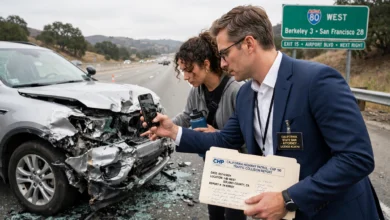
Hit and Run Accidents in New York: Your Legal Rights and Compensation Options
Hurt in a hit and run accidents in New York? Here's how no-fault, uninsured motorist coverage, and MVAIC claims work, plus deadlines you can't miss.

A hit and run accidents in New York leaves you with two problems at once. You’re hurt, shaken, and possibly facing medical bills and time off work. And the person who caused it is gone, which makes the usual path to compensation feel closed off before you’ve even started.
The good news is that New York has more safety nets for hit and run victims than most people realize. The state’s no-fault insurance system pays for medical care and lost wages regardless of who caused the crash. Your own auto policy almost certainly includes uninsured motorist coverage, which can step in when the at-fault driver can’t be found. And if you don’t have car insurance at all, a state-created organization called MVAIC may still cover you.
The catch is that each of these options comes with strict rules and short deadlines. Some require you to report the crash to police within 24 hours. Others require written notice within 30 or 90 days. Miss one, and a valid claim can be denied on a technicality.
This guide walks through what New York law requires of drivers who flee, what your legal rights are as a victim, where compensation can come from, and the specific steps that protect your claim. Whether you were driving, walking, or riding a bike when you were hit, you’ll come away knowing exactly what to do next and when to do it.
What Counts as a Hit and Run Accident in New York?
Under New York law, a hit and run happens when a driver involved in a crash leaves the scene without stopping and providing required information. The governing statute is New York Vehicle and Traffic Law Section 600, often called the “leaving the scene” law. You can read the full text on the New York State Senate’s page for VTL § 600.
The law requires any driver who knows, or has reason to know, that their vehicle caused damage or injury to do the following:
- Stop at the scene
- Show their driver’s license and insurance information
- Give their name, address, and the vehicle’s registration to the injured party or a police officer
- Report the incident to police as soon as physically able if someone was injured and no officer is present
A hit and run doesn’t only involve two moving cars. It also includes a driver who strikes a pedestrian or cyclist and keeps going, a driver who hits a parked car and leaves without leaving a note or contacting police, and a driver who stops briefly but leaves without sharing their information.
Common Hit and Run Scenarios in New York
Some situations come up again and again in New York hit and run cases:
- Pedestrian strikes in crosswalks, especially in dense areas of New York City where drivers turning at intersections fail to yield
- Cyclist collisions, including drivers who clip bike riders while passing or opening lanes
- Sideswipes on highways like the BQE, the Cross Bronx, or the Long Island Expressway, where drivers speed off before anyone gets a plate
- Parking lot incidents, where a driver backs into another vehicle and leaves
- Late-night crashes involving impaired drivers who flee to avoid a DWI charge
That last one matters. Many drivers flee because they’re drunk, uninsured, driving on a suspended license, or have an outstanding warrant. Understanding why drivers run helps explain why so many never get caught, and why your own insurance is often the most reliable source of recovery.


Criminal Penalties for Leaving the Scene in New York
Before getting into your compensation options, it helps to understand how seriously New York treats hit and run penalties. The criminal case against the driver is separate from your civil claim, but the two often overlap.
The severity of the charge depends on what the fleeing driver left behind:
- Property damage only: Leaving the scene is a traffic infraction, with fines and possible short-term jail time.
- Personal injury: It becomes a class A misdemeanor, punishable by up to a year in jail.
- Serious physical injury: It rises to a class E felony.
- Death: It’s a class D felony, which can carry years in state prison.
Penalties increase for repeat offenders. A conviction can also lead to license revocation.
How the Criminal Case Affects Your Civil Claim
If police identify and charge the driver, that case can help you. A conviction or guilty plea can serve as strong evidence of fault in your personal injury lawsuit. Police reports, witness statements, and surveillance footage gathered for the criminal case often become useful in your civil claim too.
That said, you don’t need to wait for a criminal case to finish before pursuing compensation. Your insurance claims and deadlines run on their own clock, and waiting on prosecutors is one of the easiest ways to miss them.
Your Legal Rights After a Hit and Run Accident in New York
Being the victim of a hit and run accident in New York gives you several legal rights, even when the driver is never found. Knowing these rights is the first step toward getting paid.
You have the right to:
- Receive no-fault benefits for medical expenses and lost wages, regardless of who caused the crash
- File an uninsured motorist claim through your own auto policy if the driver can’t be identified
- Seek help from MVAIC if you have no insurance of your own and no household relative’s policy covers you
- Sue the at-fault driver directly if they’re later identified
- Hold the vehicle owner responsible in many cases, even if someone else was driving
- Apply for crime victim compensation through the New York State Office of Victim Services, which may cover certain costs for victims of crimes involving motor vehicles
Your insurance company is required to treat an uninsured motorist claim fairly. But remember that in this situation, your own insurer becomes the party paying you, which means their interests don’t fully line up with yours. Adjusters may push back on the value of your injuries just as they would if you were a stranger.
Where Compensation Comes From: Your Main Options
Here’s where New York’s system gets specific. Most victims will draw on one or more of the following sources.
1. No-Fault Insurance (Personal Injury Protection)
New York is a no-fault insurance state. Every auto policy includes Personal Injury Protection, or PIP, which pays up to $50,000 in basic economic losses per person regardless of who was at fault.
No-fault benefits typically cover:
- Reasonable and necessary medical and rehabilitation expenses
- 80% of lost earnings, up to $2,000 per month, for up to three years
- Up to $25 per day for reasonable necessary expenses, like household help, for up to one year
- A $2,000 death benefit
If you were driving or a passenger in an insured car, you claim no-fault through that car’s policy. If you were a pedestrian or cyclist, you generally claim through your own auto policy or a policy belonging to a relative you live with.
The key deadline: you usually need to submit your no-fault application within 30 days of the accident. Missing it without a reasonable excuse can cost you these benefits.
2. Uninsured Motorist (UM) Coverage
Here’s the piece many people don’t know about. New York requires every auto policy to include uninsured motorist coverage, with minimum limits of $25,000 per person and $50,000 per accident for bodily injury. Under New York law, a hit and run driver who can’t be identified is treated as an uninsured driver.
UM coverage pays for things no-fault doesn’t, including pain and suffering, but only if your injuries meet New York’s serious injury threshold (more on that below).
To qualify for a hit and run UM claim, New York generally requires:
- Physical contact between the fleeing vehicle and you or your vehicle. If a car ran you off the road without touching you, the claim becomes much harder.
- A police report filed within 24 hours, or as soon as reasonably possible
- Written notice to your insurer, often including a sworn statement, within 90 days or as soon as practicable
Many policies also include optional Supplementary Uninsured/Underinsured Motorist (SUM) coverage, which raises your limits. It’s worth checking your declarations page. A lot of drivers carry more coverage than they realize.
3. MVAIC (Motor Vehicle Accident Indemnification Corporation)
What if you don’t own a car, don’t have auto insurance, and don’t live with a relative who does? That’s where the Motor Vehicle Accident Indemnification Corporation, known as MVAIC, comes in.
MVAIC was created by the New York legislature to protect people injured by uninsured and unidentified drivers who have no other coverage. It can provide no-fault benefits and, in some cases, compensation for bodily injury. You can find claim forms and eligibility details on the official MVAIC website.
MVAIC has strict filing requirements of its own:
- The accident generally must be reported to police within 24 hours
- A Notice of Intention to Make Claim must usually be filed within 90 days
- No-fault applications have their own short timelines
MVAIC is often the lifeline for pedestrians and cyclists in New York City who don’t drive. But because it’s funded by insurers, it reviews claims closely, and incomplete paperwork is a common reason for denial.
4. Direct Lawsuit Against the Driver
If police eventually track down the driver, or a witness captures the plate, you may be able to file a personal injury lawsuit directly against them. This can recover damages beyond what insurance covers.
New York also has a vehicle owner liability rule. Under VTL Section 388, the owner of a vehicle can be held responsible for injuries caused by anyone driving it with permission. So if the fleeing driver borrowed a friend’s car, the owner’s insurance may be on the hook.
5. Your Health Insurance and Other Sources
Health insurance can cover treatment once no-fault is exhausted. Disability insurance may replace some income. And the New York State Office of Victim Services may help with certain out-of-pocket costs for victims of crimes, which can include some leaving-the-scene cases. Each program has its own eligibility rules, so it’s worth checking early.
The Serious Injury Threshold: A Rule You Need to Understand
New York’s no-fault system comes with a trade-off. In exchange for guaranteed medical and wage benefits, you can only pursue pain and suffering damages if your injury qualifies as a “serious injury” under Insurance Law Section 5102(d).
Qualifying injuries include:
- Death
- Dismemberment
- Significant disfigurement
- A fracture
- Loss of a fetus
- Permanent loss of use of a body organ, member, function, or system
- Permanent consequential limitation of use of a body organ or member
- Significant limitation of use of a body function or system
- A medically determined injury that prevents you from performing substantially all of your usual daily activities for at least 90 of the 180 days following the accident
This threshold applies to UM claims too. That’s why consistent medical treatment and thorough documentation matter so much. Insurers frequently argue that soft tissue injuries, like back and neck strains, don’t meet the standard. Detailed records from doctors, imaging results, and physical therapy notes are what push a claim over the line.
7 Essential Steps to Take After a Hit and Run Accident in New York
These steps line up with what insurers and MVAIC require. Following them in order gives your claim the strongest foundation.
Step 1: Get Medical Attention Right Away
Your health comes first. Call 911 if anyone is hurt. Even if you feel fine, see a doctor within a day or two. Adrenaline hides pain, and injuries like concussions and internal bleeding don’t always show symptoms right away. Prompt treatment also creates a medical record that links your injuries to the crash, which insurers will look for.
Step 2: Call the Police Immediately
This one is non-negotiable. Report the hit and run accident in New York to police as soon as possible, and no later than 24 hours. Both UM claims and MVAIC claims typically depend on it. Ask for the report number and the name of the responding officer.
Step 3: Write Down Everything You Remember
Memories fade fast. As soon as you’re able, write down:
- Any part of the license plate, even a few characters
- The car’s make, model, color, and any damage or distinctive features
- The direction the driver fled
- The time, location, weather, and road conditions
- A description of the driver if you saw them
Step 4: Gather Evidence and Find Witnesses
Take photos of the scene, your vehicle, your injuries, skid marks, and debris. Get names and phone numbers of anyone who saw what happened. Look around for cameras on nearby businesses, apartment buildings, traffic lights, or passing buses. Many businesses overwrite footage within days, so ask quickly or have a lawyer send a preservation letter.
Step 5: Notify Your Insurance Company
Tell your insurer about the accident promptly and in writing. Stick to the facts. Don’t guess about fault, and don’t downplay your injuries by saying “I’m fine” before you’ve been fully evaluated.
Step 6: File Your No-Fault and UM Paperwork on Time
Submit your no-fault application within 30 days. File notice of your UM claim within the time your policy requires, often 90 days. If you’re going through MVAIC, file the Notice of Intention to Make Claim within 90 days. Keep copies of everything and send documents in a way you can prove, like certified mail.
Step 7: Talk to a New York Hit and Run Lawyer
A New York hit and run lawyer can handle deadlines, deal with adjusters, and push back when an insurer undervalues your claim. Most personal injury attorneys work on contingency, so you don’t pay unless you recover money. An attorney can also track down evidence you might not think to look for, like traffic camera footage or records from auto body shops where a damaged car might show up.
Key Deadlines for Hit and Run Claims in New York
Deadlines are where most hit and run claims go wrong. Here’s a quick summary:
| Action | Typical Deadline |
|---|---|
| Police report (for UM and MVAIC eligibility) | Within 24 hours |
| No-fault application | Within 30 days |
| UM notice to insurer | Within 90 days or as soon as practicable |
| MVAIC Notice of Intention to Make Claim | Within 90 days |
| Notice of claim against a city or state agency | Within 90 days |
| Personal injury lawsuit | 3 years |
| Wrongful death lawsuit | 2 years from date of death |
Your specific policy may have different language, so read it carefully or have an attorney review it. If a government vehicle was involved, such as a city truck or bus, the 90-day notice of claim requirement is especially strict.
What Damages Can You Recover?
The compensation available after a hit and run accident in New York depends on your injuries, the coverage available, and whether the driver is identified.
Economic Damages
These are your measurable financial losses:
- Medical bills, both current and future
- Lost wages and reduced earning capacity
- Physical therapy and rehabilitation
- Prescription costs
- Property damage to your vehicle, bike, or personal items
- Transportation to medical appointments
Non-Economic Damages
These cover losses that don’t come with a receipt:
- Pain and suffering
- Emotional distress and anxiety
- Loss of enjoyment of life
- Scarring or disfigurement
Remember that non-economic damages generally require meeting the serious injury threshold.
How Comparative Fault Affects Your Recovery
New York follows pure comparative negligence. If you were partly at fault, for example crossing mid-block or riding without lights, your compensation is reduced by your share of fault, but not eliminated. Even a victim found 40% at fault can still recover 60% of their damages. Insurers sometimes try to shift blame onto victims to lower payouts, which is another reason documentation matters.
Common Mistakes That Hurt Hit and Run Claims
Plenty of valid claims get denied or undervalued because of avoidable errors. Watch out for these:
- Waiting too long to call police. A late report can disqualify a UM or MVAIC claim.
- Skipping medical care. Gaps in treatment give insurers an easy argument that you weren’t really hurt.
- Giving a recorded statement too early. You’re not required to give one on the spot, and it’s smart to talk to a lawyer first.
- Accepting the first offer. Early settlement offers rarely account for future medical costs.
- Posting on social media. Photos from a weekend outing can be used to argue your injuries aren’t serious.
- Assuming you have no coverage. Many people don’t realize a relative’s policy or MVAIC may cover them.
What If the Driver Is Found Later?
Sometimes police locate the driver weeks or months after the crash. When that happens, your options expand. You can pursue a claim against the driver’s liability insurance, and if their coverage is too low, you may still be able to use your own UM or SUM coverage to make up the difference.
If you’ve already received UM benefits, your insurer may have the right to recover that money from the driver, which is called subrogation. It’s important not to sign any release or settlement with the driver without checking with your insurer and an attorney first, because doing so can jeopardize your UM benefits.
Conclusion
Surviving a hit and run accident in New York is stressful, but you are not without options: no-fault insurance covers your medical bills and a portion of lost wages no matter who caused the crash, uninsured motorist coverage treats an unidentified driver as uninsured so you can seek pain and suffering damages if your injuries meet the serious injury threshold,and you can sue the driver or vehicle owner directly if they’re later identified.
What ties all of these together is timing, since a police report within 24 hours, a no-fault application within 30 days, and written notice within 90 days are often the difference between a paid claim and a denied one, so get medical care, report the crash, document everything, and speak with an experienced New York personal injury attorney early to protect both your health and your right to fair compensation.