Online Divorce Services in the UK: 7 Proven Ways to Stay Safe and Legally Protected in 2026
Online divorce services in the UK offer speed and lower cost, but safety and legal standing vary by provider. Here's what to check first.
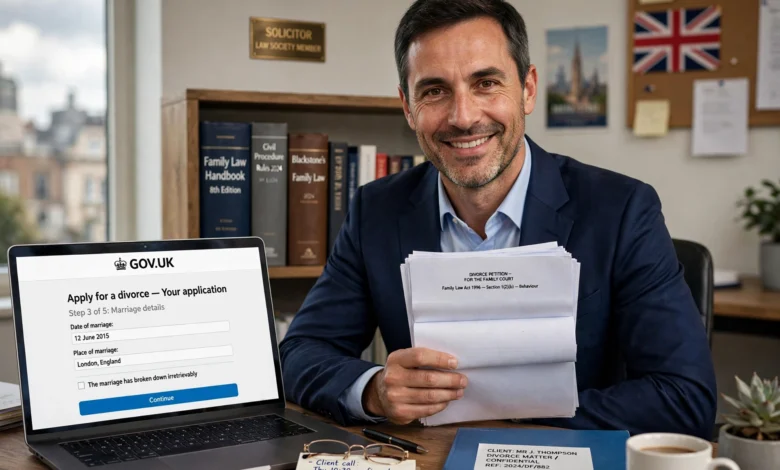
Online divorce services have become the default way most people in England and Wales end a marriage. Since the government launched its digital portal in 2022, filing a divorce online has gone from a niche option to the standard route, with the vast majority of applicants now skipping paper forms entirely.
That shift has also opened the door to a growing market of private companies offering to handle your online divorce application for a fee, sometimes a very high one, and it has left a lot of people wondering whether these services are actually safe and whether the paperwork they produce will hold up in court.
The short answer is that online divorce in the UK is completely legal when it goes through the correct channel: the official GOV.UK service. What varies is how you get there. Some private “online divorce” companies are legitimate businesses that simply guide you through the government form for a service fee.
Others are little more than a template generator dressed up to look official, and a few have been flagged for taking money without delivering much of value. Before you hand over your details or your card number, it helps to understand who actually processes your divorce, what a legally sound divorce service looks like, and which warning signs mean you should walk away.
This guide breaks down how the system works, what to check before you pay anyone, and how to protect yourself from the parts of this process that catch people out.
What “Online Divorce” Actually Means in the UK
The phrase online divorce gets used loosely, so it’s worth separating out what it really covers before you start comparing services.
At its core, an online divorce is simply the digital version of the divorce application process for England and Wales. Instead of filling in a paper D8 form and posting it to a court, you complete the same legal application through a web portal, upload your marriage certificate, and pay the court fee electronically. The court still reviews it, still issues it, and the legal outcome is identical to the old paper-based system. Nothing about doing this online makes the divorce itself faster or “less legal” than a solicitor filing a physical form on your behalf.
There are two distinct layers to be aware of:
- The official government service – run by HM Courts & Tribunals Service (HMCTS) through GOV.UK. This is the only body that can actually grant a divorce. Every valid divorce, whether you use a private company or not, ultimately passes through this system.
- Private online divorce services – third-party companies that charge a fee to prepare your paperwork, answer questions, and sometimes submit the application on your behalf. These businesses do not grant divorces themselves; they act as an intermediary between you and the court.
Understanding that distinction is the single most useful thing you can do before choosing a provider, because it explains both why online divorce is safe in principle and why some private services are worth avoiding.


Is Online Divorce Legally Valid in the UK?
Yes. Divorce online applications submitted through the government’s digital service carry exactly the same legal weight as an application filed on paper. Since the Divorce, Dissolution and Separation Act 2020 came into force, the law has been built around a no-fault divorce system, meaning you no longer need to blame your spouse or prove specific conduct. You simply state that the marriage has broken down irretrievably, and the court accepts that statement as sufficient grounds.
A few legal facts worth keeping in mind:
- You must have been married for at least one year before you can apply.
- Either spouse can apply alone (a sole application), or you can apply together (a joint application).
- There is a mandatory 20-week reflection period between the application being issued and when you can apply for a conditional order, plus a further six weeks before the final order can be granted.
- The current court fee is £628, payable directly to HMCTS regardless of which service helps you apply.
Because the underlying legal process is standardised and government-run, no private company can make your divorce “more legal” or “faster” than the official timeline allows. Any provider claiming they can bypass the 20-week wait or guarantee a same-week divorce is either misunderstanding the law or misleading you, and that’s usually the first sign a service isn’t legally sound.
For the definitive, up-to-date process and fee information, it’s worth checking the official GOV.UK divorce application service directly, even if you end up using a private provider for support.
Why People Turn to Online Divorce Services
Before getting into safety concerns, it’s fair to acknowledge why these services exist and why so many people use them.
They Simplify a Confusing Form
The government portal is functional but not always intuitive, especially for anyone who has never dealt with court paperwork. Private services often walk you through each field, explain legal terms in plain language, and check your answers before submission, which reduces the chance of a rejected application.
They Save Time Compared to Hiring a Solicitor
A full-service family solicitor can charge anywhere from several hundred to a few thousand pounds just to handle the divorce petition itself, separate from any financial or child arrangements. A straightforward online divorce service typically charges a flat fee that’s a fraction of that, which makes it appealing for uncontested, amicable splits.
They’re Useful When Both Parties Agree
If you and your spouse are on the same page about ending the marriage and there’s no dispute over the divorce itself (financial and custody matters are separate issues), an online service can genuinely be the most efficient route. Joint applications, in particular, tend to move through the system with fewer delays.
Are Online Divorce Services Safe? What to Check First
This is where most of the real risk sits, not in the legal process itself, but in choosing who you trust with your personal and financial information.
1. Confirm the Company Isn’t Impersonating GOV.UK
A number of unofficial websites are designed to look like government pages, sometimes appearing high in search results or paid ads, charging people simply to access forms that are free on the real GOV.UK site. Always check the web address carefully. The only genuine government portal sits on a gov.uk domain. If a site charges an upfront “processing fee” before explaining what it actually does, treat that as a red flag.
2. Look for Transparent, Fixed Pricing
A legally sound online divorce service should tell you exactly what you’re paying for and separate its own service fee from the £628 court fee, which goes to HMCTS regardless of provider. Be cautious of:
- Vague pricing that only appears after you’ve entered personal details
- Services that quote a low headline price but add charges at every step
- Companies that won’t confirm whether the court fee is included
3. Check Data Protection Practices
You’ll be sharing sensitive information: your marriage certificate, address history, sometimes financial details. A trustworthy provider will state clearly how your data is stored, whether it’s shared with third parties, and how long they retain it. Look for a proper privacy policy, not just a generic terms page, and check whether the company is registered with the Information Commissioner’s Office (ICO), which oversees UK data protection compliance.
4. Verify Reviews Across Multiple Platforms
Don’t rely solely on testimonials posted on the company’s own website. Cross-check reviews on independent platforms like Trustpilot, and look specifically for comments about response times, hidden fees, and whether applications were actually submitted correctly. A pattern of complaints about delayed submissions or unreachable support is a strong warning sign.
5. Confirm Who Actually Files the Application
Some services only give you a guided template that you still have to submit yourself; others submit it on your behalf using their own account. Know which one you’re paying for. If a company implies they have some special, faster access to the court system, that claim doesn’t hold up, since every application goes through the same HMCTS queue.
Legal Risks Worth Understanding Before You Apply
Even with a legitimate provider, there are a few structural issues in the online divorce process that catch people out, and no service, however good, removes them.
Divorce Doesn’t Automatically Settle Finances
This is arguably the most important point in the entire process. Getting a final order legally ends the marriage, but it does not divide your assets, pensions, or property. Many people apply for and receive their final order before sorting out finances, only to discover later that their ex-spouse can still make a financial claim against them, sometimes years afterward, because no formal financial order was ever put in place. Family law professionals generally recommend resolving or at least formalising financial arrangements through a consent order before applying for the final order.
The 20-Week Period Is a Legal Requirement, Not a Delay Tactic
It can be frustrating to wait, but this reflection period exists by design, giving both parties time to consider arrangements around children, housing, and money. No online service, however efficient, can shorten it. If a provider suggests otherwise, that’s a legal red flag, not a convenience feature.
Sole vs Joint Applications Change the Process
In a sole application, your spouse must be formally served with the divorce papers and has 14 days to respond via an acknowledgment of service. If they don’t respond, this can cause delays that some online services aren’t equipped to help you navigate, since it may require an application for deemed or alternative service through the court. Joint applications avoid this step entirely, which is one reason mediators and family law bodies increasingly recommend them where the split is amicable.
Errors Can Cause Real Delays
Small mistakes, a misspelled name, an incorrect marriage certificate number, a mismatched address, can result in the court rejecting or querying the application. A good online service reduces this risk by checking your entries; a poor one just forwards whatever you typed without review.
DIY, Online Service, or Solicitor: Which Route Fits Your Situation
There isn’t one right answer here, it depends on how straightforward your circumstances are.
Consider the DIY government route if:
- You and your spouse agree on ending the marriage
- There are no complex financial assets or disputes over children
- You’re comfortable reading through the GOV.UK guidance yourself
Consider a private online divorce service if:
- You want guidance through the form without paying solicitor rates
- You’d like someone to double-check your application before submission
- Your situation is uncontested but you want reassurance along the way
Consider a solicitor or family mediator if:
- There are significant assets, a business, or pensions involved
- Your spouse is disputing the divorce or is difficult to locate
- You need help reaching a financial settlement or child arrangements
- Domestic abuse or safety concerns are part of the situation
For anyone unsure which route applies to them, family law professional body Resolution maintains a directory of accredited family solicitors and mediators who follow a code of practice designed to keep the process constructive rather than adversarial.
Red Flags That Signal an Unsafe or Non-Compliant Provider
Keep an eye out for these warning signs when comparing online divorce services:
- No clear company registration details or physical UK address
- Promises to make the divorce final faster than the legal 20-week minimum
- Pressure to pay immediately before you’ve seen full terms
- No mention of the separate £628 court fee
- Poor or inconsistent communication once you’ve paid
- Marketing language claiming they are “the official” divorce service
- No visible complaints procedure or way to escalate an issue
If a service ticks two or more of these boxes, it’s worth pausing and looking elsewhere, even if the price looks attractive.
Frequently Asked Questions
Is it safe to apply for divorce online in the UK? Applying through the official GOV.UK portal is safe and is now the standard method for most divorces in England and Wales. Safety concerns mostly arise with unofficial third-party sites, not with the government system itself.
Do online divorce services replace the court process? No. Private providers assist with preparing and sometimes submitting your application, but the court, through HMCTS, is the only body that legally grants the divorce.
How much does an online divorce cost in the UK? The court fee is currently £628. Private services charge an additional fee on top of that, which varies widely, so always confirm what’s included before paying.
Can I get help paying the court fee? Yes, if you’re on a low income or receive certain benefits, you may qualify for fee remission through the Help with Fees scheme.
How long does an online divorce take? The legal minimum is around 26 weeks from application to final order, accounting for the 20-week reflection period and additional processing time. Contested or complex cases can take longer.
Conclusion
Online divorce in the UK is a legitimate, legally recognised process when it runs through the official GOV.UK system, and for straightforward, uncontested separations, it’s often the most practical way to end a marriage without the cost of full solicitor representation. The real question isn’t whether online divorce itself is safe, it’s whether the particular service you choose is transparent about fees, careful with your data, and honest about what it can and can’t do.
Stick to providers with clear pricing, verifiable reviews, and no exaggerated claims about beating the legal timeline, keep financial and child arrangements on your radar as separate matters, and you’ll come out the other side with a divorce that’s both fast to arrange and solid enough to stand up wherever it matters.