What to Do After a Car Accident in California: Legal Steps Most People Miss
Hurt in a California car crash? These legal steps protect your claim, from SR-1 filing to deadlines and insurance traps that most drivers overlook.
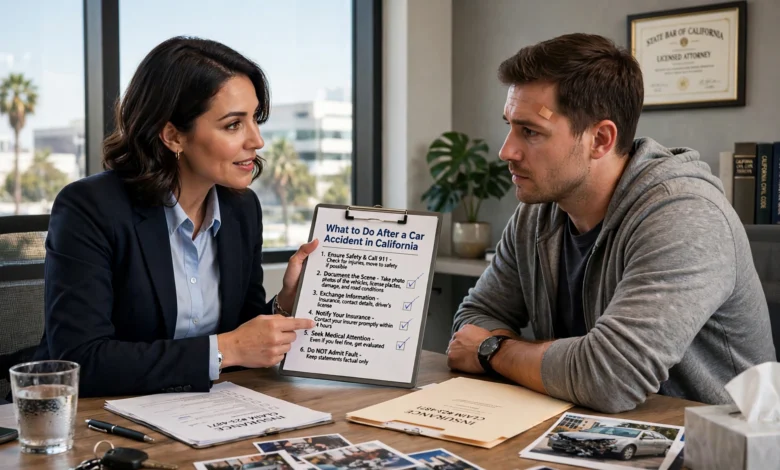
Knowing what to do after a car accident in California is one of those things nobody thinks about until the moment it matters. And in that moment, your hands are shaking, your car is blocking traffic, and someone is either apologizing or yelling at you. Clear thinking is hard to come by.
Most people get the obvious parts right. They check for injuries, call 911 if needed, and swap insurance details. Where things go wrong is in the quieter legal steps that come after. A form the DMV expects within 10 days. A phone call from the other driver’s insurance adjuster that feels friendly but is really an information-gathering session. A doctor’s visit that gets skipped because “it’s just a little stiffness.” A deadline that passes before anyone realizes it existed.
California has its own rules, and they don’t always match what people assume from other states or from TV. The state uses a pure comparative fault system, requires certain reports even when police never show up, and gives you less time than you might think to file a claim against a city or county.
This guide walks through the full picture, from the first few minutes at the scene to the months that follow. The goal is simple: help you protect your health, your money, and your right to fair compensation without making the mistakes that quietly weaken so many claims.
Step 1: Stop, Stay, and Secure the Scene
The first legal duty after any collision in California is to stop. This sounds obvious, but it carries real legal weight.
Why Leaving the Scene Is a Serious Problem
Under California Vehicle Code sections 20001 and 20002, drivers involved in a collision must stop at the scene. If someone is injured and you leave, it can be charged as a felony hit-and-run. Even if only property is damaged, leaving without exchanging information is a misdemeanor. This applies even when you believe the accident wasn’t your fault.
If you hit a parked car or damage property and the owner isn’t around, the law requires you to leave a note with your name and address and to report the incident to local police or the CHP.
Make the Scene Safer
Once you’ve stopped, focus on preventing a second accident:
- Turn on your hazard lights.
- If the cars can be moved and no one is seriously hurt, move them to the shoulder or a nearby safe spot.
- If anyone is injured or the cars can’t be moved, stay put and call 911.
- Use flares or warning triangles if you have them, especially at night or on a freeway.
Your safety comes before any paperwork. A claim can always be built later. A second collision can’t be undone.


Step 2: Call 911 and Get a Police Report When You Can
Many people skip calling the police after a minor fender bender. Sometimes that’s fine, but often it’s a mistake that shows up months later.
When California Law Requires a Report
If anyone is injured or killed, California Vehicle Code section 20008 requires the driver to file a written report with the California Highway Patrol or local police within 24 hours, unless an officer already investigated and wrote one. Accidents on freeways and unincorporated roads usually fall under CHP. City streets usually go to the local police department.
Why a Police Report Helps Even in Small Accidents
A police report isn’t proof of who was at fault, but it carries a lot of weight with insurers. It records:
- The date, time, and exact location
- Names, contact details, and insurance information for everyone involved
- Witness names and statements
- The officer’s observations about road conditions, damage, and sometimes fault
- Any citations issued
Without a report, a simple rear-end collision can turn into a “he said, she said” argument. The other driver who apologized at the scene might tell their insurer a completely different story a week later. A report locks down the facts while they’re fresh.
Once it’s filed, request a copy. You’ll usually need the report number, and there may be a small fee.
Step 3: Exchange Information the Right Way
California Vehicle Code section 20003 requires drivers to share specific information after an accident. At minimum, you should get and give:
- Full name and address
- Driver’s license number
- Vehicle registration and license plate number
- Insurance company name and policy number
- Vehicle make, model, and color
If the driver doesn’t own the car, get the owner’s name and contact information too. It’s common in California for people to drive a friend’s, relative’s, or employer’s vehicle, and the owner’s policy may be the one that pays.
What Not to Say
Be polite, but keep the conversation factual. Avoid phrases like “I’m so sorry, I didn’t see you” or “I think I was going a little fast.” Even casual comments can be used later to assign fault. You don’t have to be cold. Just stick to exchanging information and checking whether everyone is okay.
Take a Photo of Everything
The easiest way to avoid mistakes is to photograph the other driver’s license, insurance card, and license plate rather than writing them down. It’s faster and there’s no risk of a typo.
Step 4: Document the Scene Like You’ll Need to Prove It
Evidence disappears quickly. Skid marks fade, cars get repaired, and witnesses forget. The photos and notes you take in the first 30 minutes can shape your entire car accident claim in California.
What to Photograph
- Damage to every vehicle, from multiple angles and distances
- The positions of the cars before they’re moved (if it’s safe)
- Traffic signs, signals, and lane markings
- Road conditions, including potholes, debris, or construction
- Weather and lighting
- Any visible injuries
- Skid marks and broken glass
Talk to Witnesses
Independent witnesses are some of the most persuasive evidence you can have, because they have no stake in the outcome. Get their names and phone numbers. If they’re willing, record a short video of them describing what they saw.
Look for Cameras
Check for dashcams, doorbell cameras, gas station cameras, and traffic cameras nearby. Many businesses overwrite footage within a few days to a couple of weeks, so ask quickly or have a lawyer send a preservation request.
Write Your Own Notes
As soon as you’re able, write down everything you remember: where you were going, how fast you were driving, what you saw, and what the other driver said. Memory fades faster than people expect, and a detailed account written the same day is far more reliable than one pieced together a month later.
Step 5: Get Medical Care Even If You Feel Fine
This is one of the most costly mistakes people make, and it’s easy to understand why it happens. Adrenaline masks pain. You feel shaken but okay, so you go home. Two days later your neck won’t turn and your head is pounding.
Why Delayed Symptoms Are Common
Injuries like whiplash, concussions, soft tissue damage, and even internal bleeding often don’t show symptoms right away. A concussion might first appear as trouble concentrating or sleeping. A back injury might only become obvious when you wake up the next morning.
How Skipping the Doctor Hurts Your Claim
Insurance companies look closely at gaps in treatment. If you wait two weeks to see a doctor, the adjuster will argue your injury came from something else or wasn’t serious. Prompt medical records connect your injuries directly to the accident.
Here’s what to do:
- See a doctor, urgent care, or ER within 24 to 72 hours, even for mild symptoms.
- Describe every symptom, no matter how small.
- Follow the treatment plan and go to follow-up appointments.
- Keep copies of bills, prescriptions, and receipts, including mileage to appointments.
Your health matters most here. The legal benefit is a bonus, but it’s a real one.
Step 6: File the SR-1 Form With the DMV Within 10 Days
This is the step most people have never heard of, and it’s the one that catches them off guard.
What the SR-1 Form Is
The SR-1 is the Report of Traffic Accident Occurring in California. You must file it with the DMV within 10 days if the accident involved:
- Any injury, even a minor one
- Any death
- More than $1,000 in property damage to anyone’s property
This requirement comes from California Vehicle Code section 16000, and it applies whether or not you were at fault and whether or not police filed their own report. The police report does not replace the SR-1. They are separate obligations.
What Happens If You Don’t File
If you don’t submit the SR-1 on time, the DMV can suspend your driver’s license. If you were uninsured at the time of the accident, you can face a suspension of up to four years.
Given how expensive car repairs have become, almost any collision beyond a light tap can pass the $1,000 threshold. When in doubt, file it. Your insurance agent or attorney may offer to help, but the legal responsibility is still yours.
Step 7: Understand California Insurance Rules Before You Call Anyone
Before talking to any insurer, it helps to understand how the system works in California.
California Is an At-Fault State
The driver who caused the accident is responsible for the damages, and their liability insurance usually pays. You can file with the other driver’s insurer, your own insurer, or both depending on your coverage.
Minimum Insurance Requirements in California
As of January 1, 2025, California raised its minimum liability limits for the first time in decades. Drivers now need at least:
- $30,000 for injury or death of one person
- $60,000 for injury or death of more than one person
- $15,000 for property damage
Those numbers still don’t go far with modern medical and repair costs. That’s why your own coverage matters.
Why Uninsured Motorist Coverage Matters
A significant share of California drivers are uninsured or underinsured. If one of them hits you, your uninsured motorist coverage (UM/UIM) can pay for your injuries. California insurers must offer it, and you can only decline it in writing. Check your policy now, before you ever need it.
Other coverages worth checking include medical payments coverage (MedPay), collision coverage, and rental reimbursement.
Prop 213: A Rule Uninsured Drivers Need to Know
Under Proposition 213 (California Civil Code section 3333.4), if you were driving without insurance at the time of the accident, you generally can’t recover non-economic damages like pain and suffering, even if the other driver was completely at fault. You can still recover medical bills and lost wages. The same limit applies to drivers convicted of DUI in connection with the accident.
Step 8: Be Careful With the Insurance Adjuster
Within a day or two, you’ll probably get a call from the other driver’s insurance adjuster. They’ll sound helpful. They may be genuinely nice people. But their job is to limit what their company pays.
You Don’t Have to Give a Recorded Statement
The other driver’s insurer will likely ask for a recorded statement. You are not legally required to give one to them. These recordings are often used to find inconsistencies, get you to downplay your injuries, or lock you into a version of events before you have all the facts.
Your own policy probably does require you to cooperate with your own insurer, so notify them promptly. But with the other side, it’s reasonable to say, “I’m not ready to give a recorded statement right now,” and leave it there.
Watch Out for Early Settlement Offers
A quick offer can feel like relief, especially when bills are piling up. But once you sign a release, the claim is usually closed for good. If your injury turns out to need surgery or months of therapy, you can’t go back for more.
Before accepting any offer, make sure:
- You’ve finished treatment or your doctor has a clear prognosis.
- You know the total of your medical bills, lost wages, and future costs.
- The offer includes property damage, or that’s handled separately.
- You understand every word of the release.
Know Your Rights Under California Insurance Rules
California’s Fair Claims Settlement Practices Regulations require insurers to acknowledge a claim within 15 days and generally accept or deny it within 40 days after receiving proof of the claim. If an insurer is stalling, ignoring you, or acting unfairly, you can file a complaint with the California Department of Insurance.
Step 9: Know Your Deadlines and How Fault Is Shared
This is where a lot of valid claims quietly die. Not because the case was weak, but because time ran out.
California Statute of Limitations for Car Accidents
The general deadlines are:
| Type of Claim | Deadline |
|---|---|
| Personal injury | 2 years from the accident date |
| Property damage only | 3 years from the accident date |
| Wrongful death | 2 years from the date of death |
| Claim against a government agency | 6 months to file an administrative claim |
The two-year injury deadline comes from California Code of Civil Procedure section 335.1. For injured minors, the clock usually doesn’t start until they turn 18, though there are exceptions.
The Six-Month Trap
The government deadline is the one that catches people. If your accident involved a city bus, a county vehicle, a state employee, or a dangerous road condition like a missing stop sign or a massive pothole, you usually must file a formal claim with that agency within six months under the Government Claims Act. Miss it, and your right to sue may be gone. Two years sounds like plenty of time. Six months often isn’t.
Comparative Negligence in California
California follows a pure comparative fault rule. That means you can recover damages even if you were partly at fault. Your compensation is simply reduced by your share of the blame.
For example, if your damages total $100,000 and you’re found 25% at fault for speeding slightly, you can still recover $75,000. Even if you were 80% at fault, you could recover 20%.
This is exactly why insurers work so hard to shift blame onto you. Every percentage point they can assign to you saves them money. It’s also why the evidence from Steps 2 through 4 matters so much.
Other Mistakes That Weaken a Car Accident Claim
Beyond the nine main steps, a few smaller habits can cause real damage to a personal injury claim.
Posting on Social Media
Insurance companies check social media. A photo of you smiling at a birthday dinner or carrying groceries can be spun as proof you aren’t really hurt. The safest move is to stay off social media until your claim is resolved, or at least avoid posting anything about the accident, your injuries, or your activities.
Repairing the Car Too Soon
Get photos and an estimate before any repairs, and let the insurer inspect the car if they ask. Once the damage is fixed, it’s hard to prove how severe the impact was.
Not Tracking Your Losses
Keep a simple folder or spreadsheet with:
- Medical bills and receipts
- Pay stubs showing missed work
- Rental car and transportation costs
- A short daily journal of pain levels and activities you couldn’t do
That journal sounds minor, but it’s often the best evidence of pain and suffering, which is hard to measure any other way.
Forgetting About Medical Liens
If your health insurance, Medi-Cal, or Medicare paid for your treatment, they may have a right to be repaid from your settlement. Ignoring these liens can create problems when the money comes in. A lawyer can often negotiate them down.
Special Situations Worth Knowing About
Not every accident follows the standard pattern. A few scenarios have extra layers.
Rideshare Accidents
If you’re hurt in an Uber or Lyft, or hit by one, coverage depends on what the driver was doing at the time. When a passenger is in the car or the driver is on the way to pick one up, the rideshare company’s commercial policy typically provides up to $1 million in liability coverage. When the app is off, only the driver’s personal policy applies.
Hit-and-Run Accidents
If the other driver flees, report it to police right away and gather any witness details or camera footage you can. Your uninsured motorist coverage usually applies, but many policies require prompt reporting to police, often within 24 hours.
Accidents With Commercial Vehicles
Crashes involving delivery vans, big rigs, or company cars can involve employers, trucking companies, and multiple insurance policies. These cases get complicated quickly and evidence like driver logs and black box data needs to be preserved early.
When to Talk to a Car Accident Lawyer in California
Not every accident needs an attorney. If it was a minor collision, no one was hurt, and the insurer is paying fairly for repairs, you can probably handle it yourself.
It’s worth talking to a car accident lawyer in California if:
- You or a passenger were injured, especially seriously
- Fault is disputed
- The other driver was uninsured or underinsured
- A government vehicle or road defect was involved
- The insurer is delaying, denying, or lowballing your claim
- You’re not sure whether a settlement offer is fair
Most personal injury lawyers work on contingency, meaning they get paid a percentage of the recovery (commonly around 33% to 40%) and nothing if you don’t win. Initial consultations are usually free, so there’s little downside to getting an opinion. A good lawyer can also handle the adjuster calls, collect evidence, calculate future damages, and keep track of every deadline so you can focus on recovering.
Quick Checklist: What to Do After a Car Accident in California
For easy reference, here’s the full process in order:
- Stop and stay at the scene.
- Check for injuries and call 911 if needed.
- Move to safety if possible.
- Report to police (required within 24 hours if anyone is hurt and no officer took a report).
- Exchange names, license, registration, and insurance information.
- Photograph the scene, vehicles, injuries, and documents.
- Get witness contact details.
- See a doctor within 24 to 72 hours.
- Notify your own insurance company.
- File the SR-1 form with the DMV within 10 days if required.
- Avoid giving a recorded statement to the other insurer.
- Don’t accept a quick settlement without knowing your full damages.
- Track all expenses and keep a pain journal.
- Note your deadlines: 6 months for government claims, 2 years for injuries, 3 years for property damage.
- Talk to a lawyer if injuries, disputes, or delays come up.
Conclusion
Knowing what to do after a car accident in California comes down to protecting three things: your safety, your evidence, and your legal rights. The first hour is about stopping, staying safe, calling for help, and documenting everything you can. The following days are about getting medical care, notifying your insurer, and filing the SR-1 form with the DMV if the accident involved any injury or more than $1,000 in damage.
The weeks and months after that are about handling the insurance adjuster carefully, avoiding early settlements, tracking your losses, and keeping a close eye on deadlines like the two-year California statute of limitations and the six-month window for government claims. Because California uses comparative negligence, every piece of evidence you gather can directly affect how much you recover, so the small steps really do add up. And if your case involves injuries, disputed fault, or an insurer that isn’t playing fair, a short consultation with a car accident lawyer in California can help you avoid mistakes that are hard to undo later.