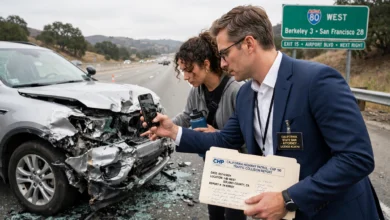
Car Accident Claims Queensland: 7 Proven Steps to Win Compensation
Car accident claims Queensland guide: how to claim through the Nominal Defendant when the other driver is uninsured, plus time limits and options.

Car accident claims Queensland drivers make are usually simple on paper. Someone runs into you, their insurer pays for your injuries, and life moves on. It gets messier when you find out the other driver’s registration lapsed six months ago, or they sped off before you could get a plate number. Suddenly there’s no insurer to call, and you’re left wondering whether you’ll be paying for someone else’s mistake.
The good news is that Queensland has a safety net for exactly this situation. If you’re injured by an uninsured driver, an unregistered vehicle, or a driver who can’t be identified, you can still claim compensation. The body that steps in is called the Nominal Defendant, and it works much like a regular CTP insurer.
The catch is that these claims run on tighter deadlines and come with extra hoops. Miss a notice period and you can lose your right to claim entirely. Property damage is a separate problem again, because CTP insurance only covers injuries, not your crumpled bumper.
This guide walks through how car accident claims in Queensland work when the other driver has no insurance. You’ll see how the CTP scheme fits together, who the Nominal Defendant is, which time limits matter, and what you can do about vehicle damage. There’s also a practical seven-step plan you can follow from the day of the crash onward.
How Car Accident Claims Queensland Drivers Make Actually Work
Before looking at uninsured drivers, it helps to know how the system normally runs.
Queensland uses a fault-based CTP scheme. That means an injury claim after a road accident generally goes to the CTP insurer of the vehicle that caused it, not to your own insurer. Every registered vehicle in Queensland carries Compulsory Third Party (CTP) insurance, and the premium is bundled into your registration fee. You don’t pick up a separate policy. It just comes with the rego.
A few things are worth knowing about how CTP works:
- It covers personal injury only. CTP pays for injuries to people. It does not pay to fix cars, fences, or other property.
- It protects other people from you. Your CTP covers your liability if you injure someone else. It doesn’t pay for your own injuries if the crash was your fault.
- It covers a wide range of road users. Drivers, passengers, motorcyclists, pillion passengers, cyclists, scooter riders, pedestrians and bystanders can all fall within the scheme.
- Fault matters. You need to show someone else’s negligent driving caused your injury, at least in part.
So in a typical crash, you’d lodge a claim with the at-fault driver’s CTP insurer (Allianz, QBE, Suncorp or RACQ in Queensland). But what happens when there’s no CTP insurer to claim against?
Who Is the Nominal Defendant in Queensland?
The Nominal Defendant is the answer to that question. It’s a government body that acts as the CTP insurer when there isn’t one available.


It’s a statutory body set up under the Motor Accident Insurance Act 1994 (Qld), and it’s funded by annual contributions collected through the registration of every vehicle in Queensland. In other words, every registered driver chips in a little so that people hurt by uninsured or unknown drivers aren’t left with nothing. The body has existed in Queensland since 1961 and has been administered by the Motor Accident Insurance Commission (MAIC) since October 1994.
The Nominal Defendant handles two main types of claims.
Unidentified Vehicles (Hit and Run Accidents)
This covers crashes where the driver who caused the accident simply can’t be found. Think of a car that clips you at a roundabout and keeps going, or a ute that knocks a cyclist off their bike and disappears before anyone gets a plate.
For these hit and run claims in Queensland, you’ll need to show you made a genuine effort to identify the vehicle. That means reporting to police, asking witnesses, and checking for CCTV or dashcam footage. The Nominal Defendant will look closely at whether you tried.
Unregistered and Uninsured Vehicles
This covers crashes where you know exactly who hit you, but their vehicle had no valid registration and therefore no CTP cover. For uninsured vehicles, the accident must have happened on a road or in a public place for the Nominal Defendant to be liable. A crash on a private farm track, for example, may fall outside the scheme.
There’s also a useful grace period. The law gives thirty days of CTP cover after registration expires, so a driver who lets their rego lapse is still insured for about a month afterward. If the crash happened inside that window, your claim goes to the driver’s original CTP insurer rather than the Nominal Defendant. When checking, make sure the registration search is run as at the date of the accident, not the day you do the search.
Does the Uninsured Driver Get Off Free?
Not at all. After the Nominal Defendant pays out damages to an injured person, it can pursue the owner and driver of the uninsured vehicle to recover that money. That isn’t your problem to manage, but it’s a fair answer to anyone who feels the system lets careless drivers walk away.
Time Limits for Nominal Defendant Claims in Queensland
This is the part that trips people up most often. Car accident claim time limits in Queensland are strict, and they’re even tighter when the Nominal Defendant is involved.
The Standard CTP Deadlines
For a regular claim against a CTP insurer, you must lodge a Notice of Accident Claim Form (NOAC) within 9 months of the accident, or within 1 month of first seeing a lawyer, whichever comes first. Separately, any court proceedings for personal injury damages generally need to start within 3 years.
The Shorter Nominal Defendant Deadline
For Nominal Defendant claims, the key number is three months. Where the at-fault vehicle is unidentified, you must notify the Nominal Defendant within three months of the accident.
For unregistered or uninsured vehicles, lawyers don’t all read the rules the same way. Some describe a 3 month deadline for unidentified vehicles and a 9 month deadline for unregistered ones, while others say the 3 month deadline applies to every Nominal Defendant claim, with an absolute outer limit of 9 months.
The practical takeaway is simple. Treat three months as your deadline, whatever kind of vehicle hit you. Lodging early costs you nothing, while lodging late can cost you your claim.
Here’s a quick summary:
| Claim type | Notice deadline | Court deadline |
|---|---|---|
| Standard CTP claim | 9 months (or 1 month after seeing a lawyer) | 3 years |
| Hit and run (unidentified vehicle) | 3 months | 3 years |
| Unregistered or uninsured vehicle | Aim for 3 months, 9 months outer limit | 3 years |
For people injured as children, the three-year court limit generally runs from their 18th birthday. Even so, notice deadlines still apply, so parents shouldn’t wait.
7 Proven Steps for Car Accident Claims Queensland When the Other Driver Is Uninsured
Here’s a practical plan to follow. Some of it happens at the scene, and some of it happens in the weeks afterward.
1. Get Medical Help and Keep Records
Your health comes first. See a doctor or go to hospital, even if you feel fine. Injuries like whiplash, concussion and back damage often show up a day or two later.
Beyond your wellbeing, medical records are the backbone of any CTP injury claim. Keep copies of:
- GP and hospital notes
- Referrals, scans and test results
- Receipts for medication, physio and travel to appointments
- Any time off work your doctor recommends
2. Report the Accident to Police
This step is required, not optional. Anyone planning to claim for personal injuries under the Act must notify police of the accident. For hit and run crashes, the police report is also key evidence that you tried to identify the vehicle.
Write down the report number and the name of the officer you spoke with.
3. Gather Every Detail You Can
If the other driver stayed at the scene, collect their:
- Full name, address and phone number
- Licence number
- Vehicle registration number, make, model and colour
If they drove off, note anything you remember: partial plates, the colour and type of vehicle, damage to it, the direction it went. Ask witnesses for their names and numbers. Look for nearby shops, homes or service stations with cameras, and ask quickly, because footage often gets overwritten within days.
4. Check Whether the Vehicle Was Registered
You can run a Queensland registration check online through the Department of Transport and Main Roads. This tells you whether the vehicle was registered and whether CTP was active. Remember the 30-day grace period mentioned earlier. A vehicle with rego that lapsed three weeks before the crash may still have had cover.
5. Lodge Your Notice of Accident Claim Form Early
Once you know there’s no CTP insurer, the Nominal Defendant becomes your point of contact. You’ll lodge a Notice of Accident Claim Form with it, along with supporting documents like medical certificates and the police report number.
Don’t sit on this. As covered above, three months is the safest target. Lodging early also means the Nominal Defendant can start funding rehabilitation sooner, which can make a real difference to your recovery.
6. Cooperate With the Investigation
Claims against the Nominal Defendant tend to be more involved than standard CTP claims because of the extra investigation required. Expect questions about how the crash happened and what you did to find the other driver. You may be asked to attend independent medical assessments.
Be honest and consistent. Differences between your police statement, your claim form and what you tell doctors can be used to question your account.
7. Get Legal Advice Before You Settle
You can run a claim yourself, but most people benefit from speaking with a personal injury lawyer in Queensland, especially for anything beyond minor injuries. Many work on a no win no fee basis, and first consultations are often free.
One thing to note: seeing a lawyer can trigger the one-month notice deadline for standard claims. That’s not a reason to avoid advice, but it is a reason to act on it promptly.
Property Damage When the Other Driver Has No Insurance
Here’s where many people get caught off guard. The Nominal Defendant and CTP scheme only deal with personal injury. If an uninsured driver wrecks your car, you’ll need to recover repair costs another way.
Check Your Own Car Insurance Policy
Start with your own insurer. What you can claim depends on your cover:
- Comprehensive insurance covers damage to your car regardless of who caused it. If you weren’t at fault and you can identify the other driver, many insurers will waive or refund your excess.
- Third party property insurance usually won’t cover your own car, but some policies include an uninsured motorist extension. This pays for damage to your vehicle up to a set cap when an uninsured, identified driver was at fault.
- Third party fire and theft policies often include a similar extension.
Read the fine print. These extensions usually require you to provide the other driver’s name, address and registration, and to show they were fully at fault.
Recover the Money Directly From the Driver
If you don’t have useful cover, you can go after the at-fault driver personally. The person who caused the accident is responsible for the property damage, and if they have no insurance and can’t pay upfront, you can try negotiating a payment arrangement with them.
Put any agreement in writing, including the total amount, instalment dates and what happens if payments are missed.
Take the Dispute to QCAT
If negotiation goes nowhere, the Queensland Civil and Administrative Tribunal (QCAT) can help. It hears disputes about property damage caused by a motor vehicle where the amount is $25,000 or less, excluding interest. The process is designed for people without lawyers, and fees are modest. You can read the eligibility rules and application steps on the QCAT property damage caused by a motor vehicle page.
For larger amounts, the Magistrates Court can handle claims up to $150,000.
A QCAT order is only as good as the other person’s ability to pay, though. If the driver has no assets or income, enforcement can be slow. Weigh that up before spending too much time and money chasing a debt.
What Compensation Can You Claim Through the Nominal Defendant?
A successful Nominal Defendant claim works much like a standard CTP compensation claim in Queensland. Depending on your injuries and circumstances, you may be able to recover:
- Medical and rehabilitation costs, including hospital bills, surgery, physiotherapy, psychology and medication, both past and future.
- Past loss of income for time you’ve already missed at work.
- Future economic loss if your injuries reduce your earning capacity going forward.
- General damages for pain, suffering and loss of enjoyment of life. In Queensland these are assessed using an injury scale under the Civil Liability Regulation, so amounts depend on how the injury is rated.
- Care and assistance, including help from family members, if you meet the legal thresholds.
- Travel expenses for getting to and from medical appointments.
- Superannuation losses linked to lost income.
Your payout can be reduced if you were partly to blame. This is called contributory negligence. For example, not wearing a seatbelt or riding with a driver you knew was drunk can cut the amount you receive.
What About Very Serious Injuries?
If you suffer a catastrophic injury, such as a spinal cord injury, serious brain injury, multiple amputations, severe burns or permanent blindness, the National Injury Insurance Scheme Queensland (NIISQ) may cover your lifetime treatment, care and support. NIISQ works on a no-fault basis, so eligibility doesn’t depend on who caused the crash. You may still be able to bring a common law claim for other losses alongside it.
Common Mistakes That Can Sink Your Claim
People with valid car accident claims Queensland courts would support still lose out because of avoidable errors. Watch for these:
- Waiting too long. The three-month Nominal Defendant window passes quickly when you’re recovering from injuries.
- Not reporting to police. Without a report, your claim can fail before it starts.
- Taking cash at the scene. An uninsured driver offering a few hundred dollars to “keep it quiet” isn’t doing you a favour. Accepting doesn’t cancel your rights, but it can complicate things and rarely covers the real cost.
- Skipping the doctor. Gaps in treatment make it harder to link injuries to the crash.
- Posting about the accident online. Insurers and investigators check social media. A photo of you at the gym can undercut a back injury claim, even if the context is innocent.
- Assuming you can’t claim. Plenty of people think no insurance means no compensation. In Queensland, that simply isn’t true for injuries.
Should You Hire a Lawyer for an Uninsured Driver Claim?
For small, straightforward claims, some people manage on their own. For most Nominal Defendant claims though, advice is worth getting early, for a few reasons:
- The time limits are short and the rules around them are not always clear.
- Hit and run claims require proof of genuine efforts to identify the vehicle.
- Valuing future economic loss and general damages is technical.
- The Nominal Defendant has experienced claims staff and lawyers on its side.
Queensland’s legal framework is explained in plain language in the Queensland Law Handbook’s guide to personal injury claims after a motor vehicle accident, which is a good place to get your bearings before speaking with a lawyer.
When choosing a firm, ask about fees upfront. Find out whether they charge on a no win no fee basis, what percentage or fee cap applies, and who pays outlays like medical reports if the claim fails.
Frequently Asked Questions
Can I claim if I was a passenger in the uninsured car?
Often, yes. If the driver of the unregistered vehicle you were travelling in caused the crash, you may be able to claim against the Nominal Defendant. Your payout could be reduced if you knew the driver was affected by alcohol or drugs.
Can I claim if I was on a bicycle or on foot?
Yes. Cyclists and pedestrians hit by an uninsured or unidentified vehicle are covered by the scheme, as long as the other driver’s negligence caused the injury.
How long does a Nominal Defendant claim take?
It varies. CTP claims are often resolved within 12 to 18 months, and simple ones can wrap up in around six months. Nominal Defendant claims can take longer because of the extra investigation.
Will the Nominal Defendant pay for my car repairs?
No. The scheme covers personal injury only. For vehicle damage, look to your own policy, the at-fault driver directly, or QCAT.
What if I didn’t get the plate number?
You can still claim as an unidentified vehicle case. Report to police, collect witness details and look for footage as soon as possible, then lodge your notice within three months.
Conclusion
Being hit by a driver with no insurance feels unfair, but Queensland law doesn’t leave you to carry the cost of your injuries alone. Car accident claims Queensland residents make against uninsured, unregistered or unidentified vehicles go through the Nominal Defendant, which steps into the shoes of a CTP insurer and can pay for medical costs, lost income, care and pain and suffering.
The key is speed: get medical treatment, report the crash to police, gather every detail you can, and lodge your notice within three months to be safe. Remember that CTP only covers injuries, so vehicle damage needs a separate approach through your own insurance, a direct arrangement with the driver, or QCAT for disputes up to $25,000. With the right steps and timely legal advice, you can protect your rights and give yourself the best chance of fair compensation.