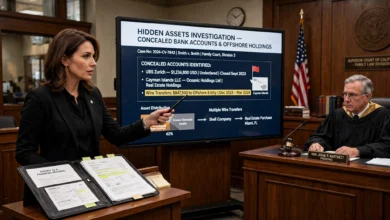
ASIC Investigations in Brisbane: What Financial Advisors Face When Charged
ASIC investigations in Brisbane can end a financial advisor's career fast. Here's what to expect and how to protect yourself when charged.
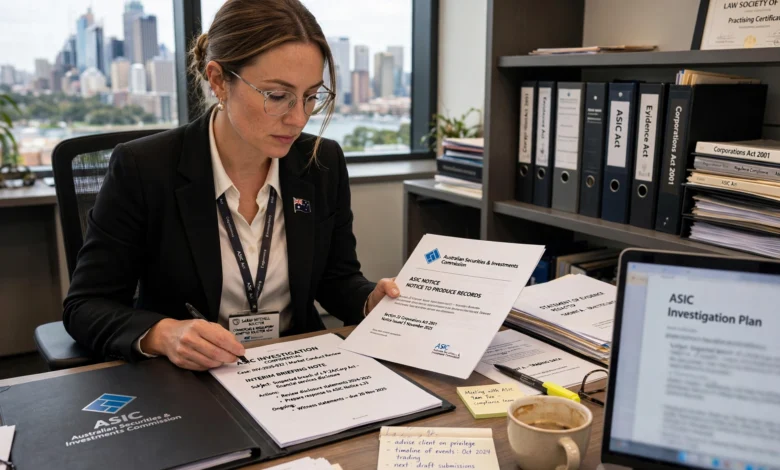
An ASIC investigation rarely announces itself with a knock on the door. More often it starts quietly, with a notice to produce documents, a phone call from a compliance officer, or a letter that mentions a client complaint you’d almost forgotten about. By the time most Brisbane financial advisors realise they’re actually under scrutiny, the regulator has usually already been looking at their files for weeks.
That gap between “something feels off” and “I’ve just been served a formal notice” is where a lot of advisors lose ground they didn’t need to lose. The Australian Securities and Investments Commission doesn’t move fast, but it moves methodically, and it has powers that most people outside the legal profession don’t fully appreciate until they’re on the receiving end of them.
This article walks through what actually happens when ASIC opens a file on a financial advisor based in Brisbane or elsewhere in Queensland: how investigations typically start, what compulsory examinations look like, the range of outcomes from a warning through to criminal prosecution, and what you can realistically do to protect your licence, your reputation, and your livelihood if you find yourself in this position. It’s not written to scare anyone. It’s written because advisors who understand the process tend to make better decisions than advisors who are improvising under pressure.
What Triggers an ASIC Investigation in Brisbane
ASIC doesn’t investigate every complaint that lands on its desk. With thousands of reports of alleged misconduct arriving each year, the regulator has to prioritise, and it generally focuses on matters where there’s a pattern, a large number of affected clients, or conduct that points to a systemic problem rather than a one-off mistake.
For Brisbane financial advisors, the most common triggers include:
- Client complaints, either lodged directly with ASIC or referred on after a dispute with the Australian Financial Complaints Authority (AFCA)
- Breach reports from your own Australian Financial Services (AFS) licensee, who is legally obligated to report significant breaches
- Whistleblower reports from colleagues, former staff, or industry insiders
- Referrals from auditors or liquidators, particularly where a managed investment scheme has collapsed
- Data matching and surveillance, where ASIC identifies unusual patterns across a licensee’s client base (for example, a disproportionate number of clients being advised to switch into the same high-risk product)
- Media coverage, which increasingly prompts ASIC to open a file even before a formal complaint is received
A single client complaint about a fee dispute is unlikely to trigger a full investigation on its own. What tends to escalate matters is when a complaint reveals a broader pattern, such as several clients being steered into the same fund, or a Statement of Advice that appears to have been recycled or backdated. Queensland has had its share of large-scale advice failures referred to ASIC in recent years, including advisers linked to collapsed managed investment schemes, which has meant Brisbane-based practices have come under increased attention alongside advisers in Sydney and Melbourne.
The ASIC Investigation Process Explained
Once ASIC decides a matter warrants a formal look, the process generally follows a recognisable sequence, though the timeline can stretch from months to several years depending on complexity.
Notices to Produce Documents
The earliest formal step is usually a notice requiring the production of documents under the Australian Securities and Investments Commission Act. This can request client files, Statements of Advice, fee disclosure statements, file notes, emails, and internal compliance records. These notices are compulsory. There’s no discretion to simply ignore or partially comply with them, and failing to respond properly can itself become a separate offence.
It’s worth noting that receiving a notice like this doesn’t automatically mean you’re the target of the investigation. Sometimes ASIC is investigating a licensee, a product provider, or another adviser, and your files are relevant because you dealt with the same clients or the same fund. That said, it’s never safe to assume you’re just a bystander until you’ve had proper advice on what the notice actually says.


Compulsory Examinations Under Section 19
Where ASIC believes a person has information relevant to an investigation, it can compel them to attend a section 19 examination. These are private, recorded interviews conducted under oath, and they carry real legal weight. You can be legally represented at one, but the examiner controls the questioning, and you’re generally required to answer even where the answer might be self-incriminating (though what’s said can’t usually be used against you directly in later criminal proceedings, subject to specific legal protections around that use).
Section 19 examinations are commonly used when ASIC is looking into systemic issues within a licensee, rather than a single adviser’s isolated conduct. If you’re called in for one, that’s a strong signal the investigation has moved past the preliminary, document-gathering stage.
Interim Orders and Asset Preservation
In more serious matters, particularly those involving alleged dishonesty or the risk that client funds might be dissipated, ASIC can apply to the Federal Court for interim orders. These have included asset freezes, orders preventing a person from leaving the country, and orders requiring the surrender of a passport. This level of action is reserved for cases where ASIC believes there’s a genuine risk to client money or a flight risk, and it’s typically paired with an ongoing investigation rather than being the end point itself.
Common Reasons Brisbane Financial Advisors Face ASIC Charges
The conduct that leads to ASIC enforcement action against advisers tends to fall into a fairly consistent set of categories:
- Best interests duty breaches – recommending products or strategies that weren’t appropriate for the client’s actual circumstances, risk tolerance, or objectives
- Conflicted remuneration and undisclosed fees – receiving commissions or benefits that should have been disclosed, or charging fees for advice that was never actually provided
- Misleading or false statements in a Statement of Advice – including inflated performance figures or misrepresenting how long a product has existed
- Unlicensed or unauthorised advice – providing financial services outside the scope of what your AFS licence or authorisation permits
- Dishonest conduct with client funds – including fabricated withdrawal forms, unauthorised fee deductions, or misappropriation of superannuation
- Failure to maintain proper records – inadequate file notes, missing client authorisations, or documents that appear to have been created after the fact
- Recommending high-risk or poorly performing managed investment schemes without adequate due diligence, particularly where a scheme later collapses and affects large numbers of retirees
Some of the more serious enforcement actions over the past couple of years have centred on advisers who recommended clients switch significant portions of their superannuation into specific high-risk investment options, sometimes marketed through aggressive lead-generation campaigns. Where ASIC found the underlying advice wasn’t appropriate and the supporting documentation was misleading, the outcomes have ranged from lengthy banning orders to referrals for criminal prosecution.
Potential Outcomes: Banning Orders, Civil Penalties, and Criminal Charges
Not every ASIC investigation ends in the same place. The regulator has a genuinely broad toolkit, and the outcome for any individual advisor depends on the seriousness of the conduct, whether it was isolated or systemic, and the person’s overall compliance history.
Banning Orders
A banning order prevents an individual from providing financial services, being an officer of a financial services business, or controlling such a business, for a set period or permanently. ASIC can issue these administratively, sometimes immediately in urgent cases, though the person affected usually has the right to a hearing beforehand and can apply to the Administrative Review Tribunal to challenge the decision afterward. Bans of five, six, or even ten years aren’t unusual for serious best interests breaches, and permanent bans are reserved for the most serious cases, including dishonesty findings or convictions.
Importantly, ASIC has made clear it can still issue a ban even where an adviser has since completed remedial training or taken steps to fix past problems. The regulator looks closely at whether the person’s response to a compliance issue was proactive or reactive, and a late fix doesn’t necessarily undo the consequences of the original conduct.
Civil Penalty Proceedings
Where ASIC believes there’s been a breach that doesn’t rise to the level of criminal dishonesty but still warrants a significant financial penalty, it can commence civil penalty proceedings in the Federal Court. These can result in substantial monetary penalties against both individuals and the licensees who employed them, and are often run in parallel with actions against a collapsed fund’s other gatekeepers, including platforms, research houses, and trustees.
Criminal Prosecution
The most serious matters, generally involving dishonest conduct, fraud, or operating without a required licence, can be referred to the Commonwealth Director of Public Prosecutions. Providing financial services without an AFS licence, for example, is a criminal offence under the Corporations Act, carrying penalties that can include imprisonment as well as substantial fines. Where dishonesty is alleged, such as fabricating client authorisations or misappropriating fees, criminal charges have run alongside civil banning action rather than instead of it.
Your Rights During an ASIC Investigation
Being investigated doesn’t strip you of your legal protections, though it’s easy to feel that way when compulsory notices start arriving. A few points are worth keeping in mind:
- You’re entitled to legal representation at a section 19 examination, and you should use it. The examiner won’t slow down or simplify the process because you’re unrepresented.
- Notices have limits. A notice to produce documents must relate to the investigation ASIC has identified. If a notice seems overly broad or unclear, that’s something a lawyer can raise before you comply, not after.
- You generally have the right to a hearing before certain administrative actions, like a banning order, are finalised, except in limited urgent circumstances.
- Decisions can be reviewed. Many banning orders and other administrative decisions can be challenged at the Administrative Review Tribunal, and a number of advisors banned in recent enforcement sweeps have exercised exactly that right.
- Silence has consequences in some contexts but not others. In a compulsory examination you’re generally required to answer, but in an ordinary voluntary interview you’re not obligated to participate at all without advice.
For a clearer picture of how ASIC frames its own enforcement powers and the range of actions available to it, ASIC’s own guidance on <a href=”https://www.asic.gov.au/about-asic/asic-investigations-and-enforcement/asic-s-approach-to-enforcement/” target=”_blank” rel=”noopener”>its approach to enforcement</a> is a useful starting point, though it’s written from the regulator’s perspective rather than the advisor’s.
Steps to Take If You’re Under ASIC Investigation in Brisbane
If you’ve received a notice, been asked to attend an examination, or simply heard through your licensee that ASIC is asking questions about your files, the practical steps tend to look like this:
- Get legal advice before you respond to anything. This matters even if the notice seems routine. What looks like a standard document request can be the first step toward something much larger.
- Don’t alter, delete, or “tidy up” files once you know or suspect an investigation is underway. Doing so can turn a manageable compliance issue into an obstruction allegation.
- Keep your own copy of everything you provide to ASIC, along with a record of when and how it was sent.
- Loop in your professional indemnity insurer early. Many policies require prompt notification of circumstances that could lead to a claim, and delaying can affect your cover.
- Be careful what you say to colleagues, clients, or on social media about the investigation while it’s ongoing. Comments made informally have a way of resurfacing.
- Understand the difference between your licensee’s interests and your own. Your AFS licensee may be cooperating with ASIC in ways that don’t necessarily protect your individual position, especially if the licensee is trying to distance itself from your conduct.
- Prepare properly for any compulsory examination, including reviewing your own files in detail beforehand with your lawyer, rather than trying to reconstruct events from memory in the room.
Why Local Legal Representation Matters
There’s a genuine advantage to working with lawyers who are familiar with how ASIC operates in Queensland specifically, including the Federal Court registry in Brisbane, local barristers who regularly appear in financial services matters, and the practical rhythms of how ASIC’s Queensland-based investigators tend to run their files. National financial services law firms handle this work too, but for advisors who want someone who can meet face to face, attend an examination in person, and respond quickly if urgent orders are sought, a Brisbane-based defence lawyer with direct experience in AFSL and financial services enforcement matters is often the more practical choice.
This is also where the earliest decisions matter most. How you respond to that very first notice, whether you seek advice before or after your initial call with your licensee, and how carefully you document your own version of events, can shape the entire trajectory of the matter. Advisors who bring in experienced representation early tend to have more options later, simply because fewer decisions have already been made for them by default.
The Role of AFCA and Client Complaints
It’s worth understanding that ASIC’s investigation and a client’s individual complaint often run on separate tracks. A client who believes they received poor advice can lodge a complaint with the Australian Financial Complaints Authority, which handles individual disputes and can order compensation, entirely separately from whatever ASIC decides to do about your licence or conduct more broadly. AFCA’s process is designed to be accessible and free for consumers, which means even a single dissatisfied client can generate a formal dispute that runs in parallel with any regulatory scrutiny you’re facing.
You can find more detail on how that complaints process works directly through <a href=”https://www.afca.org.au/” target=”_blank” rel=”noopener”>AFCA’s own website</a>, which is useful context if you’re trying to understand the full picture of what’s happening around you rather than just the ASIC side of it.
It’s entirely possible to resolve an AFCA complaint in a way that satisfies the client while still facing an unrelated ASIC investigation into the broader pattern of advice you provided. The two processes don’t cancel each other out, and settling with a client doesn’t make a regulatory investigation disappear.
What This Means for Your Practice Going Forward
Even where an investigation doesn’t result in formal action, simply going through the process tends to change how advisors operate afterward. Many come out the other side with tighter file notes, more conservative advice practices, and a much sharper sense of what their licensee actually expects of them in terms of documentation and disclosure. That’s not a bad outcome, even if getting there was stressful.
If the investigation does result in action, whether that’s a warning, a banning order, or something more serious, the earlier you engage genuinely experienced legal representation, the more realistic your options remain, including review rights, negotiated outcomes where available, and simply making sure the process is fair from the outset.
Conclusion
An ASIC investigation into a Brisbane financial advisor typically begins quietly with a document request or a client complaint, then escalates through compulsory examinations and, in serious cases, interim court orders, before concluding in outcomes that range from a warning through to banning orders, civil penalties, or criminal prosecution. The seriousness of the outcome usually tracks the seriousness and pattern of the underlying conduct, and advisors retain real legal rights throughout the process, including the right to representation, the right to a hearing in most cases, and the right to seek review of adverse decisions.
What separates advisors who come through this process with their careers intact from those who don’t is rarely luck. It’s usually how early they sought proper advice, how carefully they handled their own documentation, and whether they treated the first notice they received as the serious matter it actually was.