Child Support Termination in Florida: 7 Critical Ways It Legally Ends
Find out exactly when child support terminates in Florida, the legal exceptions that extend it, and the steps parents must take to stop payments.
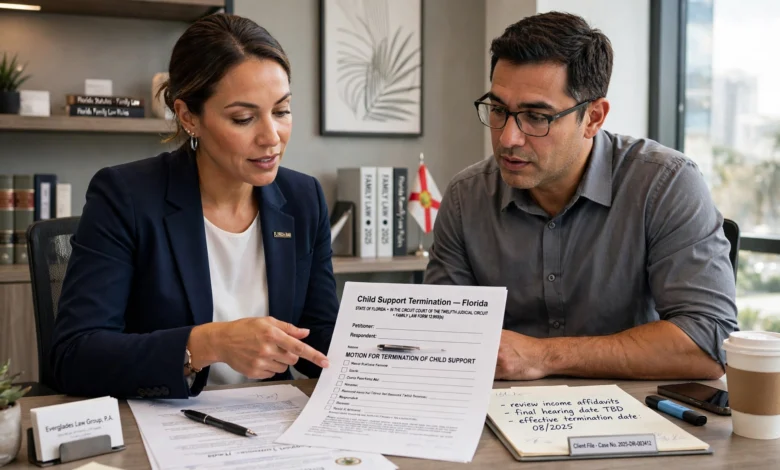
Child support termination in Florida isn’t as simple as circling a birthday on the calendar. Plenty of parents assume payments stop the moment a child turns 18, and then they get a wage garnishment notice a year later because nobody told them about the high school exception. Others stop paying on their own, without a court order, and end up owing thousands in arrears they didn’t realize were still accruing.
Florida law sets a general rule for when child support ends, but it also carves out several exceptions that can push that date further out, sometimes by months, sometimes indefinitely. Whether you’re the parent making payments or the parent receiving them, knowing exactly how child support termination in Florida works can save you from a legal and financial headache down the road.
This guide walks through the general termination rule, the statutory exceptions, the other events that can end an obligation early, and the actual paperwork you need to file to make it official. If you’re trying to figure out when your payments should stop, or you want to make sure you don’t get blindsided by a support order that outlives your expectations, this is what you need to know.
The General Rule: When Does Child Support End in Florida?
Under Florida Statute 743.07, a child support obligation ends when the child turns 18. That’s the statutory “age of majority” in Florida, meaning the child is legally recognized as an adult once that birthday hits. In most cases, this is the default rule courts apply when writing a support order.
Since 2010, Florida law has required every child support judgment to spell out:
- The exact date support will terminate or reduce for each child
- A payment schedule showing what’s owed as each child ages out
- Whether any of the statutory exceptions apply
If your order was issued before 2010, it may not include this language, and the analysis can look a little different. Older orders sometimes list a fixed end date instead of relying on the statute, so it’s worth pulling your original judgment to see exactly what it says.
But here’s where people get tripped up: 18 is the default, not a guarantee. Florida law recognizes several situations where support continues past that birthday, and a court (or the parents themselves) has to formally account for them.
The Statutory Exceptions That Extend Support Past 18
Florida Statute 743.07(2) lays out the two most common legal exceptions to the age-18 cutoff. A third scenario comes from the parents’ own agreement.
Exception 1: The Child Is Still in High School
This is the exception that catches the most parents off guard. If a child turns 18 while still enrolled in high school and is performing in good faith with a reasonable expectation of graduating before turning 19, child support continues until graduation or the 19th birthday, whichever happens first.


The key phrase courts look at is “reasonable expectation of graduation.” That generally means:
- The child is actually attending classes and passing them
- There’s no indication the child has dropped out or fallen so far behind that graduation isn’t realistic
- The child hasn’t already earned a diploma or its equivalent
If a child is 18 and clearly not on track to graduate by 19, support can actually end right at the 18th birthday instead of stretching out further. It’s a provision meant to keep kids in school through graduation, not to extend support indefinitely.
Exception 2: Physical or Mental Incapacity
If a child has a mental or physical incapacity that began before they turned 18, and that incapacity leaves them unable to support themselves, Florida courts can order support to continue well past age 18, sometimes for life. This is often referred to as support for a “dependent adult.”
Courts look at several factors when deciding whether this exception applies, including:
- The severity and permanence of the condition
- Whether the condition began before the child reached majority
- The adult child’s income and ability to work
- Who is currently providing care and what resources are available
This exception doesn’t apply automatically. It has to be raised and established in court, ideally documented clearly in the original judgment or in a later modification, so there’s no dispute later about whether the child qualifies.
Exception 3: Agreement Between the Parents
Parents are also free to agree to extend support beyond what the statute requires, most commonly through college graduation or a specific age. This isn’t a legal requirement in Florida (unlike some states, Florida doesn’t mandate support through college), but if both parents put it in writing in a marital settlement agreement, courts will typically enforce it.
If you and your co-parent negotiated support through college as part of your divorce settlement, that agreement generally controls, even though the statute itself wouldn’t require it.
Other Ways Child Support Can End Before Age 18
Turning 18 isn’t the only trigger for child support termination in Florida. Several other events can end the obligation earlier, sometimes automatically and sometimes only after a parent goes back to court.
1. Marriage of the Minor Child
If a minor child gets married, Florida law treats that as removing “the disability of nonage,” which is a fancy way of saying the child is legally emancipated. Support obligations typically end at that point.
2. Military Enlistment
A minor who enters active military service is also generally considered emancipated under Florida law. Once a child joins the military, the parent’s support obligation typically ends because the child is no longer dependent on the parents for basic needs.
3. Court-Ordered Emancipation
A minor can petition the court directly for emancipation, essentially asking to be legally treated as an adult before turning 18. If granted, this cuts off the support obligation early. Courts don’t grant these petitions lightly. The minor generally has to show they’re financially self-sufficient and capable of managing their own affairs.
4. Death of the Child
This is obviously the hardest scenario to think about, but legally, a parent’s obligation to pay child support ends upon the child’s death. Any related issues, like refunding overpayments or resolving arrears, are typically handled separately.
5. Death of the Paying Parent
Depending on the terms of the order, the death of the paying parent may end future support obligations, though any arrears already owed usually become a claim against the parent’s estate. Some orders address this directly by requiring life insurance to secure ongoing support, so it’s worth checking your specific judgment.
Does Child Support Stop Automatically, or Do You Need a Court Order?
This is one of the most misunderstood parts of Florida family law: child support doesn’t always stop on its own.
If your original judgment already includes the required termination language (the date, the reduced schedule, and any exceptions that apply), and none of the exceptions kick in, support can end automatically without going back to court. The Florida Department of Revenue, which handles many support cases through its Child Support Program, can also stop enforcement automatically once the terms are clearly met.
But if your order predates 2010, doesn’t specify an end date, or there’s any ambiguity about whether an exception applies (like the high school extension), you may need to file a motion asking the court to confirm termination. Stopping payments on your own, without documentation that the obligation has legally ended, is risky. If the Department of Revenue or the other parent disagrees, you could end up with an enforcement action, wage garnishment, or even a contempt finding while the dispute gets sorted out.
How to Formally Terminate Child Support in Florida
If your case needs a court order to close it out, here’s the general process:
- Review your existing judgment or order. Check whether it already specifies a termination date and whether any statutory exceptions were addressed.
- Gather supporting documentation. This might include the child’s birth certificate, proof of high school enrollment or graduation, a marriage certificate, or military enlistment records, depending on which basis applies.
- File a motion or petition with the court that issued the original support order. If the Department of Revenue is involved in enforcement, you may need to notify them as well.
- Serve the other parent with notice of the motion, giving them the opportunity to respond if they believe support should continue.
- Attend the hearing, if one is scheduled, and present your documentation to the judge.
- Obtain a written order confirming the termination date, and make sure any income withholding order tied to your paycheck is officially cancelled.
- Follow up with your employer or the Department of Revenue to confirm wage withholding has actually stopped, since paperwork delays can sometimes cause an extra payment or two to go through even after termination.
Skipping the paperwork step is where a lot of parents get into trouble. Even if you’re confident the obligation has ended, having a court order on file protects you if the issue is ever questioned later.
What Happens to Child Support Arrears After Termination?
Termination of the ongoing obligation doesn’t erase past-due support. If you owe arrears, meaning unpaid support from before the termination date, that debt doesn’t disappear just because the child turned 18 or graduated. Florida law allows the receiving parent (or the Department of Revenue on their behalf) to keep pursuing collection of arrears even after current support ends.
This can include:
- Continued wage garnishment until the arrears balance is paid off
- Interception of tax refunds
- Liens on property
- Suspension of a driver’s license or professional license in some cases
If you’re behind on payments, terminating the ongoing obligation is a separate issue from resolving the debt itself. It’s worth addressing both, ideally with a payment plan or negotiated settlement, rather than letting collection actions continue indefinitely.
Common Mistakes Parents Make Around Child Support Termination
A few patterns show up again and again in Florida family law cases:
- Assuming support ends automatically at 18 without checking whether the high school exception applies.
- Stopping payments without a court order, then facing enforcement action months later.
- Failing to document a child’s disability early enough to preserve the incapacity exception.
- Not updating income withholding orders with an employer after a termination order is entered, leading to overpayment.
- Ignoring arrears, assuming that once current support ends, old debt is forgiven (it isn’t).
Avoiding these mistakes usually just comes down to reading your original order carefully and confirming termination in writing rather than assuming.
Frequently Asked Questions
Does child support automatically stop when a child turns 18 in Florida? Not always. It depends on whether your original order includes the required termination language and whether any exceptions, like the high school provision, apply.
Can child support continue after high school graduation? Generally no, unless the parents agreed to extend it (for example, through college) in a written settlement agreement, or the child qualifies under the incapacity exception.
What if my child support order was issued before 2010? Older orders may not include the automatic termination language required today, so you may need to petition the court for a formal termination order.
Can I stop paying if my child moves out or becomes self-supporting? Not without addressing it through the court or Department of Revenue. Voluntarily stopping payments without documentation can lead to enforcement action even if you believe the obligation should have ended.
Do I need a lawyer to terminate child support in Florida? It’s not legally required, but given how easily arrears and enforcement issues can pile up, many parents find it worthwhile to have a family law attorney confirm the termination date and file the paperwork correctly.
Conclusion
Child support termination in Florida hinges on more than just a child’s 18th birthday. Between the high school extension, the incapacity exception, parental agreements, and early-termination events like marriage or military enlistment, the actual end date can shift depending on your family’s circumstances. The safest approach is always to check your original order, confirm whether any exceptions apply, and get a formal termination order on file rather than assuming payments will simply stop on their own.
Doing that upfront protects both parents from enforcement disputes, unexpected arrears, and confusion down the line. For the exact statutory language, you can review Florida Statute 743.07 on the Florida Senate’s official site, and parents dealing with active enforcement can find case-specific guidance through the Florida Department of Revenue Child Support Program.