College Expenses and Child Support in Illinois: Who Pays Under the Law?
This article walks through how Illinois College expenses and child support law treats college costs, who typically ends up paying.
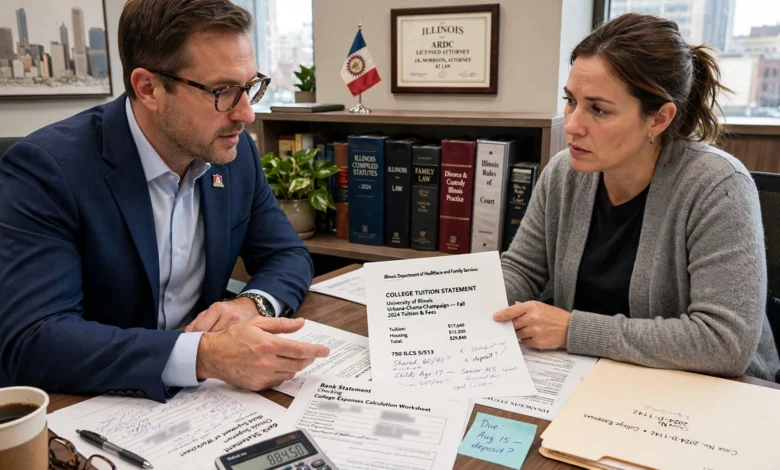
College expenses and child support in Illinois work differently than most people expect. Regular child support in Illinois typically ends when a child turns 18 or graduates high school, whichever comes later. But that’s not the end of the story for many families. Illinois is one of the relatively small number of states that lets a court order a parent to contribute to a child’s college costs even after that child is legally an adult.
If you’re a divorced or separated parent in Illinois, or you’re heading into a divorce with kids who will eventually go to college, this matters a lot. The rules around college expense contribution in Illinois come from a specific statute, and they’re not automatic. A parent doesn’t just get billed for tuition because their child enrolled somewhere. There’s a legal process, a set of factors judges weigh, and even a dollar cap on what can be ordered.
Whether you’re trying to plan ahead in a divorce settlement or you’re already facing a dispute over tuition bills, understanding these rules can save you a lot of stress and money down the road. As always, this is general information, not legal advice for your specific situation, so a family law attorney should review your case before you make decisions.
1. Illinois Law on College Expenses and Child Support Comes From One Specific Statute
Unlike regular child support, which is governed by the Illinois child support guidelines, college expenses and child support in Illinois are addressed separately under 750 ILCS 5/513, sometimes called the “non-minor child” support provision. This section of the Illinois Marriage and Dissolution of Marriage Act gives judges the authority to order either or both parents to contribute toward the educational expenses of a child who is no longer a minor.
This is a big deal because most states don’t require divorced parents to pay for college at all. Illinois does, but only in the context of a divorce, legal separation, or paternity case where the court already has jurisdiction over the family. If parents were never married and there was no court case establishing parentage, this provision generally can’t be used to force a college contribution order.
You can read the full text of the statute directly through the Illinois General Assembly’s official website, which lays out exactly what the law allows and what factors apply.
Why This Law Exists
The idea behind 750 ILCS 5/513 is that if a family had stayed together, the parents likely would have contributed to their child’s education anyway. Illinois courts have long taken the position that divorce shouldn’t automatically strip a child of that expectation. So the law lets a judge step in and essentially recreate that obligation, even though the “child” in question is a legal adult by the time college starts.
2. Is a Parent Actually Required to Pay for College in Illinois?
This is the question most parents want answered first, and the honest answer is: it depends. There’s no automatic requirement that a parent pay for college in Illinois. Child support in Illinois for college isn’t triggered just because a child turns 18 and enrolls somewhere. A parent (usually the one with primary custody, or the child themselves through a parent) has to formally request it, and a judge has to approve it based on the family’s specific circumstances.
That said, courts in Illinois grant these petitions fairly often, especially when:


- Both parents have reasonable financial means
- The child has a decent academic record
- The family’s standard of living during the marriage suggested college was expected
- The petition is filed on time (more on that below)
So while it’s not automatic, it’s also not rare. Many Illinois divorce decrees actually include language addressing college contribution upfront, so parents don’t have to go back to court later and fight about it.
3. Factors Courts Consider When Dividing College Costs
When a judge decides how to split college expenses and child support in Illinois, they don’t just split the bill 50/50. Section 513 lists specific factors the court must weigh, and understanding these can help you anticipate how a judge might rule in your case.
Financial Factors
- Each parent’s current and future financial resources — income, assets, earning potential
- The child’s own financial resources, including any income, scholarships, or savings
- The standard of living the child would have had if the marriage hadn’t ended
- Each parent’s ability to contribute without creating undue hardship
Academic and Personal Factors
- The child’s academic performance, including grades and standardized test scores
- The child’s chosen course of study and career goals
- Whether the child is attending full-time or part-time
- The child’s relationship with each parent (in some cases, a estranged relationship can affect a court’s decision)
Judges have a fair amount of discretion here, which is part of why these cases can be unpredictable. Two families with similar incomes might get very different rulings depending on the specific facts a judge finds persuasive.
4. What College Expenses Are Actually Covered
One of the most misunderstood parts of Illinois child support law around college is what counts as a covered expense. It’s not just tuition. Section 513 specifically allows courts to order contribution toward:
- Tuition and mandatory fees
- Housing costs, whether on-campus or off-campus, up to a reasonable amount
- Medical expenses, including insurance coverage for the child while in school
- Books and required course materials
- A vehicle, in some cases, if reasonable for getting to and from school
- Living expenses during the school year, and sometimes during breaks if the child isn’t working
Courts have also allowed contribution toward application fees, standardized testing costs (SAT/ACT prep and fees), and even a computer if it’s genuinely needed for coursework. What a court will not typically order is anything considered excessive or unrelated to actual educational need, like a car far above what’s reasonable or expenses tied to a lifestyle rather than schooling.
5. The University of Illinois Cap Limits What Parents Can Be Ordered to Pay
Here’s a detail that surprises a lot of parents: Illinois law caps the amount a court can order for college expense contribution. Specifically, the total amount ordered for a single academic year cannot exceed the cost of attendance at the University of Illinois at Urbana-Champaign, based on in-state tuition, fees, and standard housing and meal plan costs for that year.
This cap exists even if the child attends a much more expensive private school or an out-of-state university. So if your child chooses a school where tuition runs $60,000 a year but the University of Illinois in-state cost of attendance is around $35,000 (the exact figure changes annually), a court generally can’t order parents to cover more than that $35,000 benchmark, unless the parents agree otherwise in a settlement.
This cap matters a lot for financial planning. Families who want their child to have the option to attend a pricier school often need to either:
- Negotiate a higher contribution amount directly in a settlement agreement
- Plan for the child (or the custodial parent) to cover the difference through loans, scholarships, or savings
- Build 529 plans or other education savings that aren’t subject to this cap
You can find current University of Illinois cost of attendance figures through the school’s own official financial aid office, which publishes updated tuition and fee schedules each year that Illinois courts reference when applying this cap.
6. Age Limits and Deadlines to Request College Contribution
Timing is critical when it comes to college expenses and child support in Illinois. A parent can’t wait until a child is 26 years old and halfway through grad school to suddenly ask a court for contribution. The statute sets clear boundaries:
- A petition for college expense contribution generally must be filed before the child turns 23
- In certain circumstances, such as if the child was disabled or the case involves special hardship, the deadline can extend to age 25
- Once a child turns 23 (or the extended age limit passes) without a petition on file, the right to request contribution is typically lost
This is why many family law attorneys recommend addressing college expenses directly in the original divorce judgment, rather than waiting to see what happens years later. Waiting creates real risk. Life changes, memories fade, and financial situations shift, all of which make a later petition harder to win.
7. How to Petition for College Expense Contribution
If college contribution wasn’t already addressed in the divorce decree, a parent or the child can file a formal petition asking the court to allocate expenses. The general process looks like this:
Step-by-Step Overview
- File a petition with the same Illinois circuit court that handled the divorce or parentage case
- Provide financial disclosures, including income, assets, and expenses for both parents
- Submit the child’s academic records and any documentation of enrollment or acceptance
- Attend a hearing, where both sides can present evidence and arguments
- Receive a court order outlining each parent’s share of expenses, if any
Parents can also resolve this without a full court battle. Many families work out a college contribution agreement through mediation or direct negotiation, then submit it to the court for approval. This tends to be faster, cheaper, and less stressful than litigating the issue, especially if both parents are reasonably cooperative.
8. Can a College Expense Order Be Modified Later?
Life doesn’t stay the same for four (or five, or six) years of college, and Illinois courts recognize that. If a parent’s income drops significantly, if the child changes schools, or if new financial information comes to light, a college expense contribution order can potentially be modified.
Common reasons courts have adjusted these orders include:
- Job loss or significant income reduction for the paying parent
- The child losing full-time student status, dropping below required credit hours
- Poor academic performance, particularly if grades fall below what the original order required
- The child’s own income increasing, such as through a well-paying job or larger scholarship
It’s worth noting that just because a parent doesn’t want to pay anymore isn’t grounds for modification. Courts look for a genuine, substantial change in circumstances, not just buyer’s remorse.
9. What Happens If a Parent Refuses to Pay Court-Ordered College Expenses
Once a court issues an order under 750 ILCS 5/513, it’s enforceable just like any other child support in Illinois order. A parent who refuses to pay can face real consequences, including:
- Contempt of court proceedings
- Wage garnishment
- Driver’s license or professional license suspension in some enforcement cases
- Interest accruing on unpaid amounts
- Additional attorney’s fees owed to the other party for having to enforce the order
Courts don’t take non-payment lightly, especially once a child is relying on that contribution to actually attend school. If a parent is genuinely unable to pay due to a real financial hardship, the right move is to petition for a modification rather than simply stop paying, since unpaid court orders can snowball into serious legal and financial trouble.
10. Practical Tips for Parents Navigating College Expenses and Child Support
If you’re facing this issue, whether you’re the parent likely to pay or the parent hoping for contribution, a few practical steps can make the process smoother:
- Address college expenses in the original divorce agreement whenever possible, rather than leaving it for a future fight
- Keep detailed financial records, since courts want clear documentation of income, assets, and expenses
- Talk to the child directly about school costs, since a realistic budget helps avoid surprises later
- Consider a 529 plan early on, which can reduce the amount subject to court battles altogether
- Get everything in writing, even informal agreements, and have them reviewed by an attorney before relying on them
- Don’t wait until the last minute to file a petition if informal negotiations aren’t working, given the age 23 deadline
Working with a family law attorney who regularly handles these cases in your county can make a real difference, since local judges sometimes have their own tendencies when it comes to applying the statute’s factors.
Final Thoughts
College expenses and child support in Illinois occupy a unique space in family law. Unlike most states, Illinois gives courts the power to order parents to help pay for a child’s education well beyond the standard child support years, but that power comes with real limits, including a strict filing deadline, a cap tied to University of Illinois costs, and a list of factors judges must weigh before ordering anything.
Whether you’re negotiating a divorce settlement now or facing a college expense dispute years later, understanding how 750 ILCS 5/513 works, what it covers, and how to properly petition the court puts you in a much stronger position to protect both your finances and your child’s education. If you’re dealing with this issue directly, talking to an Illinois family law attorney early can help you avoid missed deadlines and unnecessary conflict down the road.