Hit-and-Run Motorcycle Accidents in Ohio: Using UMBI Coverage Effectively
Hit-and-run motorcycle accidents in Ohio leave riders with big bills. See how UMBI coverage works, what proof you need, and how to file a strong claim.
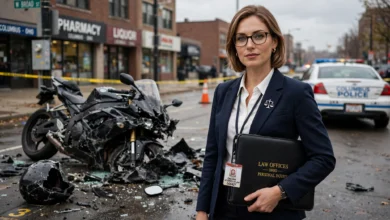
Hit-and-run motorcycle accidents in Ohio are some of the most frustrating crashes a rider can go through. One second you are cruising down I-71 or a quiet county road, and the next you are on the pavement while the car that caused it disappears around a bend. No plate number. No insurance card. No one to send the bill to.
That last part is what catches most riders off guard. Medical bills from a motorcycle crash add up fast, and riders usually take far worse injuries than people inside a car. When the at-fault driver is gone, the normal route of filing against their insurance simply does not exist.
This is where uninsured motorist bodily injury (UMBI) coverage comes in. Ohio law treats an unidentified hit-and-run driver as an uninsured motorist, so your own policy can step in and pay for injuries the other driver should have covered. There is a catch, though. Ohio requires specific proof before an insurer has to pay, and many riders learn too late that their policy has gaps or that they skipped a step that mattered.
In this guide, I’ll walk through how UMBI coverage in Ohio actually works for motorcyclists, what evidence you need, which deadlines apply, the policy traps to watch for, and seven practical ways to get the most out of your claim. If you ride in Ohio, this is worth knowing before you ever need it.
What UMBI Coverage Means for Hit-and-Run Motorcycle Accidents in Ohio
UMBI coverage is the part of your own insurance policy that pays for your injuries when the person who caused the crash has no insurance, or when nobody can figure out who they are. Think of it as buying protection against everyone else’s bad choices. For motorcyclists, that protection matters more than for almost anyone else on the road, because a rider has no steel frame, airbags, or seat belt between them and the impact.
UMBI, UIM, and UMPD: Knowing the Difference
Insurance companies love acronyms, and these three get mixed up all the time. Here is the short version:
- UMBI (uninsured motorist bodily injury): Pays for your injuries when the at-fault driver has no insurance or cannot be identified. This is the coverage that matters most after a hit-and-run.
- UIM (underinsured motorist): Pays when the at-fault driver has insurance, but not enough to cover your losses. In Ohio, UM and UIM are usually sold together on the same line of your policy.
- UMPD (uninsured motorist property damage): Pays for damage to your bike. Many policies limit or exclude this coverage when the other driver is never identified, so collision coverage is often what actually fixes your motorcycle after a hit-and-run.
When people talk about uninsured motorist coverage in Ohio for a hit-and-run, they almost always mean the bodily injury part. That is where the big money is: hospital stays, surgery, lost income, and pain and suffering.
How Ohio Law Treats a Hit-and-Run Driver as “Uninsured”
Ohio’s uninsured motorist statute is Ohio Revised Code section 3937.18. Under that law, an “uninsured motorist” includes a driver whose identity cannot be determined, as long as there is independent corroborative evidence that the unknown driver’s negligence caused your injury.
In plain terms, the runaway driver gets treated exactly like a driver with no insurance. You file the claim with your own insurer, and your insurer stands in the shoes of the driver who fled. Your insurance company then evaluates what you would have been entitled to recover if you could have sued that driver directly.
This also covers what lawyers call phantom vehicle cases. That is when a car cuts you off or swerves into your lane, you go down trying to avoid it, and the car never actually touches you. Ohio used to require physical contact for these claims. That rule is gone. Today, a no-contact crash can qualify, but the proof requirement becomes even more important because there is no dent, paint transfer, or debris to point to.
Ohio Does Not Make You Buy It
Here is the part that hurts a lot of riders. Ohio requires liability insurance with minimum limits of $25,000 per person and $50,000 per accident for bodily injury, but it does not require you to carry uninsured motorist coverage. Since reforms passed in 2001, Ohio insurers are not even required to offer it.
That means plenty of riders buy the cheapest motorcycle policy they can find and never realize they turned down the one coverage that would help them after a hit-and-run. If you are reading this before a crash, the single best move you can make is to pull up your policy declarations page and check whether UM/UIM is listed for your bike.
Proving Your Claim: Ohio’s Independent Corroborative Evidence Rule
If there is one phrase every Ohio rider should know, it is independent corroborative evidence. This is the legal hurdle that decides most hit-and-run UM claims, and it is where a lot of them fall apart.
What the Rule Actually Requires
Under R.C. 3937.18, your own testimony alone is not enough to prove that an unknown driver caused your crash. You can tell the adjuster exactly what happened, and you can be completely honest, but the law says your word needs backup from some other source.
The reason is simple. Insurers worry about riders who lose control on their own and then blame a mystery car to get paid. The corroboration rule is the legislature’s way of balancing that concern against the real harm done to honest victims. The rule replaced the old physical contact requirement after the Ohio Supreme Court’s 1996 decision in Girgis v. State Farm.
What the Ohio Supreme Court Said in Smith v. Erie
In 2016, the Ohio Supreme Court decided a case that made these claims a little easier for many riders and drivers. In Smith v. Erie Insurance Co., a driver crashed while avoiding an unidentified vehicle that never touched him. Erie denied the claim, arguing he had no independent proof.
The court ruled that, under the language of that policy, evidence derived from the driver’s own account, such as a police report and the officer’s findings, could count as independent corroborative evidence when it was supported by additional evidence. The key takeaway is that policy wording matters a great deal. Some policies track the statute closely, and others use slightly different language that can work in your favor. This is one reason why reading your actual policy, not just the summary, is so important.
Evidence That Can Help Satisfy the Rule
You do not need a perfect case. You need enough outside support to make your account believable. Useful evidence includes:
- Eyewitness statements from other drivers, pedestrians, or people at nearby businesses who saw the other vehicle.
- Dashcam or helmet cam footage, either yours or from another driver who stopped.
- Surveillance video from gas stations, stores, traffic cameras, or home doorbell cameras near the crash site.
- Physical evidence such as paint transfer on your bike, broken car parts at the scene, or skid marks that show another vehicle’s path.
- The police crash report, especially when the officer documents details that line up with your account, like debris or witness names.
- Accident reconstruction findings in serious cases, where an expert can show the crash pattern does not fit a single-vehicle wipeout.
- Phone records or 911 call logs showing you or a witness reported the fleeing vehicle right away.
The more of these you collect, the harder it becomes for an insurer to argue that the other car never existed.
What to Do Right After a Hit-and-Run Motorcycle Crash in Ohio
The first hours after a crash shape the entire claim. Evidence disappears quickly, witnesses drive away, and camera footage gets recorded over. If you are physically able, or if someone with you can help, these steps protect both your health and your uninsured motorist claim.
- Get to safety and call 911. Move out of traffic if you can do it safely. Ask for police and medical help. Leaving a crash scene without stopping is a crime in Ohio under R.C. 4549.02, and the police will treat it that way.
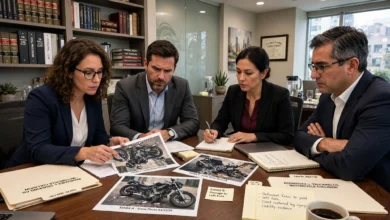
- Get a police report on the record. This is not optional. Many policies require you to report a hit-and-run to police promptly, and some set a 24-hour window. A report filed days later invites the insurer to question your story.
- Write down everything about the other vehicle. Color, make, body style, partial plate, direction of travel, damage, bumper stickers. Even a partial description helps police and supports your account.
- Talk to witnesses before they leave. Get names and phone numbers. A two-minute conversation at the scene can be the independent evidence your claim depends on.
- Take photos and video. Capture your bike, the road, debris, skid marks, traffic signals, and your injuries. Wide shots that show the whole scene are just as useful as close-ups.
- Look for cameras nearby. Note any businesses, homes, or intersections with cameras. Many systems overwrite footage within days, so ask for it, or have a lawyer send a preservation letter, as soon as possible.
- Get medical care the same day. Adrenaline hides injuries. A same-day medical record also ties your injuries directly to the crash, which closes a common insurer argument.
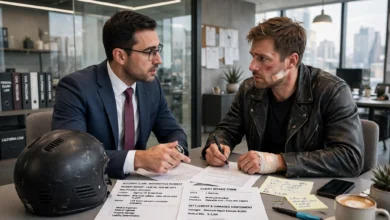
- Preserve your bike and gear. Do not repair the motorcycle or throw away your helmet and jacket until the claim is resolved. Paint transfer and impact marks are evidence.
- Notify your insurer in writing. Report the claim promptly under every policy that might apply. Keep the notice factual and short.
- Be careful with recorded statements. Your own insurer will likely ask for one. In a UM claim, your insurer is effectively on the other side of the table, so it is reasonable to get advice before giving a detailed recorded statement.
A Quick Word on Phantom Vehicle Crashes
If the car never touched you, the steps above matter even more. Without contact, the insurer will lean hard on the idea that you simply lost control. Witnesses, video, and an officer who documents your account at the scene are what turn a phantom vehicle crash into a payable claim.
7 Proven Ways to Use UMBI Coverage Effectively After Hit-and-Run Motorcycle Accidents in Ohio
Having coverage and actually collecting on it are two different things. These seven strategies close the gap.
1. Put UMBI on Your Motorcycle Policy, Not Just Your Car Policy
Many riders assume the UM coverage on their car policy will follow them onto the bike. Often it won’t. Ohio law allows insurers to exclude injuries that happen while you are riding a vehicle you own but that is not listed on that policy. This is called an other-owned vehicle exclusion, and it trips up motorcyclists constantly.
The fix is simple: make sure UM/UIM is listed on the motorcycle policy itself. Then check that the limits are more than the state minimum. A serious motorcycle injury can easily run past $25,000 in the emergency room alone. Many riders choose UM limits that match their own liability limits, such as $100,000 per person or higher.
2. Find Every Policy That Might Cover You
You may have more coverage than you think. Look at:
- Your motorcycle policy
- Your car policy, if its exclusions allow it
- Policies held by a spouse or relative you live with, since many define “insured” to include resident family members
- An umbrella policy, if it includes UM coverage (many do not, so check)
Ohio allows insurers to include anti-stacking language, which stops you from adding several policies’ UM limits together. Even so, a second policy can sometimes provide coverage that the first one excludes. It is worth having every policy reviewed.
3. Build Your Corroborative Evidence From Day One
The evidence list in the section above is not something to deal with later. Start collecting it immediately, because video and witnesses vanish. A claim with two witness statements and a gas station clip is a very different claim from one that rests on your word alone.
4. Follow Every Policy Condition to the Letter
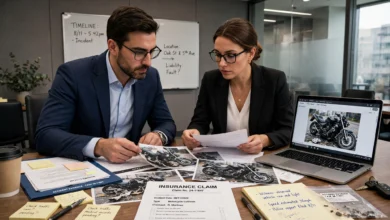
UM policies come with conditions, and insurers enforce them. Common ones include prompt notice to police, prompt notice to the insurer, cooperation with the investigation, and submitting to a statement or exam under oath. Missing a condition gives the insurer an easy reason to deny an otherwise valid claim. Read the “Uninsured Motorists Coverage” section of your policy, including the definitions, and keep copies of everything you send.
5. Document Every Loss, Not Just the Hospital Bill
UMBI covers what you could have recovered from the driver who fled. That includes much more than medical bills. Keep a file with:
- Medical records and bills, including future treatment your doctors recommend
- Pay stubs and a letter from your employer showing missed work
- Receipts for prescriptions, mileage to appointments, and home help
- A simple daily journal describing pain, sleep problems, and activities you can no longer do
- Photos of your injuries as they heal
Pain and suffering is often the biggest part of a motorcycle injury claim, and a journal is one of the best ways to prove it.
6. Remember Your Insurer Is Now the Other Side
This feels strange, because you pay these people. But in a UM claim, every dollar your insurer pays you comes out of its own pocket. Expect the adjuster to question fault, push back on treatment, and start with a low offer. Do not accept the first number without comparing it to your documented losses, and never sign a release until you are sure your treatment is finished or your future care is accounted for.
7. Know How Disputes Get Resolved
Many Ohio auto and motorcycle policies send UM disputes to arbitration instead of a jury trial. Others allow a lawsuit against your own insurer. The policy will tell you which process applies, how to demand it, and any time limits that come with it. Knowing this early helps you make smart choices about negotiation and settlement.
Deadlines That Apply to Hit-and-Run Motorcycle Accidents in Ohio
Timing rules are where good claims quietly die. There are a few different clocks running at once, and they do not all start or stop the same way.
| Deadline | Where it comes from | What it means for you |
|---|---|---|
| Police report | Your policy’s conditions | Often “promptly,” sometimes within 24 hours. Report the same day. |
| Notice to your insurer | Your policy’s conditions | Usually “as soon as practicable.” Late notice can lead to a denial. |
| Contractual UM deadline | R.C. 3937.18 and your policy | Ohio lets insurers require UM claims or suits within a set period, but generally no shorter than three years from the accident. |
| Lawsuit against the driver | R.C. 2305.10 | Two years for personal injury if police later identify the driver. |
That last row is easy to overlook. If police track down the driver months later, your claim may shift from a UM claim to a regular liability claim against that driver’s insurance, and possibly a UIM claim on top of it. The two-year statute of limitations in Ohio applies to suing the driver, so do not let it slip past while you wait on your own insurer.
How Fault Affects Your Ohio UMBI Claim
Your insurer can raise the same fault arguments the missing driver would have raised. Ohio follows a modified comparative negligence rule. If you are found partly at fault, your recovery is reduced by your share. If you are found more than 50% at fault, you recover nothing.
Common arguments insurers use against riders include:
- Speeding or lane splitting at the time of the crash
- Riding without proper headlights or reflective gear at night
- Losing control on your own, with no other vehicle involved
- Not wearing a helmet, which may be raised to argue certain head injuries were worse than they would have been
Ohio only requires helmets for riders under 18 and for novice riders in their first year, along with their passengers. Even when a helmet is not legally required, wearing one protects your health and takes an argument off the table.
Other Sources of Help After an Ohio Hit-and-Run
UMBI is usually the main source of recovery, but it is not the only one. Depending on your situation, these may also help:
- Medical payments coverage (MedPay): Pays medical bills regardless of fault, often quickly. Check whether your policy reduces UM payments by MedPay amounts.
- Health insurance: Covers treatment, though your health plan may seek reimbursement from your UM recovery later.
- Collision coverage: Usually the most reliable way to repair or replace your motorcycle after a hit-and-run.
- Ohio Crime Victims Compensation: Because leaving the scene is a crime, injured victims may be able to apply for help with unpaid expenses through the Ohio Attorney General’s program. Eligibility rules and reporting requirements apply.
- Disability insurance: Short-term or long-term disability through work can replace some lost income while you recover.
When to Talk to an Ohio Motorcycle Accident Lawyer
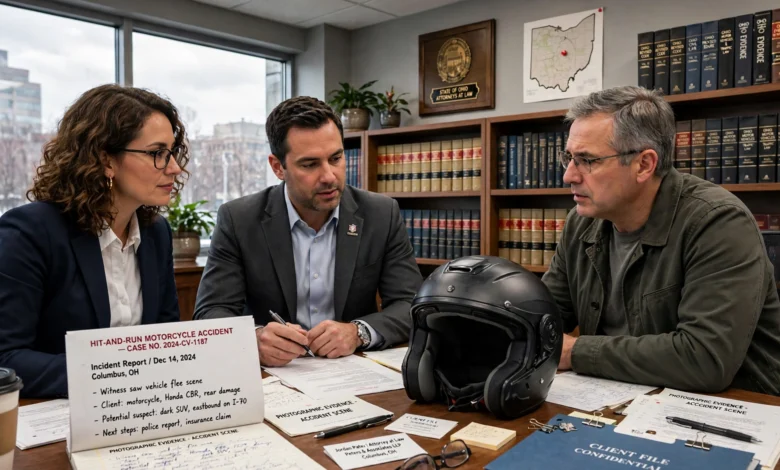
Not every claim needs a lawyer. A minor injury with clear video evidence and a fair offer may settle smoothly. But an Ohio motorcycle accident lawyer is worth calling when:
- Your injuries are serious, involve surgery, or affect your ability to work
- The crash was a no-contact phantom vehicle case
- Your insurer denies the claim for lack of corroborating evidence
- Several policies might apply and you are not sure how they interact
- The insurer wants a recorded statement or an examination under oath
- The settlement offer does not come close to your documented losses
Most personal injury lawyers in Ohio work on a contingency fee, which means they get paid a percentage of the recovery rather than charging upfront. Many also offer free consultations, so getting an opinion early costs you very little.
Frequently Asked Questions About Hit-and-Run Motorcycle Accidents in Ohio
Does UMBI cover me if the car never hit my motorcycle?
It can. Ohio no longer requires physical contact. You need independent corroborative evidence, such as a witness or video, showing an unidentified driver’s negligence caused your crash.
Will filing a UM claim raise my insurance rates?
Ohio insurers generally should not treat a not-at-fault claim the same as an at-fault crash, but rating practices vary by company. Ask your agent how your insurer handles UM claims, and remember that skipping a valid claim to protect your rate rarely makes financial sense after a serious injury.
What if police find the driver later?
Your claim may switch to a liability claim against that driver’s insurer. If their limits are too low, your UIM coverage may cover the difference. Watch the two-year deadline for suing the driver.
Can I use my car insurance UM coverage while riding my motorcycle?
Sometimes, but many policies exclude injuries on a vehicle you own that is not listed on that policy. Check both policies, and ideally carry UM directly on the motorcycle policy.
How long does a hit-and-run UM claim take in Ohio?
A simple claim with clear evidence can settle within a few months after treatment ends. Disputed claims, especially phantom vehicle cases or those that go to arbitration, can take a year or more.
This article is general information, not legal advice. Insurance policies differ, and Ohio law can change, so talk to a licensed Ohio attorney about your specific situation.
Conclusion
Hit-and-run motorcycle accidents in Ohio leave riders facing serious injuries with no at-fault driver to hold responsible, but UMBI coverage gives you a real path to recovery if you set it up correctly and handle the claim with care. Ohio treats an unidentified driver as uninsured, yet it also demands independent corroborative evidence, so reporting the crash right away, finding witnesses and video, and getting same-day medical care all make a direct difference in whether you get paid.
Carry UM/UIM on your motorcycle policy itself at meaningful limits, check every policy that might apply, follow your policy’s conditions closely, document every loss, and keep an eye on both your policy deadlines and Ohio’s two-year limit for suing a driver who is later found. Do those things, and your own insurance can do what the driver who fled never would.