Insurance Coverage Disputes in Georgia: What Happens When Policies Are Vague
Insurance coverage disputes in Georgia often start with one vague sentence. Here's how courts read unclear policies and what you can do.
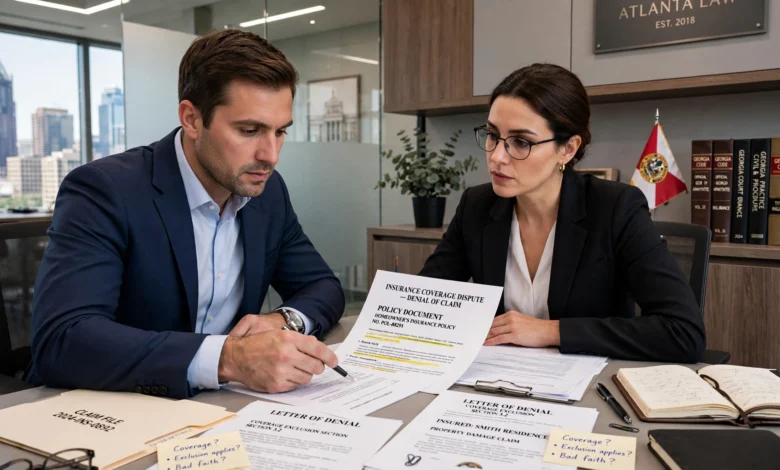
You file a claim expecting your insurer to pay. Instead, you get a denial letter pointing to a policy provision you barely remember reading, written in language that could mean two different things depending on who’s interpreting it. This is how most insurance coverage disputes in Georgia actually start. It’s rarely a dramatic fraud case. It’s usually a sentence buried on page 14 that the insurer reads one way and the policyholder reads another.
Georgia law has a lot to say about what happens when that sentence is genuinely unclear. Courts don’t just shrug and side with whoever wrote the check. There’s a structured process for figuring out what an ambiguous insurance policy actually means, and that process tends to favor policyholders more than most people realize, at least once a real ambiguity is proven.
This article walks through how Georgia courts handle vague policy language, the most common types of coverage disputes, what Georgia’s bad faith statute does for you, and the practical steps to take if you’re staring down a denial letter right now. If you’re dealing with a Georgia insurance dispute, understanding these rules before you respond to your insurer can change the outcome of your claim.
What Counts as a Vague Insurance Policy in Georgia
Not every disagreement over a policy is a legal ambiguity. Georgia courts draw a real line here, and it matters because the outcome of your dispute often depends on which side of that line your situation falls on.
A policy provision is considered ambiguous when it’s reasonably susceptible to more than one interpretation, and both interpretations are ones a normal person would actually consider plausible. That’s different from language that’s just complicated, technical, or annoying to read. Dense insurance jargon that still points to a single clear meaning isn’t ambiguous, it’s just poorly written.
Common Sources of Ambiguous Language
Some of the recurring trouble spots in Georgia insurance disputes include:
- Undefined terms that get used repeatedly but never actually defined in the policy (words like “sudden,” “accidental,” or “reasonable”)
- Overlapping or conflicting clauses, where one section of the policy seems to grant coverage and another section seems to take it away
- Exclusions written broadly in a way that could swallow the entire coverage grant if read literally
- Endorsements added later that don’t clearly integrate with the base policy language
- Definitions that shift between the declarations page, the policy body, and any riders or endorsements
If you’re staring at policy language and genuinely can’t tell which of two readings is correct, and you’re not alone in that confusion, you may be looking at a real ambiguity rather than just a coverage denial you disagree with.
How Georgia Courts Interpret Ambiguous Insurance Policies
Once a court agrees that a provision is genuinely unclear, it doesn’t jump straight to picking a winner. Georgia follows a fairly standard sequence used across most states for insurance policy interpretation disputes.
Plain Meaning First
The starting point is always the plain, ordinary meaning of the words. If the language only supports one reasonable reading, that’s the end of the analysis, no matter how much a policyholder might wish it said something else. Courts won’t manufacture an ambiguity just because one side proposes a creative alternative reading.


Reasonable Expectations of the Insured
If the plain meaning doesn’t resolve things, Georgia courts look at what a reasonable policyholder would have expected the coverage to include, based on the type of policy purchased and the context in which it was sold. This doctrine exists because insurance contracts aren’t negotiated line by line. The insurer writes every word; the policyholder either buys the policy or doesn’t.
The Contra Proferentem Rule
If ambiguity survives both of the steps above, Georgia applies contra proferentem, a doctrine that construes unclear language against the party that drafted it. In practice, that’s almost always the insurance company. <cite index=”9-1″>The rule places the burden of ambiguity on the party most capable of mitigating it, meaning the party that wrote the disputed language in the first place.</cite>
This doctrine has real teeth in Georgia insurance disputes. <cite index=”5-1″>Georgia courts have applied the longstanding rule that where a rational argument can be made that policy language is ambiguous, the interpretation favoring the insured controls.</cite> That doesn’t mean policyholders automatically win every close call, but it does mean insurers carry the risk of their own imprecise drafting.
It’s worth noting that contra proferentem is treated as a rule of last resort, not a first move. <cite index=”2-1″>Courts hold insurers to a high standard of clarity, but the policyholder still has to show the disputed language is genuinely susceptible to two or more reasonable interpretations before this doctrine comes into play.</cite> For a deeper look at how this doctrine functions across jurisdictions, the Legal Information Institute at Cornell Law School maintains a useful explainer on contra proferentem.
Exclusions Are Read Narrowly
One more wrinkle specific to insurance law: coverage grants tend to be read broadly, while exclusions and limitations tend to be read narrowly. If an insurer wants to carve something out of coverage, Georgia courts generally expect that carve-out to be stated clearly. A vague or overly broad exclusion is less likely to survive scrutiny than a vague coverage grant is likely to be denied.
Common Types of Insurance Coverage Disputes in Georgia
Vague policy language shows up differently depending on the type of insurance involved. Here’s where these disputes tend to concentrate.
Homeowners Insurance Disputes
Homeowners policies generate a steady stream of Georgia coverage disputes, particularly around:
- Water damage versus flood exclusions (a distinction that trips up a lot of policyholders after storms)
- What counts as a “sudden and accidental” loss versus gradual deterioration
- Mold coverage limits and exclusions
- Roof damage age and wear-and-tear exclusions after hail or wind events
Auto Insurance Disputes
With auto policies, common flashpoints include:
- Whether a driver qualifies as a “permissive user” under the policy
- Rental car and loss-of-use coverage terms
- Underinsured and uninsured motorist stacking provisions
- Total loss valuation disputes, where “actual cash value” is defined loosely
Business and Commercial Insurance Disputes
Commercial policies bring their own set of vague terms, including business interruption triggers, what qualifies as “direct physical loss,” and how broadly a professional liability exclusion applies. Because commercial policies are often heavily negotiated and endorsed, ambiguity frequently arises from endorsements that don’t cleanly mesh with the base form.
Health Insurance Disputes
Health insurance disputes in Georgia often center on medical necessity definitions, network adequacy language, and pre-authorization requirements that are vague about timing or documentation standards.
Across all four categories, the common thread is the same: the insurer relies on an interpretation that limits payout, the policyholder relies on a different, equally plausible reading, and the outcome hinges on which side the ambiguity ultimately favors.
When Vague Policy Language Leads to a Bad Faith Insurance Claim
An ambiguous policy is one problem. An insurer that denies a claim without a reasonable basis is a separate, and more serious, problem. Georgia law treats the two as related but distinct issues.
Georgia’s Bad Faith Statute: O.C.G.A. § 33-4-6
Georgia’s primary bad faith insurance statute gives policyholders real leverage. Under the statute, if an insurer refuses to pay a covered loss within 60 days of a proper demand, and that refusal is found to have been made in bad faith, the insurer becomes liable for the underlying loss plus a penalty. <cite index=”13-1″>Georgia law provides that the insurer must pay the policyholder, in addition to the loss itself, not more than 50 percent of the liability for the loss or $5,000, whichever is greater, along with all reasonable attorney’s fees for prosecuting the action.</cite>
That’s a meaningful deterrent against insurers who deny claims casually or drag out the process hoping a policyholder will give up. Importantly, <cite index=”13-1″>the bad faith action isn’t erased just because the insurer eventually pays after the 60-day window closes.</cite> An insurer can’t dodge the penalty simply by cutting a check once litigation starts.
What “Bad Faith” Actually Means in Georgia
Bad faith under this statute isn’t the same as being wrong about coverage. <cite index=”18-1″>Georgia courts have defined bad faith under this statute as a frivolous and unfounded refusal to pay a claim, and an insurer that has any reasonable ground to contest the claim generally hasn’t acted in bad faith even if it ultimately loses.</cite> In other words, an insurer can lose a coverage dispute over genuinely ambiguous language without necessarily being liable for bad faith penalties, if it had a reasonable, good-faith basis for its position at the time.
This distinction matters a lot for how you approach a dispute. Proving the policy is ambiguous and proving the insurer acted in bad faith are two different legal tasks, and you may win one without the other.
The Demand Letter Requirement
Before a Georgia bad faith claim can move forward, the policyholder generally has to send a written demand to the insurer that clearly identifies the policy, the loss, the amount owed, and the basis for the claim, then wait out the statutory period before filing suit. Sending the demand too late, or filing suit before the waiting period expires, can bar the claim entirely regardless of how strong the underlying coverage argument is. This procedural step trips up more claimants than the substantive coverage question itself, which is one of the strongest reasons to get legal guidance before sending anything in writing to your insurer.
For the full statutory text, you can review O.C.G.A. § 33-4-6 directly through Justia’s Georgia Code database.
Steps to Take When You Face a Coverage Dispute in Georgia
If you’re currently dealing with a denied or underpaid claim, the order in which you act matters. Here’s a practical sequence:
- Request the complete policy in writing, including all endorsements, riders, and declarations pages, not just the summary the insurer sent with the denial letter.
- Get the denial in writing with the specific policy language the insurer is relying on. A vague verbal explanation isn’t enough to evaluate your options.
- Compare the cited language against the rest of the policy to check for internal inconsistencies or undefined terms that support a different reading.
- Document your own understanding of the coverage at the time you purchased or renewed the policy, including any communications with your agent.
- Avoid recorded statements or quick settlement offers before you understand the full scope of the ambiguity you’re dealing with.
- Send a formal demand letter if you believe the denial was made without a reasonable basis, being careful to meet Georgia’s procedural timing requirements.
- Consult a Georgia insurance attorney before the statutory windows close, particularly if the claim involves significant value or a genuinely unclear provision.
Each of these steps builds the record you’ll need if the dispute escalates to litigation. Insurers keep detailed claim files; policyholders should too.
How to Protect Yourself Before a Dispute Ever Arises
Most people only think about policy language after something has gone wrong. A little attention up front reduces your exposure to a future coverage fight.
- Read the definitions section, not just the coverage grants. Most ambiguity disputes trace back to a term used loosely throughout the policy but never clearly defined.
- Ask your agent to confirm coverage in writing for anything you’re relying on, particularly for less common risks like water backup, business interruption, or specific named perils.
- Keep a copy of every endorsement added over the life of the policy, and check that new endorsements don’t quietly narrow older coverage.
- Review your policy at each renewal, since insurers sometimes adjust definitions or exclusions between policy periods without drawing much attention to the change.
- Photograph and inventory high-value property so that if a valuation dispute arises later, you have your own independent record.
None of this guarantees you’ll avoid a dispute entirely, but it puts you in a much stronger position if one shows up.
When to Hire an Attorney for a Georgia Insurance Coverage Dispute
Not every denied claim needs a lawyer. Small, clearly-excluded losses usually aren’t worth the cost of litigation. But a few signals suggest it’s time to get an attorney involved:
- The disputed amount is significant relative to your finances
- The insurer’s denial relies on language you genuinely can’t parse, or that seems to contradict another part of the policy
- The insurer has missed its own deadlines or gone silent for extended periods
- You suspect the delay or denial pattern looks more like stalling than a genuine coverage disagreement
- You’re approaching the one-year suit limitation period that applies to many Georgia property policies
An attorney experienced in Georgia coverage litigation can also flag whether your situation supports a bad faith claim in addition to the underlying breach of contract claim, since the two require different evidence and different procedural steps.
If you want a second opinion on how a state regulator views your dispute, the Georgia Department of Insurance accepts consumer complaints and can sometimes prompt a faster insurer response, though it doesn’t replace the legal remedies available through a bad faith claim.
Frequently Asked Questions
Does an ambiguous policy automatically mean I win my claim? No. It means the ambiguity gets construed against the insurer under contra proferentem, but only after the plain meaning and reasonable expectations analysis fail to resolve the question first.
How long do I have to file a lawsuit over a denied claim in Georgia? This varies by policy type and cause of action, and many property policies contain their own contractual limitation periods (often one year from the date of loss). Check your policy and don’t wait to confirm the deadline.
Can I recover attorney’s fees in a Georgia insurance dispute? Under O.C.G.A. § 33-4-6, yes, but only if you prove bad faith, not simply that the insurer was wrong about coverage.
What if my agent told me something different from what the written policy says? This is a common source of disputes and can sometimes support a reasonable expectations argument, though the written policy generally controls. Document any conversations with your agent as soon as possible.
Conclusion
Insurance coverage disputes in Georgia almost always start in the same place: a piece of policy language that two reasonable people could read two different ways. Georgia courts have a structured way of working through that uncertainty, starting with the plain meaning of the text, moving to the reasonable expectations of the policyholder, and finally applying contra proferentem against whichever side drafted the confusing language, which is nearly always the insurer. On top of that, Georgia’s bad faith statute gives policyholders a real financial incentive for insurers to handle claims honestly, provided the proper demand and timing requirements are met. If you’re facing a denial built on vague policy language, the strongest move isn’t to argue with the adjuster. It’s to get the full policy in writing, compare the disputed language against the rest of the document, and talk to an attorney who handles Georgia coverage disputes before any statutory deadlines pass.