Underinsurance Disputes After Property Damage in Queensland: Your Rights
Underinsurance disputes after storm or flood damage in Queensland? Learn 7 rights that protect homeowners fighting reduced claims.
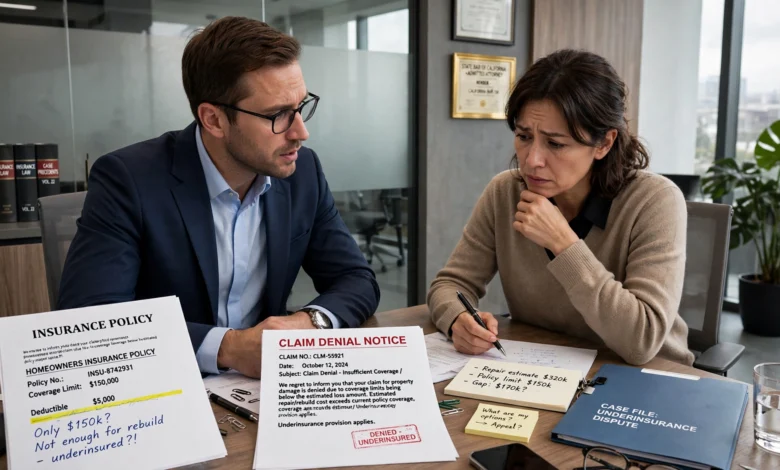
Underinsurance disputes are becoming one of the most common headaches for Queensland homeowners after a cyclone, flood, or storm tears through their property. You lodge a claim expecting your insurer to cover the cost of rebuilding, only to be told your payout has been slashed because your sum insured didn’t match the real value of your home. It feels unfair, and often it is more complicated than it should be.
Queensland is one of the most disaster-prone states in Australia, which makes this issue especially urgent here. Rebuilding costs have jumped sharply over the past few years, driven by material shortages, labour costs, and repeated severe weather events. Many policyholders set their sum insured years ago and never revisited it, so when disaster strikes, the gap between what they’re insured for and what it actually costs to rebuild can run into tens of thousands of dollars.
The good news is that you’re not powerless in this situation. Australian insurance law gives policyholders real protections, and there are clear steps you can take when an insurer applies an underinsurance clause and reduces your claim. This article walks through what underinsurance actually means, why these disputes happen, what your rights are under Queensland and Commonwealth law, and exactly how to push back if you think your insurer has got it wrong.
What Is Underinsurance and Why It Happens So Often in Queensland
Underinsurance occurs when the sum insured on your policy is lower than the actual cost of rebuilding or replacing your property. It’s different from a claim being denied outright — the insurer accepts the claim but pays out less than the full cost of repairs, because your policy limit doesn’t stretch far enough.
In Queensland, several factors make underinsurance disputes more common than in other parts of the country:
- Rising construction costs. Post-pandemic material shortages and skilled labour shortages pushed building costs up significantly, and many sums insured haven’t kept pace.
- Frequent natural disasters. Cyclones, floods, and severe storms mean Queensland homeowners lodge claims more often, which increases the chance of an underinsurance gap being exposed.
- Set-and-forget policies. Many people set their sum insured once, at purchase or at the time they took out the policy, and never update it as renovations, extensions, or market conditions change.
- Confusing calculators. Online rebuilding cost calculators provided by insurers don’t always account for site-specific costs like difficult access, asbestos removal, or heritage requirements, leading to underestimated figures.
Understanding why underinsurance happens is the first step toward protecting yourself, and it’s also relevant if you’re already in a dispute, because how the shortfall arose can affect who’s responsible for it.
How Underinsurance Clauses (the “Average” Clause) Actually Work
Most home and contents, landlord, and commercial property policies in Australia include what’s known as an average clause or co-insurance clause. This clause reduces your payout proportionally if your sum insured is below a certain percentage of the property’s actual replacement value — commonly 80%.
Here’s a simplified example of how it works:
- Your home would actually cost $600,000 to rebuild.
- You’re insured for only $400,000 (67% of the true value).
- A storm causes $100,000 worth of damage.
- Instead of paying the full $100,000, the insurer applies the average clause and pays only 67% of that amount — around $67,000.
This is one of the most misunderstood parts of property insurance, and it’s exactly where underinsurance disputes most often start. Policyholders assume that as long as they haven’t hit their total sum insured, every claim will be paid in full. That’s not how average clauses work, and insurers are required to disclose this in the Product Disclosure Statement (PDS), though the wording is often buried in dense legal language.


Not All Policies Apply an Average Clause
It’s worth checking your own PDS carefully, because not every insurer uses this mechanism the same way. Some Queensland home insurance products offer “sum insured” cover with no average clause at all, while others offer “total replacement” cover that removes the underinsurance risk entirely, usually at a higher premium. Knowing which type of policy you hold is critical before you can properly assess whether a reduced payout is lawful.
Common Causes of Underinsurance Disputes After Property Damage
When a dispute arises, it usually falls into one of these categories:
- Outdated valuations. The sum insured was accurate when the policy started but hasn’t been adjusted for years of cost inflation.
- Broker or insurer miscalculation. A rebuilding cost estimate provided by the insurer’s own calculator tool turned out to be too low, and the policyholder relied on it in good faith.
- Disagreement over the actual rebuild cost. The insurer and the policyholder get different quotes from different builders, and the gap between the two figures triggers the underinsurance clause dispute.
- Non-disclosure allegations. The insurer claims the policyholder failed to disclose renovations, extensions, or a change in property use, which affected the true rebuilding cost.
- Post-disaster cost spikes. After a major cyclone or flood event, building material and labour prices surge locally, meaning even an accurate pre-disaster sum insured no longer covers the real cost of rebuilding.
Each of these scenarios raises a different legal question, and the right response depends on which one applies to your situation.
Your Legal Rights in an Underinsurance Dispute
This is the part most Queensland policyholders don’t realise: even though the policy wording might look airtight, you still have meaningful rights under Australian law when you’re facing an underinsurance dispute.
1. The Right to Fair Treatment Under the Insurance Contracts Act 1984
The Insurance Contracts Act 1984 (Cth) governs how insurers must deal with policyholders across Australia, including Queensland. It requires insurers to act with utmost good faith in handling claims, which means they can’t apply policy terms unreasonably or hide behind technicalities to avoid a fair payout. If an insurer’s calculation of your rebuild cost seems inflated or unreasonable, you can challenge it under this obligation.
2. The Right to a Clear Explanation of How the Underinsurance Clause Applies
Insurers are required to explain, in plain terms, how any average clause or underinsurance deduction has been calculated. If your insurer hasn’t shown you the workings, such as the assessed replacement value they used, you’re entitled to ask for it in writing.
3. The Right to Dispute the Insurer’s Valuation
You are not obligated to accept the insurer’s rebuilding cost assessment. You can obtain an independent builder’s quote or a quantity surveyor’s report and use it to challenge the figure the insurer relied on. If the two valuations differ significantly, this becomes central evidence in any dispute.
4. The Right to Internal Dispute Resolution (IDR)
Every insurer operating in Australia must have an internal dispute resolution process under the General Insurance Code of Practice. This means you can formally escalate your complaint within the company, and it must be reviewed by someone more senior than the original claims handler, usually within 30 calendar days.
5. The Right to Take Your Complaint to AFCA
If internal resolution doesn’t fix the problem, you have the right to lodge a free, independent complaint with the Australian Financial Complaints Authority (AFCA). AFCA can investigate the dispute, request documents from the insurer, and make a binding decision if the insurer doesn’t resolve things fairly. This is one of the most powerful tools available to Queensland policyholders and is usually faster and cheaper than going to court.
6. The Right to Query Non-Disclosure Findings
If your insurer claims the underinsurance was caused by something you failed to disclose, you have the right to see exactly what information they say was missing, and to argue that it wasn’t material to the risk or wasn’t something you were reasonably expected to disclose.
7. The Right to Legal Advice and Representation
You are always entitled to seek independent legal advice, engage a loss assessor, or bring in a solicitor to represent you during a dispute, including at AFCA or in court. Insurers have teams of assessors and lawyers working for them; you’re allowed the same support.
Steps to Take When Your Claim Is Reduced for Underinsurance
If your insurer has applied an average clause and reduced your payout, don’t just accept the number on the letter. Work through these steps methodically.
- Request the full calculation in writing. Ask exactly how the insurer arrived at your property’s replacement value and the percentage reduction applied.
- Get an independent rebuild estimate. A local Queensland builder or quantity surveyor can provide a written estimate that reflects current material and labour costs in your area, including any post-disaster price spikes.
- Compare policy wording carefully. Check whether your PDS actually includes an average clause, and whether the wording matches how the insurer has applied it.
- Lodge a formal internal dispute. Put your complaint in writing to the insurer’s internal dispute resolution team and attach your independent valuation.
- Escalate to AFCA if unresolved. If the insurer won’t budge, or the 30-day IDR period passes without a fair outcome, lodge a complaint with AFCA.
- Keep a paper trail. Save every email, letter, quote, and phone call summary. Disputes are won or lost on documentation, and gaps in your records can weaken an otherwise strong case.
- Consider legal advice for large or complex claims. For high-value commercial or residential disputes, a solicitor experienced in insurance law can assess whether the average clause was properly triggered and whether the Insurance Contracts Act has been breached.
The Role of AFCA in Queensland Underinsurance Disputes
The Australian Financial Complaints Authority is the main external body Queensland residents turn to when an insurance dispute can’t be resolved directly with the insurer. It’s free for consumers, doesn’t require a lawyer, and covers home, contents, landlord, and small business property insurance.
When AFCA reviews an underinsurance dispute, it typically looks at:
- Whether the average clause was clearly disclosed in the PDS
- Whether the insurer’s rebuild cost calculation was reasonable and properly evidenced
- Whether the policyholder was given fair opportunity to challenge the valuation
- Whether any non-disclosure allegation is actually relevant to the underinsurance outcome
AFCA decisions are binding on the insurer if the policyholder accepts them, but the policyholder is free to reject an unfavourable outcome and pursue the matter in court instead, subject to time limits. This gives Queensland homeowners meaningful leverage, because insurers know a poorly reasoned underinsurance deduction is likely to be overturned or adjusted at AFCA.
When Court Action or QCAT Might Be an Option
For most residential underinsurance disputes, AFCA is the quickest and most cost-effective path. However, for larger commercial disputes, or where AFCA’s monetary jurisdiction is exceeded, policyholders may need to pursue the matter through the courts. In Queensland, smaller property and contract disputes can sometimes be handled through the Queensland Civil and Administrative Tribunal (QCAT), while larger or more complex insurance disputes typically go to the Magistrates, District, or Supreme Court depending on the amount in dispute.
Because court proceedings involve costs risk and stricter procedural rules, it’s worth getting legal advice before choosing this path over AFCA.
How to Avoid Underinsurance Before It Becomes a Dispute
Prevention is far cheaper than fighting a dispute after the fact. A few practical habits go a long way:
- Review your sum insured every year, especially before renewal, and adjust it for building cost inflation.
- Update your insurer after renovations, extensions, pools, sheds, or any structural change to the property.
- Use a professional rebuild estimate rather than relying solely on an online calculator, particularly for older homes or properties with unusual features.
- Ask your insurer directly whether an average clause applies, and get the answer in writing.
- Consider total replacement cover if it’s available and affordable, since it removes the underinsurance risk entirely.
- Keep records of renovations and improvements, including receipts and building approvals, so you can quickly justify an updated sum insured if questioned.
Taking these steps doesn’t guarantee you’ll never face a dispute, but it dramatically strengthens your position if you ever need to challenge an insurer’s decision.
Frequently Asked Questions
Can an insurer reduce my payout without telling me why? No. Under the General Insurance Code of Practice, insurers must give a clear, written explanation of how a claim decision, including any underinsurance deduction, was reached.
Is there a time limit to dispute an underinsurance decision? Yes. You generally have a limited window to lodge a complaint with AFCA after receiving the insurer’s final internal dispute resolution response, so it’s important not to delay.
Do I need a lawyer to take a dispute to AFCA? No, AFCA is designed to be accessible without legal representation, though you can bring a lawyer or advocate if you choose, particularly for complex or high-value claims.
What if the insurer’s rebuild estimate seems too low? Get an independent quote from a licensed local builder or quantity surveyor and use it as evidence in your dispute. Significant gaps between estimates are common grounds for a successful challenge.
Conclusion
Underinsurance disputes after property damage are stressful, but Queensland homeowners have real, enforceable rights when an insurer applies an average clause and reduces a payout. From the protections built into the Insurance Contracts Act and the General Insurance Code of Practice, to the free dispute resolution service offered by AFCA, there are clear paths to challenge a decision you believe is unfair.
The key is acting early: request a full written explanation of any underinsurance deduction, get an independent rebuilding estimate, escalate through internal dispute resolution, and don’t hesitate to bring your complaint to AFCA if the insurer won’t budge. Combined with regularly reviewing your sum insured before disaster strikes, these steps give you the best chance of a fair outcome and far more control over the process than most policyholders realise.