Motorbike Accident Claim UK: 9 Proven Steps to a Successful Settlement
Motorbike accident claim guide for UK riders: what to do after a crash, how to gather evidence, deal with insurers and secure full, fair compensation.
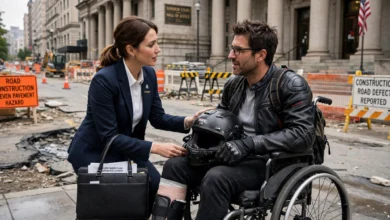
A motorbike accident claim is rarely the first thing on your mind when you are lying on tarmac wondering if your leg is broken. Fair enough. But the choices you make in the hours and weeks after a crash often decide whether you walk away with proper compensation or a lowball offer that barely covers your kit.
Riders face a different reality from car drivers. You have no metal shell, so injuries tend to be more serious. Recovery takes longer. Time off work adds up fast. On top of that, many riders feel that insurers and even some witnesses start from the assumption that the biker was going too fast. That bias is real, and it is why good evidence matters so much in any motorcycle accident compensation case.
The good news is that UK law gives injured riders solid protection. Motorcyclists are classed as vulnerable road users, which means the 2021 whiplash reforms that squeezed car occupants do not apply to you in the same way. You can still get proper legal help, and in many cases it costs you nothing upfront.
This guide walks through the whole motorbike accident claim process step by step, from what to do at the roadside to how a settlement is agreed and paid. It covers evidence, insurers, solicitors, time limits, split blame, uninsured drivers and the questions riders ask most often. Read it now, bookmark it, and share it with your riding mates. You never know who will need it.
The Motorbike Accident Claim Process: 9 Steps from Crash to Settlement
Every case is different, but most follow the same basic path. Think of the steps below as a map. You will not always go through every one in order, and many claims settle long before the later stages.
Step 1: Stay Safe and Secure the Scene
Your safety comes first. Evidence comes second, but not far behind.
- Get out of danger. If you can move, get yourself off the carriageway. If you cannot, stay still and wait for help. Do not take your helmet off if you suspect a neck or spine injury.
- Call 999 if anyone is hurt, if the road is blocked, or if the other driver drives off or turns aggressive.
- Swap details. Under the Road Traffic Act 1988 you must stop and give your name, address and vehicle registration to anyone with reasonable grounds to ask. Get the same from the other driver, plus their insurer if they know it.
- Do not admit fault. Be polite and check people are okay, but avoid saying “sorry, I didn’t see you” or similar. Fault is decided later, on the evidence.
Step 2: Collect Evidence at the Scene
If you are able to, the first 30 minutes are the best chance you will ever get to build your case. Use your phone.
- Photograph all vehicles, their final positions, number plates and damage.
- Capture the road layout, junction markings, skid marks, potholes, diesel spills and signs.
- Take names and phone numbers of witnesses. Independent witnesses carry real weight.
- Save your helmet camera footage straight away. Back it up to the cloud the same day.
- Note the time, weather, light and traffic conditions.
- Look for CCTV on nearby shops, homes and buses. Footage is often wiped within days, so ask quickly.
If you were too badly hurt to do any of this, do not worry. A good motorbike accident solicitor can often recover much of it later through police reports, dashcam appeals and CCTV requests.
Step 3: Get Medical Help and Report the Crash
See a doctor or go to A&E even if you feel fine. Adrenaline hides pain, and injuries like concussion, soft tissue damage and small fractures can take a day or two to show. Your medical records also become a key part of any motorbike accident claim, linking your injuries directly to the crash.

Then deal with the reporting:
- Police: If someone is injured and insurance details were not shown at the scene, you must report the accident to the police as soon as possible and within 24 hours at the latest. Get the incident reference number.
- Your insurer: Tell your own insurer promptly, even if you plan to claim against the other driver. Most policies require it, and late notice can cause problems.
- Your employer: If you need time off, let them know and keep a record of lost shifts and pay.
Start a simple diary from day one. Write down your pain levels, sleep, medication, appointments and anything you cannot do. It feels tedious, but it becomes powerful evidence months later.
Step 4: Build Your Evidence File
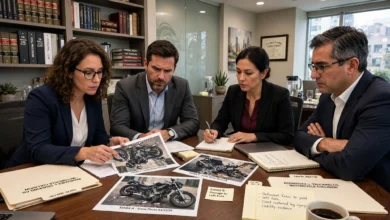
Once the dust settles, keep everything in one place: a folder, a shared drive, whatever works. A strong motorbike accident claim is built on paperwork as much as on what happened.
Your file should include:
- Photos, videos and helmet cam footage from the scene
- The police incident number and any crime or collision report
- Witness names and contact details
- Medical records, prescriptions and physiotherapy notes
- Receipts for damaged gear such as your helmet, leathers, boots and gloves
- Repair estimates or a write-off valuation for your bike
- Payslips showing earnings before and after the crash
- Receipts for travel to appointments, parking and any paid help at home
- Your recovery diary
Do not throw away damaged kit. A cracked helmet or torn jacket can show the force of the impact, and an engineer may want to inspect it.
Step 5: Deal Carefully With Insurers
Within days, you may get a call from the other driver’s insurer. Sometimes they offer to settle quickly, before you have even seen a specialist. It can sound tempting, especially if you are off work and bills are piling up.
Be careful. Early offers are usually made before anyone knows the full extent of your injuries. Once you accept, the claim is closed for good. You cannot go back if your knee needs surgery six months later.
A few ground rules:
- Do not give a recorded statement to the other side’s insurer without advice.
- Do not sign anything or accept any payment until your injuries are properly assessed.
- Do not post about the crash, your injuries or your recovery on social media. Insurers do check.
- Refer all calls to your solicitor once you have one.
Step 6: Choose the Right Motorbike Accident Solicitor
You can handle a small claim yourself, but most riders benefit from a specialist. A good motorbike accident solicitor understands riding. They know why you filtered, how a car can pull out of a junction into your path, and how to push back when an insurer claims you were speeding without proof.
Most firms work on a no win no fee motorbike claim basis, known formally as a conditional fee agreement. In plain terms:
- You pay nothing upfront.
- If you lose, you usually pay nothing to your own solicitor.
- If you win, the solicitor takes a success fee from your compensation. For personal injury claims, this is capped at 25% of your damages for pain, suffering and past losses.
- Many firms also arrange after the event insurance to cover the risk of paying the other side’s costs.
When picking a firm, ask how many motorbike cases they handle, whether they ride themselves, what their success fee is and who will actually run your file day to day. You can check a firm is properly regulated using the Law Society’s Find a Solicitor directory.
The solicitor will then send a formal letter of claim to the other driver’s insurer under the court’s pre-action rules. The insurer has a set period to investigate and say whether it accepts liability. Many claims settle at this stage without ever going near a courtroom.
Step 7: Get a Medical Report and Value Your Claim
You cannot put a fair figure on a motorbike accident claim until doctors understand your injuries and your likely recovery. Your solicitor will arrange an independent medical report from a specialist such as an orthopaedic surgeon or neurologist. If you are still recovering, it often makes sense to wait for a clearer prognosis before settling.
Motorcycle accident compensation is split into two parts.
General damages cover the injury itself: pain, suffering and the effect on your life. Judges and lawyers value these using the Judicial College Guidelines, which give brackets for different injuries. A broken wrist, a fractured femur and a brain injury all sit in very different ranges.
Special damages cover the money you have lost or will lose because of the crash, including:
- Lost earnings, now and in the future
- Bike repairs or the pre-accident value if it was written off
- Damaged helmet, leathers and other gear
- Medical treatment, physio, prescriptions and private rehab
- Travel costs to appointments
- Care and help at home, even if a partner or friend provided it for free
- Home or vehicle adaptations for serious injuries
If you are struggling financially while the case runs, ask about an interim payment. Once the other side admits liability, they can be asked to pay part of your compensation early to cover rehab, bills or a replacement bike.
Step 8: Negotiate the Settlement
With the medical evidence and losses in hand, your solicitor puts a value on the claim and sends it to the insurer. What follows is usually a back and forth.
- The insurer may accept, reject or make a counter offer.
- Either side can make a formal offer under Part 36 of the Civil Procedure Rules. These offers carry cost consequences if the other side refuses and then fails to beat the offer at trial, so take them seriously.
- Your solicitor will advise whether an offer is fair, but the final decision to accept is always yours.
Patience pays. Insurers often move their position closer to trial dates, and the first offer is rarely the best one.
Step 9: Court Proceedings and Final Settlement
Most road traffic accident claim UK cases settle without a trial. If the insurer denies liability or refuses a fair offer, your solicitor may issue court proceedings. Starting a claim does not mean you will end up in a witness box. It often pushes the other side into serious talks.
Claims are allocated to a court track by value:
| Track | Typical claim value | What it means for you |
|---|---|---|
| Small claims | Injury part up to £1,000 | Simple, low cost, limited legal costs recovered |
| Fast track | Up to £25,000 | Short trial, fixed costs |
| Intermediate track | £25,000 to £100,000 | Fixed costs, trial up to three days |
| Multi-track | Over £100,000 or complex | Full case management for serious injuries |
Once a settlement is agreed, the insurer normally pays within a few weeks. Your solicitor deducts any agreed fee and sends you the balance. Claims for children, or for adults who lack mental capacity, need a judge to approve the settlement first, to make sure it is fair.
Special Situations That Can Change Your Motorbike Accident Claim
Not every crash is a simple case of a car pulling out on you. These are the situations that most often complicate things for riders.
Personal Injury Claim Time Limit
The standard personal injury claim time limit in the UK is three years from the date of the accident, or from the date you first knew your injury was linked to it. There are exceptions:
- Children: The three years only start on their 18th birthday, though a parent can claim for them sooner.
- Lack of mental capacity: If a serious brain injury means you cannot manage your own affairs, the time limit may not run while that continues.
Do not leave it late. Solicitors need time to gather evidence, and witnesses forget details quickly. Most firms will not take on a case a few weeks before the deadline.
When You Are Partly to Blame
You can still make a motorbike accident claim if you were partly at fault. The law calls this contributory negligence, and it reduces your compensation by a percentage rather than wiping it out. If a court decides you were 25% to blame, you receive 75% of the full value.
Common arguments insurers raise against riders include:
- Speeding or riding too fast for the conditions
- Filtering past a junction where a driver may be turning
- Not wearing proper protective clothing
- Riding in a road position that made you harder to see
Filtering is legal in the UK when done with care, and the Highway Code reminds drivers to look out for motorcycles at junctions. Still, filtering cases are often argued as split liability, which is why helmet cam footage and witness accounts are so valuable.
Uninsured, Untraced and Hit and Run Drivers
If the driver who hit you had no insurance, or drove off and was never traced, you are not left empty handed. The Motor Insurers’ Bureau (MIB) compensates victims in exactly these cases. You can read about how it works on the Motor Insurers’ Bureau website. Report hit and run crashes to the police quickly, as the MIB expects this, and get legal advice early because its rules and deadlines differ from a normal claim.
Pillion Passenger Claims
A pillion passenger claim is usually one of the most straightforward. A passenger is rarely to blame, so the claim goes against whoever caused the crash. That could be another driver, or it could be the rider you were travelling with. Claiming against a friend or partner can feel awkward, but the claim is paid by their insurer, not out of their pocket.
Potholes and Road Defects
Potholes, loose gravel and spilled diesel bring down plenty of riders. Local councils and highway authorities have a legal duty to maintain the roads. If a defect caused your crash, you may have a claim against them. Photograph the defect with something for scale, such as a glove or a tape measure, and note its exact location.
How the Whiplash Reforms Affect Riders
Since May 2021, most car occupants with minor injuries in England and Wales claim through a government portal with fixed tariffs and no recoverable legal costs below £5,000. Motorcyclists and pillion passengers are classed as vulnerable road users and sit outside that scheme. For you, the small claims limit for the injury part of a claim stays at £1,000, so you can still recover legal costs on most claims. The Law Society’s overview of the personal injury reforms explains the changes in more detail.
Scotland and Northern Ireland have their own court systems and procedures, so riders there should check with a local solicitor.
Motorbike Accident Claim FAQs
How long does a motorbike accident claim take?
A simple claim where the other driver admits fault can settle in six to twelve months. Serious injury cases often take two to three years, mainly because it is unwise to settle before doctors know how well you will recover. Disputed liability also adds time.
How much is my motorbike accident claim worth?
It depends on your injuries, how long they last and what they have cost you. Minor soft tissue injuries might be worth a few thousand pounds. Life-changing injuries can run to hundreds of thousands once lost earnings and future care are included. Be wary of any online calculator that gives you a precise figure without seeing your medical evidence.
Do I need a motorbike accident solicitor?
Not legally, but it usually makes sense. Because riders sit outside the whiplash portal, most claims allow legal costs to be recovered from the other side. A specialist can also spot losses you might miss and handle the insurer for you.
Can I still claim if I wasn’t wearing full protective gear?
Yes. A helmet is a legal requirement, but other kit such as armoured jackets and boots is not. The insurer may argue that missing gear made your injuries worse and push for a reduction, but only for the injuries the gear would have prevented.
Will claiming push up my insurance premium?
If the crash was not your fault and the costs are recovered from the other driver’s insurer, the impact is usually small or nil. Some insurers still factor in any reported accident, so ask your own insurer how they treat non-fault claims.
Conclusion
A motorbike accident claim follows a clear path once you know what to expect: stay safe and gather evidence at the scene, get medical help and report the crash, keep a careful record of every loss, avoid quick offers from insurers, and work with a specialist motorbike accident solicitor who understands riding and can value your injuries properly.
UK law treats riders as vulnerable road users, which keeps the door open to proper legal help, and routes like the Motor Insurers’ Bureau, interim payments and no win no fee motorbike claim agreements mean that money worries or an uninsured driver need not stop you. Act within the three-year personal injury claim time limit, be patient during negotiations, and you give yourself the best chance of fair motorcycle accident compensation that covers your recovery, your bike and your future.