Truck Accident Lawsuits in California: Why They Are Different from Car Accident Claims
Truck accident lawsuits in California involve federal rules, multiple defendants, and larger policies. See how they differ from car accident claims.
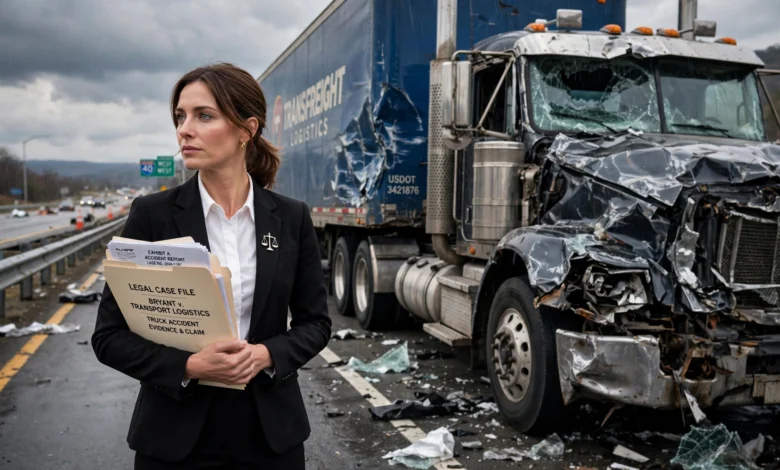
Truck accident lawsuits in California look a lot like car accident cases at first glance. Someone was careless, someone got hurt, and an insurance company is supposed to pay. But once you look past that first layer, the two types of cases split apart quickly. A fully loaded semi can weigh up to 80,000 pounds, roughly 20 times more than a typical passenger car. That weight changes everything about the crash, and it changes almost everything about the legal claim that follows.
In a normal fender bender, you deal with one other driver and one insurance adjuster. In a commercial truck accident, you may be up against a trucking company, a freight broker, a cargo loader, a repair shop, and a defense team that was on the phone before the tow truck arrived. Federal safety rules come into play. Key evidence sits in electronic logs and engine computers that can be overwritten if nobody acts fast. And the insurance policies are often worth far more, which means the other side fights harder to protect them.
This guide walks through the seven biggest ways a truck accident claim differs from a car accident claim in California. You will see who can be held responsible, which laws apply, what evidence matters most, how compensation works, and which deadlines you cannot afford to miss. If you or someone you love was hit by a big rig, understanding these differences early can protect the value of your case.
Why Truck Accident Lawsuits in California Are a Different Kind of Case
California moves an enormous amount of freight. Containers leave the ports of Los Angeles and Long Beach every day and head up I-5, across I-10 and I-15, and through the Central Valley on Highway 99. That means more big rigs sharing the road with commuters, and more serious crashes when something goes wrong.
The basic legal rule is the same for every vehicle. Under California Civil Code section 1714, everyone has a duty to use reasonable care, and anyone who breaks that duty is responsible for the harm it causes. To win, an injured person still has to prove four things:
- Duty: The defendant owed you a duty to drive or operate safely.
- Breach: They failed to meet that duty.
- Causation: That failure caused the crash and your injuries.
- Damages: You suffered real losses, such as medical bills, lost income, or pain.
What makes truck accident lawsuits in California different is everything layered on top of those four elements. Commercial trucks are a regulated industry, so the “reasonable care” question is often measured against detailed federal and state safety rules. The driver is usually working for someone else, which pulls a company into the case. And the evidence is digital, technical, and controlled by the defense. A car crash claim is often a dispute between two drivers. A truck crash claim is usually a case against a business.
7 Critical Differences Between Truck and Car Accident Claims in California
1. The Injuries Are Usually More Severe
Physics explains most of this. When an 80,000-pound truck hits a 4,000-pound sedan, the smaller vehicle absorbs nearly all the force. Crashes that would leave bruises in a car-on-car collision can be life-changing in a truck crash. Common injuries include:
- Traumatic brain injuries and concussions
- Spinal cord damage and paralysis
- Broken bones that need surgery, plates, or rods
- Severe burns from fuel fires or hazardous cargo
- Amputations and crush injuries
- Fatal injuries that lead to a wrongful death claim
Some crash types are mostly unique to trucks, such as underride collisions (where a car slides under the trailer), jackknifes, rollovers, and wide-turn accidents. Because these injuries often require years of care, the damages in a commercial truck accident case are usually far larger. That raises the stakes for everyone involved.
2. More Than One Party Can Be Liable
In most car crashes, the at-fault driver and their insurer are the only people on the other side. Trucking company liability opens the door much wider. Depending on the facts, a California truck crash case may name:

- The truck driver, for speeding, distraction, fatigue, impairment, or unsafe lane changes.
- The motor carrier (trucking company), under vicarious liability for an employee’s driving, or directly for negligent hiring, training, supervision, or pushing unrealistic delivery schedules.
- The owner of the tractor or trailer, when equipment is leased from a separate company.
- The shipper or cargo loader, if an overloaded or poorly secured load caused the truck to tip or spill.
- The freight broker, in some cases, for hiring a carrier with an obvious safety problem.
- A maintenance or repair shop, for faulty brake work or skipped inspections.
- A manufacturer, under product liability, for defective brakes, tires, steering, or underride guards.
- A government agency, if a dangerous road design or missing signage played a role.
One point matters a lot in California. Trucking companies often label drivers as independent contractors to avoid responsibility. California has strict tests for who counts as an employee, and a driver’s real working relationship can decide whether the company is on the hook. Sorting this out takes time and careful document review.
3. Federal and State Trucking Rules Apply
Car drivers follow the California Vehicle Code. Commercial truck drivers follow that too, plus a thick set of federal rules from the Federal Motor Carrier Safety Administration. These FMCSA regulations cover driver qualifications, drug and alcohol testing, vehicle inspections, cargo securement, and how long a driver can stay behind the wheel.
The hours of service rules are among the most important in crash cases. According to the FMCSA’s summary of hours of service regulations, a property-carrying driver may drive a maximum of 11 hours after 10 consecutive hours off duty, within a 14-hour on-duty window, and must take a 30-minute break after 8 hours of driving. Drivers who only operate within California follow state rules with slightly different limits, including a 12-hour driving cap for intrastate trips.
Why does this matter in court? Under California’s negligence per se doctrine (Evidence Code section 669), breaking a safety law meant to prevent this kind of harm can create a presumption of negligence. If logs show a driver was on hour 13 when the crash happened, that is powerful evidence.
4. The Evidence Is Technical and Disappears Fast
Car accident claims often rest on photos, a police report, and witness statements. A truck accident claim has all of that plus a long list of records that only the trucking company holds:
- Black box data from the engine control module, showing speed, braking, throttle, and cruise control in the seconds before impact
- Electronic logging device (ELD) records that track driving time and duty status
- GPS and telematics data showing the route and stops
- Forward-facing and driver-facing dashcam video
- The driver qualification file, including license history, past violations, and medical certificates
- Post-crash drug and alcohol test results
- Maintenance, inspection, and repair logs
- Bills of lading, weigh tickets, and dispatch messages
The problem is time. Federal rules only require carriers to keep some records, like hours of service logs, for six months. Engine data can be overwritten when the truck goes back into service. That is why a spoliation letter sent early, demanding that the company preserve all evidence, is one of the first things a California truck accident lawyer does. Once that letter is received, destroying evidence can lead to serious penalties for the defense.
5. Insurance Policies Are Bigger, and So Is the Fight
California’s minimum auto liability coverage for private cars is $30,000 per person, $60,000 per accident, and $15,000 for property damage. Those limits run out fast after a serious injury.
Interstate trucking companies must carry much more. Federal rules set the floor at $750,000 for general freight, with higher amounts for oil and hazardous materials, as described on the FMCSA’s insurance filing requirements page. Many carriers buy $1 million or more, and there may be several policies in play, including primary coverage, excess or umbrella policies, and separate trailer coverage.
More money on the table means more resistance. Large carriers and their insurers often send rapid response teams to crash scenes within hours. Their job is to gather evidence and shape the story early. Adjusters may call you quickly with a friendly tone and a low offer. Accepting it, or giving a recorded statement, can hurt your claim later.
6. Investigations and Litigation Take Longer
A simple rear-end car claim can settle in a few months. Truck accident lawsuits in California usually take longer because there is more to prove and more parties to coordinate. A typical case may involve:
- Accident reconstruction experts to recreate the crash from physical and electronic evidence
- Trucking safety experts who explain what the carrier should have done
- Medical specialists and life care planners to project future treatment costs
- Economists to calculate lost earning capacity over a lifetime
- Depositions of the driver, safety managers, and dispatchers
Out-of-state trucking companies may also try to move the case from California state court to federal court, which adds procedural steps. None of this means a case will drag on forever, but it does mean patience and preparation pay off.
7. Case Values Are Higher and Punitive Damages Are More Likely
Both car and truck crash victims in California can recover economic damages (medical bills, lost wages, property damage, future care) and non-economic damages (pain, emotional distress, loss of enjoyment of life). California does not cap non-economic damages in ordinary injury cases.
The difference is scale. Because injuries are more serious and insurance limits are higher, a truck accident settlement is often much larger than a typical car claim. Truck cases are also more likely to support punitive damages. Under Civil Code section 3294, a jury can award punitive damages when a defendant acted with malice, oppression, or fraud. A company that knowingly let drivers falsify logs, ignored repeated brake failures, or kept a driver with a history of DUIs could face that kind of award.
California Laws That Shape Truck Accident Lawsuits
A few state rules have an outsized effect on how truck accident lawsuits in California play out. Some help victims, and some create traps if you are not careful.
Pure Comparative Negligence
California follows comparative negligence in its purest form. Even if you were partly at fault, you can still recover damages. Your award is simply reduced by your share of the blame. If a jury finds you 20% responsible for a $500,000 loss, you can still collect $400,000. Trucking companies know this, so expect them to argue that you braked suddenly, merged too close, or sat in the truck’s blind spot. Good evidence keeps those arguments in check.
Proposition 51 and Multiple Defendants
This rule gets less attention, but it matters a great deal in truck cases. Under Civil Code section 1431.2 (Proposition 51), each defendant is fully responsible for your economic damages, like medical bills and lost wages. For non-economic damages, like pain and suffering, each defendant only pays its own percentage of fault. If a small maintenance shop is assigned 30% of the fault but has little insurance, you may not collect that share of your non-economic damages. Naming every responsible party, especially the well-insured carrier, protects your recovery.
The Statute of Limitations
The statute of limitations sets the deadline to file a lawsuit. In California:
- Personal injury: 2 years from the date of the crash (Code of Civil Procedure section 335.1)
- Wrongful death: generally 2 years from the date of death
- Property damage only: 3 years (Code of Civil Procedure section 338)
- Claims against a city, county, or state agency: a formal government claim must usually be filed within 6 months (Government Code section 911.2)
That six-month window catches many people off guard. If a city-owned garbage truck, a public transit bus, or a Caltrans road defect is involved, the clock runs much faster. Minors and a few other groups may get extra time, but you should never count on an exception without legal advice.
Proposition 213
If you were driving without insurance at the time of the crash, Proposition 213 generally bars you from recovering non-economic damages, even if the truck driver was completely at fault. You can still recover economic losses. There are exceptions, such as when the at-fault driver was under the influence, so it is worth getting the facts reviewed.
Truck Accident Claim vs. Car Accident Claim at a Glance
| Factor | Car Accident Claim | Truck Accident Lawsuit in California |
|---|---|---|
| Typical defendants | One driver and their insurer | Driver, carrier, owner, loader, broker, repair shop, manufacturer |
| Rules that apply | California Vehicle Code | Vehicle Code plus FMCSA regulations and state trucking rules |
| Minimum insurance | $30,000 / $60,000 / $15,000 | $750,000 or more for interstate general freight |
| Key evidence | Photos, police report, witnesses | All of that plus ECM data, ELD logs, dashcams, driver and maintenance files |
| Evidence risk | Low | High; some records can be legally discarded within months |
| Experts needed | Sometimes | Almost always |
| Typical timeline | Months | Often a year or more |
| Punitive damages | Rare | More common when company misconduct is shown |
What to Do After a Truck Accident in California
The steps you take in the first days can shape the whole case. If you are able, try to do the following:
- Get medical care right away. Some serious injuries, like brain trauma and internal bleeding, do not show symptoms immediately. Medical records also link your injuries to the crash.
- Call 911 and get a police report. The California Highway Patrol often handles truck crashes on highways. Ask for the report number.
- Document the scene. Photograph the truck, the trailer, the company name and USDOT number on the cab door, the license plates, road conditions, skid marks, and your injuries.
- Collect witness information. Names and phone numbers of anyone who saw the crash can be hard to find later.
- Do not give a recorded statement. Politely decline to discuss fault with the trucking company’s insurer until you have advice.
- Keep every record. Save medical bills, pay stubs, repair estimates, and a simple daily journal of your pain and limitations.
- Talk to a lawyer quickly. The sooner a preservation letter goes out, the better the chance that logs, video, and engine data survive.
Do You Need a California Truck Accident Lawyer?
For a minor car crash with clear fault and small medical bills, some people handle the claim on their own. Truck cases are a different story. The defense has a head start, the rules are technical, and the evidence is in the other side’s hands. A California truck accident lawyer who regularly handles these cases knows which records to demand, which experts to hire, and how to spot federal violations hidden in driver logs.
Most injury attorneys work on a contingency fee. That means you pay nothing upfront, and the lawyer is paid a percentage of the recovery only if the case succeeds. When you meet with an attorney, ask how many truck cases they have handled, whether they have taken trucking companies to trial, and how they plan to preserve evidence in your case.
Frequently Asked Questions
How long do I have to file a truck accident lawsuit in California?
In most cases, you have two years from the date of injury. If a public agency is involved, you usually need to file a government claim within six months. Waiting too long can end your case before it starts.
Can I sue the trucking company and not just the driver?
Yes. Employers are generally responsible for their employees’ negligent driving on the job. A carrier can also be directly liable for poor hiring, weak training, unsafe schedules, or skipped maintenance.
What if I was partly at fault for the crash?
You can still recover. California’s comparative negligence rule reduces your compensation by your percentage of fault, but it does not bar your claim.
How much is a truck accident case worth?
There is no set number. Value depends on the severity of injuries, future medical needs, lost earning capacity, the strength of the liability evidence, and available insurance. Serious injury cases involving commercial trucks often settle for far more than comparable car cases.
Conclusion
Truck accident lawsuits in California share the same legal foundation as car accident claims, but almost everything built on top of it is different: the injuries are more severe, several companies may share the blame, federal hours of service and safety rules set the standard of care, critical evidence like black box data and ELD logs can vanish within months, insurance policies are larger and defended more aggressively, cases take longer and need more experts, and damages, including the chance of punitive damages, tend to be much higher.
Add California’s comparative negligence rule, Proposition 51, the two-year filing deadline, and the six-month window for claims against public agencies, and it is clear why a truck crash should never be treated like a routine fender bender. Acting quickly, preserving evidence, and getting experienced legal guidance give you the best chance at a fair recovery.
