Workers’ Compensation Insurance Fraud in Illinois: Penalties and Consequences
Workers' compensation insurance fraud in Illinois carries felony charges, prison time, and steep fines. Here's what the law actually says.
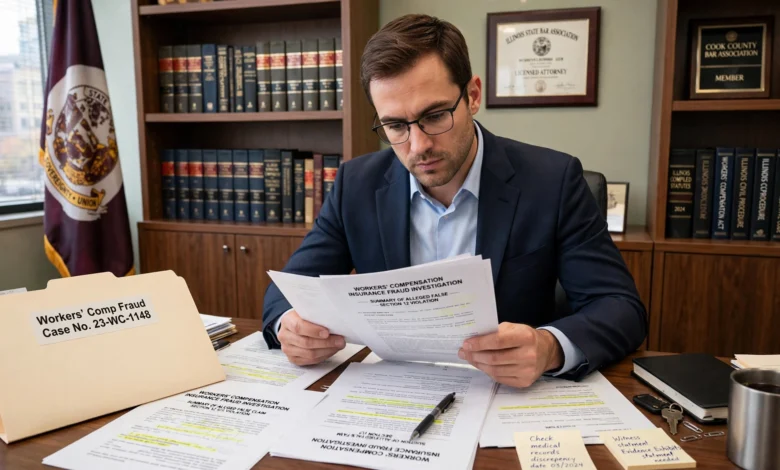
Workers’ compensation insurance fraud in Illinois is not a paperwork problem you can talk your way out of. It’s a criminal offense under the Illinois Workers’ Compensation Act, and depending on what happened, it can turn into a felony record, a prison sentence, and a bill for triple damages. Whether you’re an injured worker wondering how far you can stretch the truth on a claim form, an employer thinking about skipping coverage to save money, or a business owner who just got a letter from the Illinois Department of Insurance, you need to understand what the law actually says before you make your next move.
Illinois takes this seriously enough that it built an entire investigative unit just to chase down fraud in the workers’ comp system: the Workers’ Compensation Fraud Unit (WCFU), housed inside the Department of Insurance. That unit exists because fraud isn’t rare or victimless. It drives up insurance premiums for every honest employer in the state, and it delays or denies benefits for workers who have real injuries.
This article walks through exactly what counts as fraud under Illinois law, who can be charged, what the criminal and civil penalties look like, and what happens after you’re accused. If you’re trying to understand your exposure, or you’re just trying to stay on the right side of the law, this is the breakdown you need.
What Counts as Workers’ Compensation Fraud in Illinois
Workers’ compensation fraud in Illinois is defined under Section 25.5 of the Illinois Workers’ Compensation Act (820 ILCS 305/25.5). The statute doesn’t just target injured employees faking a bad back. It covers a wide range of people connected to the claims process, including employees, employers, insurance carriers, healthcare providers, and even attorneys or adjusters who knowingly participate in a false claim.
Under the statute, it’s illegal for any person, company, corporation, insurance carrier, healthcare provider, or other entity to:
- Intentionally present or cause to be presented a false or fraudulent claim for workers’ compensation benefits
- Intentionally make a false or fraudulent statement to obtain or deny a benefit
- Make a false statement intended to prevent an injured worker from filing a legitimate claim
- Prepare or provide a fake or invalid certificate of insurance
- Intentionally underreport payroll or misrepresent the nature of a business to lower premiums
- Help, assist, or conspire with anyone committing any of the acts above
- Present a bill or statement for medical services that were never actually provided
- Knowingly and intentionally deny valid benefits with no reasonable basis for doing so
That last point matters because it shows fraud isn’t a one-way street. Illinois workers’ comp fraud law applies just as much to employers and insurers who cheat the system in the other direction, denying legitimate claims or dodging coverage obligations, as it does to workers who exaggerate injuries.
Common Examples of Employee Fraud
Fraud committed by employees generally falls into a few recurring patterns:
- Faking an injury that never happened, or claiming an off-the-job injury occurred at work
- Exaggerating the severity of a real injury to extend benefits or increase a settlement
- Working a second job while collecting temporary total disability benefits
- Lying about prior injuries or a pre-existing condition on an application
- Continuing to collect benefits after being medically cleared to return to work
Common Examples of Employer and Insurer Fraud
On the other side of the claim, employers and insurance companies commit fraud when they:
- Misclassify employees as independent contractors to avoid paying premiums
- Underreport payroll to the insurance carrier to lower the cost of coverage
- Fail to carry workers’ compensation insurance at all despite being legally required to
- Intentionally deny or delay a legitimate claim without a valid basis
- Pressure or coach employees to lie about how an injury occurred to shift liability
Both categories are prosecuted under the same statute, and Illinois investigators actively pursue both. The Illinois Department of Insurance has said publicly that employer-side and provider-side fraud, not just employee claims, make up a substantial share of its caseload.


Criminal Penalties for Workers’ Compensation Fraud in Illinois
This is the part most people searching this topic actually want to know: what happens if you get caught?
Illinois workers’ compensation fraud penalties scale with the value of the fraud and the role of the person involved. Under 820 ILCS 305/25.5(b), a violation of the core fraud provisions is generally classified as a Class 4 felony.
A Class 4 felony conviction in Illinois can carry:
- 1 to 3 years in prison
- Fines of up to $25,000
- Mandatory restitution to any person or entity defrauded, on top of the fine
- A permanent felony record, which affects employment, licensing, and gun ownership rights
If the fraud involves higher dollar amounts, or if it’s charged as a broader theft or insurance fraud offense rather than under the workers’ comp-specific statute, penalties can climb higher. Illinois’ general theft and fraud sentencing structure allows charges as severe as a Class 1 felony, carrying 4 to 15 years in prison and fines up to $25,000, for offenses involving property or benefits valued at more than $100,000.
Misdemeanor Charges
Not every violation reaches felony level. Some fraud-related conduct is charged as a Class A misdemeanor, which carries:
- Up to 12 months in jail
- A fine of up to $2,500
For example, anyone who knowingly files a false report accusing someone else of workers’ comp fraud is guilty of a Class A misdemeanor. That provision exists to discourage people from weaponizing fraud accusations against coworkers or employers.
Employer-Specific Criminal Exposure
Employers face a distinct set of criminal consequences tied to insurance compliance, separate from the fraud provisions:
- Corporate officers who negligently fail to obtain required workers’ comp insurance are guilty of a Class A misdemeanor.
- Corporate officers who knowingly fail to obtain coverage are guilty of a Class 4 felony, exposing them to the same 1-to-3-year prison range and up to $25,000 in fines as employee-side fraud.
- An employer that knowingly operates without required coverage also loses the legal protections of the Workers’ Compensation Act, which means an injured employee can sue the employer directly in civil court, where damages are not capped the way they are under the Act.
Civil Penalties and Financial Consequences
Criminal charges are only part of the picture. Illinois workers’ compensation fraud consequences also include a separate track of civil and administrative penalties that can hit just as hard financially, even without a criminal conviction.
Civil Fines
The Illinois Workers’ Compensation Commission (IWCC) can impose civil penalties for fraud and insurance non-compliance. Employers who knowingly and willfully fail to carry required coverage face:
- A civil fine of up to $500 for every day the business operated without insurance
- A minimum penalty of $10,000, even if the lapse was brief
- Personal liability for corporate officers if the company itself doesn’t pay the penalty within 30 days of a final Commission order
Employers with two or more violations also lose the ability to self-insure for at least a year, or until every outstanding penalty is paid in full.
Treble Damages
One of the sharpest financial consequences under Illinois law is the treble damages provision. Under 820 ILCS 305/25.5, a person or entity that successfully proves it was defrauded can recover:
- Three times the value of benefits or insurance coverage that was wrongfully obtained, or
- Twice the value of benefits or coverage that was attempted to be obtained but not actually received
On top of that multiplier, the successful party can also recover reasonable attorney’s fees and expenses. That means a fraudulent claim worth $30,000 in benefits could expose the person responsible to roughly $90,000 in civil liability, not counting legal costs or any separate criminal fine.
Restitution
Regardless of the civil penalty track, anyone convicted criminally under Section 25.5 must also pay complete restitution to whoever was defrauded, in addition to any fine or sentence. Restitution and civil damages are not mutually exclusive; a person can be ordered to pay both.
Loss of Benefits and Other Consequences for Injured Workers
For an employee, getting caught committing workers’ comp fraud in Illinois doesn’t just mean criminal exposure. It typically ends the claim entirely.
- Denial of the current claim, even for the portions that may have been legitimate
- Forfeiture of future benefits connected to that claim
- Termination, since most employers treat proven fraud as grounds for immediate dismissal
- Difficulty finding future employment, particularly in industries that run background checks or require professional licensing
- A felony record that follows the person well beyond the workers’ comp case itself
Insurance carriers and employers are also legally entitled to pursue civil recovery of any benefits already paid out under a fraudulent claim, separate from whatever the courts or the IWCC decide to impose as punishment.
Who Investigates and Prosecutes Workers’ Comp Fraud in Illinois
Fraud cases don’t move through the regular workers’ comp claims process. They’re handled by a dedicated enforcement structure.
The Workers’ Compensation Fraud Unit (WCFU)
The Workers’ Compensation Fraud Unit, operated by the Illinois Department of Insurance, is responsible for investigating allegations of fraud and insurance non-compliance under the Act. Anyone, including coworkers, employers, medical providers, or insurance adjusters, can report suspected fraud to the WCFU, but the report has to include enough specific, identifying information for the unit to actually open an investigation. Anonymous tips without real detail generally won’t move forward.
The WCFU has subpoena power, including the authority to subpoena medical records connected to a claim under investigation, and it works closely with the Illinois Attorney General’s office and local State’s Attorneys, who hold the actual authority to bring criminal charges.
The Illinois Workers’ Compensation Commission (IWCC)
The Illinois Workers’ Compensation Commission handles the administrative side, including civil penalties tied to insurance non-compliance, such as employers operating without required coverage. The IWCC and the Department of Insurance coordinate on cases, but they operate under separate statutory authority.
Referral for Prosecution
Once the WCFU completes its investigation, if there’s sufficient evidence of a violation, the case gets referred to the Illinois Attorney General or the relevant county State’s Attorney for prosecution. Criminal charges then move through the regular Illinois court system, not through the Commission.
How to Report Suspected Workers’ Compensation Fraud
If you suspect fraud, whether by an employee, an employer, a medical provider, or an insurance company, you can file a report directly with the state.
To report fraud to the Illinois Department of Insurance:
- Email: DOI.WorkCompFraud@illinois.gov
- Toll-free phone: 877-923-8648
- Mailing addresses: 122 S. Michigan Ave, Floor 19, Chicago, IL 60603, or 320 W. Washington St., Springfield, IL 62786
If the suspected fraud involves a State of Illinois employee’s claim, reports go instead to the state’s risk management firm at 800-452-5452.
Keep in mind: filing a knowingly false fraud report is itself a Class A misdemeanor. Reports should be based on genuine, specific concerns, not used as leverage in a workplace dispute.
What Happens If You’re Accused of Workers’ Comp Fraud in Illinois
Being accused isn’t the same as being convicted, and Illinois law still requires the state to prove intent. Fraud under Section 25.5 requires that the false statement or claim was made intentionally. An honest mistake, a misunderstanding about coverage dates, or a genuine disagreement about the severity of an injury generally does not meet that bar on its own.
If you’ve been accused or you’re under investigation, a few things are worth knowing:
- The WCFU investigates before any criminal charge is filed. Being contacted by an investigator doesn’t automatically mean charges are coming.
- You have the right to legal representation at every stage, including during an investigation, not just after charges are filed.
- Civil and criminal exposure run on separate tracks. It’s possible to face a civil penalty from the IWCC without ever being criminally charged, and vice versa.
- Documentation matters enormously. Medical records, correspondence, and payroll records are usually what determine whether a case moves forward.
Anyone facing an active investigation or formal charges should talk to an attorney with specific experience in Illinois workers’ compensation and fraud defense, since the interplay between the Act, the criminal code, and IWCC procedure is genuinely complicated.
Why Illinois Enforces These Penalties So Aggressively
It’s worth understanding the reasoning behind how hard Illinois comes down on this. Workers’ compensation fraud isn’t a victimless paperwork violation. Every fraudulent claim that gets paid out raises the cost of coverage for every other employer paying into the system, and every employer that skips coverage or underreports payroll shifts risk onto workers who have no idea their employer isn’t actually covering them.
The state has also made a point of stressing that fraud investigations aren’t limited to injured workers filing exaggerated claims. Data from the Department of Insurance shows a meaningful share of investigated cases involve employer-side and provider-side conduct, including misclassification schemes, unreported payroll, and billing for services that were never performed. The 2005 reforms that created the WCFU, and the 2011 reforms that toughened sentencing, were both aimed squarely at closing gaps that had let fraud on all sides of the claims process go largely unpunished for years.
Frequently Asked Questions
Is workers’ compensation fraud a felony in Illinois? Yes, in most cases. A violation of Section 25.5 of the Illinois Workers’ Compensation Act is generally charged as a Class 4 felony, punishable by 1 to 3 years in prison and a fine of up to $25,000. Some conduct, like filing a false fraud report, is charged as a lesser Class A misdemeanor instead.
Can an employer go to prison for workers’ comp fraud in Illinois? Yes. Corporate officers who knowingly fail to carry required coverage face Class 4 felony charges, the same as employee-side fraud. Officers who negligently, rather than knowingly, fail to obtain coverage face a lesser Class A misdemeanor.
What is the penalty for an uninsured employer in Illinois? An employer that knowingly and willfully operates without workers’ compensation insurance faces a civil fine of up to $500 per day of noncompliance, with a minimum penalty of $10,000, in addition to any criminal charges.
Do I need a lawyer if I’m being investigated for workers’ comp fraud? Given the felony exposure, civil treble damages, and the involvement of both the Department of Insurance and, potentially, the Attorney General’s office, most people under investigation benefit significantly from experienced legal representation before speaking with investigators.
Conclusion
Workers’ compensation fraud in Illinois carries real, layered consequences that go well beyond a denied claim. Under 820 ILCS 305/25.5, most violations are prosecuted as Class 4 felonies carrying up to three years in prison and $25,000 in fines, while related misconduct, like filing a false fraud report or negligently skipping insurance coverage, can bring Class A misdemeanor charges instead. On top of criminal penalties, the state can pursue civil fines, treble damages equal to three times the value of benefits wrongfully obtained, mandatory restitution, and permanent forfeiture of benefits for workers found to have filed fraudulent claims.
The Illinois Department of Insurance’s Workers’ Compensation Fraud Unit and the Illinois Workers’ Compensation Commission both actively investigate and refer cases for prosecution, and the law applies just as forcefully to employers and insurers who cheat the system as it does to employees who exaggerate or fabricate injuries. If you’re involved in a dispute touching on any of this, whether as someone accused, someone reporting suspected fraud, or an employer trying to stay compliant, understanding these penalties upfront is the best way to protect yourself.