Disability Insurance Denials in Ohio: Legal Options When Benefits Are Blocked
Facing disability insurance denials in Ohio? Learn your legal rights, appeal deadlines, and options for fighting back and winning benefits.
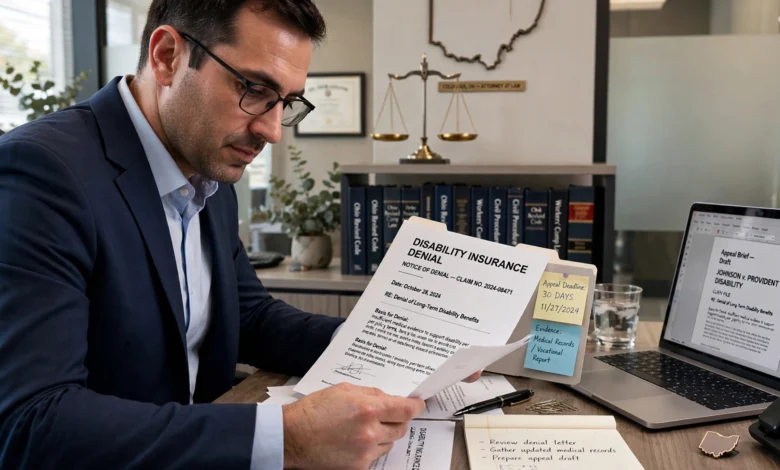
You paid your premiums. You did everything your policy asked. Then the letter showed up, denying the benefits you were counting on to pay your mortgage and keep your family afloat. If you’re dealing with a disability insurance denials in Ohio, you’re not alone, and you’re not out of options.
Every year, thousands of Ohio workers who become too sick or injured to work run into the same wall: an insurance company that decides, often on paper alone, that they don’t qualify for benefits. It happens to people with cancer, heart disease, chronic pain, autoimmune disorders, and mental health conditions that a doctor has diagnosed and documented. The insurer’s reasoning can feel arbitrary, even insulting, when you’re the one living with the condition every day.
The good news is that a denial letter isn’t the final word. Ohio residents who carry either an employer-sponsored long-term disability plan or a private disability policy have real, structured legal paths to challenge a denial. Some of those paths run through federal law, others through Ohio state courts, and the right one depends on how your policy was set up in the first place.
This guide walks through why disability insurance claims get denied in Ohio, what deadlines you’re up against, and the legal options available to fight back, whether you’re dealing with Unum, MetLife, Prudential, Guardian, The Hartford, or another major carrier.
Why Disability Insurance Denials Happen in Ohio
Insurance companies are businesses, and every dollar paid out in benefits is a dollar not kept as profit. That reality shapes how claims get reviewed. Understanding the common reasons behind a disability claim denial helps you figure out which legal strategy fits your situation.
Common Reasons Insurers Deny Claims
- Insufficient medical evidence. The insurer claims your medical records don’t support the level of impairment you’re reporting.
- Independent medical exam (IME) disputes. A doctor hired by the insurance company, who may spend 20 minutes with you, disagrees with your own treating physician.
- Missed deadlines. Claims and appeals in Ohio, especially those governed by federal law, come with strict filing windows.
- Policy definition disputes. Many policies distinguish between being unable to do “your own occupation” versus “any occupation,” and insurers often shift the standard after the first two years of benefits.
- Surveillance and social media. Insurers sometimes use video surveillance or social media posts to argue you’re more capable than you claim.
- Pre-existing condition exclusions. If a condition existed before your coverage started, the insurer may argue it’s excluded.
- Inconsistent statements. Gaps or contradictions between your application, medical records, and daily activity reports can trigger denial.
Common reasons for denial include discrepancies in the definition of disability, missing medical records, procedural errors, inconsistent information, bad faith by insurance, and lack of understanding of rare medical conditions, according to Ohio disability attorneys who handle these cases regularly.
ERISA vs. Private Disability Policies in Ohio
One of the most important things to understand about a disability insurance denial in Ohio is which legal framework governs your claim, because it changes almost everything about how you fight it.
ERISA-governed plans: If your disability coverage comes through your employer, it’s very likely governed by the Employee Retirement Income Security Act (ERISA), a federal law originally passed in 1974 to protect pension benefits and later expanded to cover most employer-sponsored benefit plans, including group long-term disability insurance. ERISA generally applies to private-sector, employer-sponsored LTD plans, but it does not apply to government employee plans, most church plans, or individual policies you purchased directly.
Non-ERISA plans: If you bought an individual disability policy on your own, or if you work for a government entity, school district, or church, ERISA likely doesn’t apply. Instead, your claim is generally governed by Ohio state insurance law and contract law, which opens the door to different remedies, including a bad faith insurance claim in some circumstances.


This distinction matters enormously because ERISA claims are decided by a judge, not a jury, are usually limited to the paperwork already in your file, and cap the damages you can recover to the benefits owed. Non-ERISA state law claims in Ohio can allow for a jury trial and, in cases of true bad faith, additional damages beyond the unpaid benefits themselves.
Understanding the Appeal Process for ERISA Long-Term Disability Denials
If your denied claim falls under ERISA, federal regulations lay out a specific process you have to follow before you can ever step into a courtroom.
The Mandatory Internal Appeal
Under ERISA, you typically have 180 days from the date you received the denial letter to file a written appeal. That deadline comes from federal regulations under 29 CFR 2560.503-1, and missing it can permanently forfeit your right to challenge the denial.
Once you submit your appeal, the insurer has its own clock to run:
- The plan must decide your appeal within 45 days.
- The insurer can take one additional 45-day extension for “special circumstances,” but only with written notice to you.
- If the insurer still denies your claim after the internal appeal, you generally must exhaust that internal process before filing a lawsuit in federal court.
This is why the appeal stage matters so much. Under ERISA, courts reviewing your case afterward are often limited to the evidence already in the administrative record, meaning the appeal you submit may be your only real chance to build the record that a judge will eventually see. A rushed, thin appeal can quietly close the door on your case before it ever reaches court.
What a Strong ERISA Appeal Should Include
- A detailed written argument addressing every reason the insurer cited for denial
- Updated medical records, test results, and treatment notes
- Statements from treating physicians directly rebutting the insurer’s independent medical exam or peer review
- Vocational evidence showing why you can’t perform your own occupation, or any occupation, depending on your policy’s definition
- A request for your complete claim file, since ERISA regulations require the insurer to give you access to it
- Documentation of any procedural errors, missed deadlines, or signs of bias on the insurer’s part, since these can affect how much deference a court later gives the insurer’s decision
Meeting the deadline with a complete package matters far more than sending a short letter promising more documentation later. Once that appeal window closes, the opportunity to add new evidence largely closes with it.
Filing an ERISA Lawsuit After a Denied Appeal
If the insurer upholds its denial after your internal appeal, your next step is filing a lawsuit in federal court. This is where having an attorney who specifically handles ERISA disability claims becomes almost essential, since these cases follow federal procedural rules that differ sharply from a typical Ohio personal injury or contract case.
What Makes ERISA Litigation Different
- No jury trial. ERISA disability cases are decided by a judge based largely on the administrative record built during your appeal.
- Limited damages. You can generally recover only the benefits owed, plus possibly attorney’s fees and interest, not the emotional distress or punitive damages available in some state law claims.
- Standard of review matters. Courts apply either a “de novo” standard (deciding the case fresh) or a deferential “arbitrary and capricious” standard, depending on how your specific plan is written. Which standard applies can significantly affect your odds of winning.
- Recent legal developments matter. In 2024, the U.S. Supreme Court’s decision in Loper Bright v. Raimondo ended the requirement that courts defer to federal agencies’ interpretations of ambiguous laws, a shift that has already influenced how some ERISA disability cases are decided, giving judges more latitude to scrutinize insurer decisions.
Because ERISA long-term disability cases are fought almost entirely on documents rather than live testimony, the strength of your case often comes down to how well your appeal was built months earlier. This is one of the clearest reasons to bring in legal help before you submit your internal appeal, not after.
Legal Options for Non-ERISA Disability Denials in Ohio
If your disability insurance denial doesn’t fall under ERISA, whether because you bought an individual policy or work for a government employer, your legal options actually broaden.
Breach of Contract Claims
At its core, a disability insurance policy is a contract. If the insurer denied a claim that meets the plain terms of your policy, you may have grounds for a breach of contract lawsuit under Ohio law. Unlike ERISA cases, this route can allow for a jury trial, live witness testimony, and a broader range of evidence than what was in the insurer’s file.
Bad Faith Insurance Claims in Ohio
Ohio law recognizes that insurance companies owe policyholders a duty of good faith and fair dealing. When an insurer denies a valid claim without a reasonable basis, or fails to properly investigate before denying, that can amount to bad faith. Ohio courts have allowed policyholders to pursue bad faith claims separate from the underlying contract dispute, and successful bad faith claims can open the door to damages beyond just the unpaid benefits, including in some cases punitive damages.
To prove bad faith in Ohio, you generally need to show:
- The insurer lacked a reasonable justification for denying the claim, and
- The insurer knew, or recklessly disregarded, that there was no reasonable basis for the denial
This is a higher bar than simply showing the insurer was wrong. It requires demonstrating the insurer’s conduct crossed the line from a debatable coverage decision into unreasonable claims handling.
Ohio Department of Insurance Complaints
Policyholders can also file a complaint with the Ohio Department of Insurance, which regulates insurance companies operating in the state and investigates consumer complaints about claims handling practices. While a department complaint won’t force an insurer to pay your claim directly, it creates a regulatory record and can sometimes prompt an insurer to take a second, more careful look at a denial. It’s rarely a substitute for legal action, but it can support a broader strategy.
Social Security Disability Denials: A Separate but Related Process
Many Ohioans dealing with a private or employer disability denial are simultaneously navigating a Social Security Disability Insurance (SSDI) claim, since long-term disability policies often require applicants to also apply for SSDI. It’s worth understanding this process runs on an entirely different track.
Almost 80% of initial SSDI and SSI applications are denied by the Social Security Administration on first review, which surprises a lot of applicants who assume a denial means they don’t qualify. In most cases, it simply means the appeal process hasn’t happened yet.
If you applied for Social Security disability benefits and were denied, you generally must request an appeal within a 60-day deadline. The SSDI appeals process typically moves through these stages:
- Reconsideration – A new reviewer at Disability Determination Services examines your case, often with newly submitted evidence.
- Hearing before an Administrative Law Judge – If reconsideration is denied, you can request a hearing, where many claims are approved.
- Appeals Council review – If the ALJ denies your claim, you can ask the Social Security Appeals Council to review the decision.
- Federal court review – As a last resort, you can file a lawsuit in federal district court.
The Social Security Administration publishes official guidance on filing deadlines and the appeals process, and it’s worth reviewing directly if you’re navigating an SSDI denial alongside a private disability claim.
Practical Steps to Take After a Disability Denial in Ohio
Whether your claim falls under ERISA or Ohio state law, there are practical moves that improve your odds no matter which legal path you take.
1. Read the Denial Letter Carefully
The letter should state the specific reason for denial and reference the policy provisions the insurer relied on. This isn’t just paperwork, it’s your roadmap for what needs to be addressed in an appeal.
2. Request Your Complete Claim File
You’re generally entitled to see everything the insurer used to make its decision, including any IME reports, peer reviews, and internal notes. Reviewing this file often reveals exactly where the insurer’s reasoning is weak.
3. Get Updated Medical Documentation
Insurers frequently deny claims by pointing to gaps in treatment or thin medical notes. Consistent, detailed documentation from your treating physicians strengthens any appeal or lawsuit.
4. Track Every Deadline
Missed deadlines are one of the most common and most avoidable reasons a strong disability claim falls apart. Mark every appeal window the moment you receive a denial letter, whether it’s the 180-day ERISA appeal deadline or the 60-day SSDI appeal window.
5. Avoid Common Mistakes
- Don’t assume a denial is final without exploring your appeal rights.
- Don’t submit a vague or incomplete appeal just to meet the deadline.
- Don’t rely solely on verbal conversations with claims adjusters; put everything in writing.
- Don’t ignore surveillance or social media exposure, since insurers do use both.
6. Consult an Attorney Early
Because ERISA appeals often set the entire evidentiary record for a later lawsuit, waiting until after a denied appeal to seek legal help can limit what an attorney is able to do for you. Many Ohio disability attorneys offer free consultations specifically because the earlier they get involved, the stronger the case they can build.
7. Consider a Second Opinion on Your Policy
Some Ohioans don’t realize their coverage isn’t governed by ERISA at all, which can dramatically change their legal options. Having an attorney review your specific plan documents early on clarifies which of the paths above actually apply to your case.
How Long Does the Process Take?
Timelines vary widely depending on the type of claim and how many appeal stages are needed.
- ERISA internal appeal: Insurer has up to 90 days total (45 days plus one 45-day extension) to decide.
- ERISA lawsuit: Federal litigation can take anywhere from several months to a few years, depending on court schedules and complexity.
- SSDI reconsideration: Often several months.
- SSDI ALJ hearing: Can take a year or longer in many regions due to backlog.
- Ohio bad faith or breach of contract claims: Timelines depend on the county court’s docket and whether the case settles or goes to trial.
Patience matters here, but so does persistence. A denial that gets appealed properly, with strong medical and vocational evidence, has a meaningfully better chance of reversal than one left unchallenged.
When to Bring in a Disability Insurance Attorney
Not every denial requires a lawyer, but certain situations make legal representation especially valuable:
- Your policy is governed by ERISA and you’re preparing an internal appeal
- The insurer relied heavily on an independent medical exam that contradicts your treating physicians
- You suspect bad faith conduct, such as an insurer ignoring medical evidence or failing to properly investigate
- Your benefits were terminated after an initial approval period, often when the policy’s definition of disability shifts from “own occupation” to “any occupation”
- You’re facing a complex claim involving multiple conditions, vocational disputes, or surveillance evidence
Most disability insurance attorneys in Ohio work on a contingency basis for these cases, meaning you don’t pay unless they recover benefits on your behalf, which lowers the barrier to getting a professional opinion on your options.
Frequently Asked Questions
Does Ohio law or federal law apply to my disability denial? It depends on how you obtained your coverage. Employer-sponsored group plans are usually governed by ERISA, while individually purchased policies and most government employee plans fall under Ohio state law.
How long do I have to appeal a long-term disability denial in Ohio? For ERISA-governed plans, you generally have 180 days from the date of the denial letter. For SSDI denials, the window is 60 days. Always check your specific denial letter, since deadlines can vary by policy.
Can I sue my disability insurance company in Ohio? Yes, though the process differs depending on whether ERISA applies. ERISA claims require exhausting the internal appeal first, then filing in federal court. Non-ERISA claims can potentially be filed in Ohio state court, including breach of contract or bad faith claims.
What if my disability insurance benefits were approved and then later terminated? This is common when a policy shifts from an “own occupation” standard to an “any occupation” standard, usually around the two-year mark. You typically have the same appeal rights as an initial denial.
Conclusion
A disability insurance denial in Ohio can feel like the system was built to work against you, and in some ways, the deck is stacked toward insurers who have every financial incentive to deny claims and limited incentive to pay them. But Ohio residents facing a denied claim, whether through an ERISA-governed employer plan, a private policy, or Social Security disability benefits, have real legal paths forward, from internal appeals and federal lawsuits to state law bad faith claims and Department of Insurance complaints.
The path that fits your situation depends on how your coverage was structured, how strong your medical evidence is, and how carefully you meet the deadlines in front of you. Acting early, documenting everything, and getting the right legal guidance before your appeal window closes gives you the best shot at turning a denial into the benefits you were promised.