Amusement Park Injury Claims in Ohio: What Victims Need to Prove
Amusement park injury claims in Ohio? Here is what you must prove to win an injury claim, from negligence and waivers to strict deadlines under Ohio law.
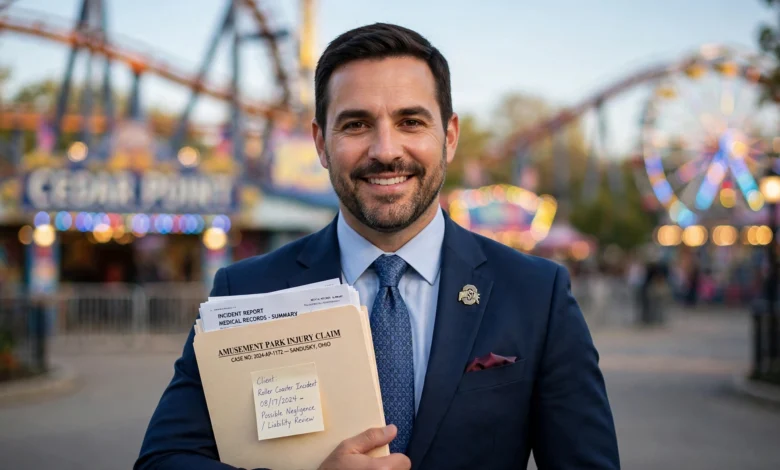
Amusement park injury claims in Ohio are more complicated than most people expect. You go to a theme park, a county fair, or a water park for a fun day out, and you leave with a broken bone, a head injury, or worse. It feels obvious that someone should be responsible. But feeling that way and proving it in a legal claim are two very different things.
Ohio is home to some of the most visited parks in the country, along with dozens of water parks, family entertainment centers, and traveling carnivals that set up at county fairs every summer. Millions of people ride roller coasters, water slides, and spinning rides across the state each year. Most visits go fine. When they don’t, the injured person has to show more than the fact that they got hurt.
To recover money for medical bills, lost wages, and pain and suffering, you generally need to prove that the park or another party did something wrong, that this wrongdoing caused your injury, and that you suffered real damages as a result. You also have to deal with defenses like assumption of risk, liability waivers, and Ohio’s comparative fault rules.
This guide walks through what an Ohio amusement park injury victim actually needs to prove, which laws apply, what evidence matters most, and the deadlines you can’t afford to miss. If you or someone in your family was hurt on a ride or at a park, this is a good place to start understanding where you stand.
Why Amusement Park Injury Claims in Ohio Are Different From Other Injury Cases
A typical car accident case has a fairly familiar structure. Someone ran a red light, someone got hurt, and the insurance companies argue about fault and value. Amusement park injury claims in Ohio add several layers that make them harder.
State Regulation of Amusement Rides
Ohio regulates amusement rides through the Ohio Department of Agriculture, which runs a dedicated ride safety program. Under Ohio Revised Code sections 1711.50 through 1711.57, ride owners must obtain permits, have their rides inspected, and carry insurance. Operators are also required to report serious injuries and accidents to the state.
You can read about the state’s inspection program on the Ohio Department of Agriculture Amusement Ride Safety page. This matters for your claim because inspection records, violation notices, and accident reports can become important evidence.
Ohio tightened its oversight after the 2017 Ohio State Fair accident, when the Fire Ball ride broke apart and killed 18-year-old Tyler Jarrell and injured several others. Investigators later linked the failure to internal corrosion. The tragedy led to legislation often called Tyler’s Law, which strengthened inspection and recordkeeping requirements for ride operators.
Multiple Parties Can Share Responsibility
In many theme park injury claim situations, more than one party may be at fault. These can include:

- The park owner or operator, who is responsible for maintaining safe premises and properly running rides.
- The ride manufacturer, if a design or manufacturing defect caused the accident.
- Maintenance contractors, if outside companies handled repairs or inspections.
- Traveling carnival companies, which often own and operate the rides at county and state fairs.
- Government entities, in some cases involving publicly owned fairgrounds or parks.
Identifying every responsible party early is important because each one may have separate insurance coverage and separate legal defenses.
Tickets, Waivers, and Fine Print
Many parks print liability language on tickets, season passes, or signage. Water parks, trampoline parks, and adventure courses often ask visitors to sign formal waivers. These documents don’t automatically kill a claim, but they can shape how it plays out. We’ll cover waivers in more detail below.
The 7 Things You Must Prove in Amusement Park Injury Claims in Ohio
Most amusement park injury claims in Ohio are built on negligence. Some also involve product liability claims against manufacturers. Either way, the injured person carries the burden of proof. Here’s what that usually looks like.
1. The Park or Operator Owed You a Duty of Care
The first element is duty. In Ohio premises liability law, what a property owner owes you depends on why you were there. Paying customers at an amusement park are generally treated as business invitees, which is the category that receives the highest level of protection.
That means the park must:
- Keep its grounds reasonably safe for visitors.
- Inspect for hazards it knows about or should reasonably discover.
- Repair dangerous conditions or give adequate warnings.
- Operate rides according to manufacturer guidelines and state rules.
- Train and supervise employees properly.
Duty is usually the easiest element to establish in an amusement park case, since you bought a ticket and entered as a customer. It gets more complicated if you were somewhere you weren’t allowed to be, such as a restricted maintenance area, or if you snuck in without paying.
2. The Park Breached That Duty
Next, you have to show the park fell short of what a reasonable operator would have done. This is where most of the fight happens. Examples of breach in a negligence claim against a park include:
- Failing to perform required inspections or maintenance on a ride.
- Letting an untrained or distracted employee operate a ride.
- Ignoring height, weight, or health restrictions when loading riders.
- Not securing restraints properly or failing to check them.
- Leaving wet walkways, broken stairs, or uneven pavement unaddressed.
- Poor crowd control that leads to falls or crush injuries.
- Serving alcohol irresponsibly in parks that sell it.
- Inadequate lifeguard staffing at a wave pool or water slide.
Evidence of breach often comes from maintenance logs, inspection reports, employee training records, surveillance footage, and testimony from witnesses or former staff.
3. The Breach Caused Your Injury
Proving causation means showing a direct link between what the park did wrong and what happened to you. It isn’t enough to show the park was careless in general. You need to show that the specific failure led to your specific injury.
For example, if a lap bar was known to be faulty and it opened mid-ride, the connection is fairly clear. But if you suffered a neck injury on a roller coaster injury claim, the park may argue that the ride operated normally and your injury came from a preexisting condition. Medical records, expert testimony from engineers, and physician opinions often become necessary to connect the dots.
4. You Suffered Actual Damages
You must show real, measurable harm. In Ohio, damages generally fall into two groups.
Economic damages include:
- Emergency room and hospital bills.
- Surgery, rehabilitation, and physical therapy.
- Future medical care.
- Lost wages and reduced earning capacity.
- Travel costs for treatment and out-of-pocket expenses.
Non-economic damages include:
- Pain and suffering.
- Emotional distress.
- Loss of enjoyment of life.
- Disfigurement and scarring.
- Loss of consortium for spouses.
Ohio limits non-economic damages in many cases under Ohio Revised Code 2315.18. The cap is generally the greater of $250,000 or three times economic damages, up to $350,000 per plaintiff or $500,000 per occurrence. There’s an important exception: the cap doesn’t apply to catastrophic injuries such as permanent and substantial physical deformity, loss of use of a limb, or injuries that permanently prevent a person from caring for themselves.
Punitive damages are also possible in rare cases involving malice or conscious disregard for safety, but Ohio caps those too, generally at twice the compensatory damages.
5. The Injury Was Not an Inherent Risk You Accepted
This is one of the biggest hurdles in any Ohio amusement park injury case. Parks commonly argue that riders assume certain risks when they get on a ride. Roller coasters jolt, drop, and twist. Water slides are slippery. Bumper cars bump.
Ohio courts recognize the doctrine of primary assumption of risk for some recreational activities. Under this idea, a defendant doesn’t owe a duty to protect against risks that are truly inherent in the activity itself.
The key word is “inherent.” Normal thrills are one thing. A broken restraint, a derailed car, a malfunctioning brake, or an operator who starts a ride before you’re seated are not risks you signed up for. Your case often depends on showing that your injury came from something outside the normal, expected experience of the ride.
6. Your Own Fault Does Not Exceed 50 Percent
Ohio follows a modified comparative negligence rule under Ohio Revised Code 2315.33. Here’s how it works:
- If you were partly at fault, your compensation is reduced by your percentage of fault.
- If your fault is greater than the combined fault of the defendants (more than 50 percent), you can’t recover anything.
So if a jury finds your damages are $100,000 and you were 20 percent at fault, you’d receive $80,000. If they find you 51 percent at fault, you’d receive nothing.
Parks often try to shift blame by pointing to things like:
- Ignoring posted height or health warnings.
- Standing up, unbuckling, or rocking a ride car.
- Riding while intoxicated.
- Going down a slide head first when told not to.
- Ignoring employee instructions.
Ohio law also places some duties on riders themselves, including following posted rules and operator instructions. That’s why evidence about your own conduct matters. Witness statements and video can protect you from unfair blame.
7. You Filed Within Ohio’s Deadline
Even a strong case fails if you miss the deadline. The Ohio personal injury statute of limitations is generally two years from the date of injury under Ohio Revised Code Section 2305.10.
A few points worth knowing:
- Wrongful death claims also generally have a two-year deadline, measured from the date of death.
- Minors usually get extra time, since the clock often doesn’t start running until they turn 18.
- Claims involving government entities may involve notice requirements, immunity rules, and different procedures, so these need attention quickly.
Two years sounds like plenty of time, but evidence disappears fast. Rides get repaired, footage gets overwritten, and employees move on. Acting early helps you preserve what you’ll need.
Common Types of Amusement Park Injuries in Ohio
Understanding the kinds of injuries that come up in amusement park injury claims in Ohio can help you recognize whether your situation fits a typical pattern.
Ride Malfunction Injuries
These are the injuries people think of first. They include restraint failures, derailments, sudden stops, collapsed structures, and electrical problems. Ride malfunctions often lead to both negligence claims against the operator and product liability claims against the manufacturer.
Roller Coaster Injuries
Even when a coaster runs “normally,” riders can suffer whiplash, concussions, torn blood vessels in the neck, and back injuries. These cases often involve questions about whether the ride’s forces were within safe design limits and whether proper warnings were posted.
Water Park Injuries
A water park injury can include drowning or near drowning, head injuries from slide collisions, lacerations from damaged surfaces, and infections from poorly treated water. Lifeguard staffing, water quality, and slide spacing between riders are common issues.
Slip, Trip, and Fall Injuries
Many injuries have nothing to do with rides. Wet pavement, broken railings, uneven walkways, and poorly lit areas cause plenty of falls. These are classic premises liability claims.
Injuries Caused by Other Guests or Employees
Assaults, rough behavior in crowds, or careless employees can all cause harm. Parks may be responsible if they failed to provide adequate security or failed to supervise staff properly.
Food and Concession Injuries
Food poisoning, allergic reactions from mislabeled food, and burns from hot items can also lead to claims, though these often raise different legal questions.
Do Liability Waivers Stop Amusement Park Injury Claims in Ohio?
This is one of the most common questions people ask. The short answer is: sometimes they limit a claim, but they rarely end every possibility.
How Ohio Courts Treat Waivers
Ohio courts generally enforce clear, unambiguous releases that waive ordinary negligence claims for adults. But there are important limits:
- Willful or wanton misconduct usually can’t be waived. If the park acted recklessly, a waiver typically won’t protect it.
- Ambiguous language is usually interpreted against the party that wrote it.
- Waivers must clearly cover the type of claim at issue. A vague statement on the back of a ticket may not be enough.
- Public policy concerns can make certain waivers unenforceable.
Waivers Signed on Behalf of Children
The Ohio Supreme Court upheld a parent’s waiver on behalf of a child in Zivich v. Mentor Soccer Club (1998), but that case involved a nonprofit, volunteer-run community activity. Whether the same reasoning applies to a for-profit amusement park is a more open question, and it’s an area where the specific facts matter a great deal.
Waivers Don’t Protect Manufacturers
A waiver you signed with the park generally doesn’t protect a separate company, like the ride manufacturer, unless the document specifically covers them. Product liability claims may remain available even when a park waiver is enforced.
Evidence That Strengthens a Theme Park Injury Claim
Proof wins cases. Here’s the evidence that tends to carry the most weight in an amusement park accident lawyer Ohio investigation.
Evidence to Gather Right Away
- Photos and video of the ride, the area where you were hurt, and your visible injuries.
- Names and contact details of witnesses, including other riders.
- An incident report from park staff. Ask for a copy if they’ll give one.
- Your ticket, wristband, or receipt proving you were there.
- Medical records from first aid stations, ambulances, and hospitals.
- Clothing and personal items damaged in the incident. Don’t wash or throw them away.
Evidence That Usually Requires Legal Action to Obtain
- Ride maintenance and repair logs.
- State inspection records and violation notices.
- Employee training records and schedules.
- Surveillance footage from park cameras.
- Prior complaints or accident reports involving the same ride.
- Manufacturer communications, bulletins, and recall notices.
Parks don’t always keep footage for long. A lawyer can send a preservation letter asking the park to keep relevant evidence, which can be critical in the early days after an accident.
What to Do After an Injury at an Ohio Amusement Park
The steps you take right after getting hurt can affect your health and your claim. Here’s a practical checklist.
- Get medical care immediately. Some injuries, like concussions or internal bleeding, don’t show symptoms right away. A medical record created the same day also helps your case.
- Report the incident to park staff. Make sure an official report exists.
- Document everything. Take photos, write down what happened while it’s fresh, and note the time and location.
- Don’t give recorded statements to the park’s insurance company before speaking with a lawyer.
- Avoid posting about the incident on social media. Insurers and defense lawyers look for posts that can be used against you.
- Keep all bills and receipts. Track missed work and out-of-pocket costs.
- Talk to a personal injury attorney familiar with amusement ride safety Ohio rules and premises liability.
Wrongful Death Claims Involving Amusement Parks
When an accident is fatal, the family may bring a wrongful death amusement park claim under Ohio Revised Code Chapter 2125. In Ohio, these claims are brought by the personal representative of the deceased person’s estate on behalf of surviving family members.
Recoverable damages may include:
- Loss of financial support.
- Loss of services and companionship.
- Mental anguish suffered by surviving relatives.
- Funeral and burial expenses.
A separate survival claim may also allow the estate to recover for the pain and suffering the person experienced before death. Both claims generally carry a two-year deadline, so families should act promptly even in the middle of grief.
Special Situations That Affect Ohio Amusement Park Injury Claims
Traveling Carnivals and County Fairs
Many rides in Ohio are portable and move from fair to fair. These rides are assembled and disassembled repeatedly, which creates added risk. The carnival company, the fair board, and sometimes the county may all be involved. Claims involving public entities can raise immunity questions under Ohio’s political subdivision tort liability rules, so they need careful handling.
Injuries to Children
Children are among the most frequent amusement park visitors and among the most vulnerable. Parks have a responsibility to enforce height and age restrictions and design attractions with young guests in mind. As noted, a child’s deadline to file often doesn’t begin until they turn 18, but parents have a separate claim for medical expenses that may follow a different timeline.
Out-of-State Visitors
If you live outside Ohio but were injured at an Ohio park, Ohio law will usually govern the claim, and the case will usually need to be filed in Ohio. Out-of-state visitors should consider working with a lawyer licensed in Ohio.
How Much Are Amusement Park Injury Claims in Ohio Worth?
There’s no standard value. The worth of amusement park injury claims in Ohio depends on:
- The severity and permanence of the injury.
- Total medical costs, past and future.
- Lost income and effect on future earning ability.
- The strength of the liability evidence.
- Your percentage of fault, if any.
- Whether damage caps apply or an exception removes them.
- The insurance coverage available.
A minor sprain might resolve for a few thousand dollars. A traumatic brain injury or spinal cord injury from a ride failure can be worth far more, especially where catastrophic injury exceptions remove Ohio’s non-economic caps. Be wary of anyone promising a specific number early on.
Should You Hire an Amusement Park Accident Lawyer in Ohio?
For small injuries with quick recoveries, some people handle claims on their own. But for anything involving serious injury, significant medical bills, a child, or a death, working with a lawyer usually makes sense. Parks and their insurers have legal teams that handle these claims regularly.
A good amusement park accident lawyer Ohio residents can trust will typically:
- Investigate the accident and identify all responsible parties.
- Secure evidence before it disappears.
- Hire engineers and medical experts when needed.
- Evaluate whether a waiver is enforceable.
- Calculate full damages, including future costs.
- Negotiate with insurers and file suit if needed.
Most personal injury lawyers work on a contingency fee basis, which means they’re paid a percentage of what you recover and nothing if you don’t. This article is general information, not legal advice, so for guidance on your specific situation, speak with a licensed Ohio attorney.
Conclusion
Amusement park injury claims in Ohio come down to proof: that the park or another party owed you a duty of care, breached it, and caused real harm, and that your injury wasn’t just an inherent risk of the ride. Along the way, you’ll likely face defenses based on assumption of risk, liability waivers, and Ohio’s modified comparative fault rule, which bars recovery if you’re found more than 50 percent responsible. State ride inspection records, maintenance logs, medical documentation, and witness evidence all play a big role, and Ohio’s two-year statute of limitations means there isn’t much time to waste.
Whether you were hurt on a roller coaster, at a water park, or on a carnival ride at a county fair, understanding what you need to prove is the first step toward holding the right party accountable and getting the compensation you deserve.