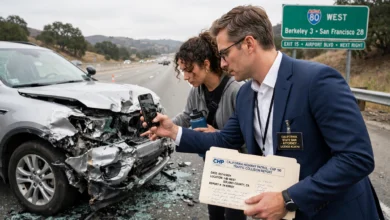
Multi-Vehicle Pile-Up Claims in Georgia: How Liability Is Split Between Parties
A multi-vehicle pile-up in Georgia can involve many drivers. See how fault is split under the 50% bar rule and who pays for each loss in a chain crash.

A multi-vehicle pile-up is one of the hardest crashes to sort out after the fact. In a two-car accident, there are two stories and usually one clear question. In a pile-up on I-75, I-285, or a foggy stretch of I-16, you might have six drivers, three insurance companies, a commercial truck, and a dozen people who each saw only a slice of what happened.
That is why multi-vehicle pile-up claims in Georgia rarely come down to a single at-fault driver. Georgia law expects fault to be divided. Under the state’s modified comparative negligence rule, a judge or jury assigns each person a percentage of blame, and that percentage decides who pays, how much they pay, and whether an injured person can recover anything at all.
The stakes are real. If you are found 50 percent or more responsible, you get nothing. If you are found 20 percent responsible, your award drops by 20 percent. And since the 2025 tort reform law took effect, some evidence that used to be off limits, like whether you wore a seatbelt, can now affect how fault is split.
This guide walks through how Georgia pile-up accident liability actually works. We cover the statute that controls apportionment of fault, the seven rules that shape how blame gets divided in a chain reaction crash, the evidence that moves those percentages, and the deadlines and insurance issues you need to watch. The goal is simple: by the end, you should understand what happens to a claim when many cars, and many people, share the blame.
What Counts as a Multi-Vehicle Pile-Up in Georgia?
A multi-vehicle pile-up is any crash involving three or more vehicles where one impact leads to the next. Lawyers and adjusters often call it a chain reaction car accident. There is no special statute for pile-ups in Georgia. The same negligence rules apply as in any car crash, but they get applied to more people at once, which is where things get complicated.
Common Causes of Pile-Ups on Georgia Roads
Most pile-ups start with one mistake and grow because of several others. The usual triggers include:
- Following too closely. Georgia’s tailgating statute, O.C.G.A. § 40-6-49, requires drivers to keep a reasonable and prudent distance. When traffic stops suddenly, tailgaters turn one collision into five.
- Speeding for conditions. Driving the posted limit in heavy rain, fog, or smoke can still be negligent if it was too fast for what the road looked like that day.
- Distracted driving. Georgia’s hands-free law bars holding a phone while driving. A driver looking at a screen often hits the first car and sets off the chain.
- Sudden lane changes and failure to yield. Cutting into a gap and braking hard can start a sequence even if the lane-changer never touches another car.
- Commercial trucks. A loaded tractor-trailer needs far more distance to stop, so trucks are often the vehicles that push a minor crash into a major one.
- Low visibility. Fog near rivers and wetlands, and smoke from controlled burns, have caused some of the worst pile-ups in the Southeast.
Why Pile-Ups Are Different From Two-Car Crashes
In a simple rear-end collision, the rear driver is usually the one at fault. In a pile-up, a single car might be hit from behind and then pushed into the car ahead. That driver may have stopped safely, yet their bumper is now in someone else’s trunk. Sorting out who caused which impact, and which injury came from which hit, is the core problem in every Georgia pile-up accident liability case.
How Georgia Law Splits Fault in a Multi-Vehicle Pile-Up
Georgia is an at-fault state. The driver who causes a crash, through their at-fault insurance, pays for the damage. There is no no-fault PIP system that pays everyone regardless of blame. So in a multi-vehicle pile-up, the first question for every claim is how much of the fault belongs to each person.
Modified Comparative Negligence and the 50 Percent Bar Rule
Georgia follows modified comparative negligence with a 50 percent bar rule. In plain terms:


- If you are less than 50 percent at fault, you can recover damages.
- Your recovery is reduced by your own share of fault.
- If you are 50 percent or more at fault, you recover nothing.
Say a jury values your losses at $200,000 and finds you 25 percent at fault for braking late. You would be entitled to $150,000. Bump your fault to 50 percent and the award drops to zero. That cliff is why insurers in pile-up cases work so hard to push blame onto the people making claims.
O.C.G.A. 51-12-33: Georgia’s Apportionment Statute
The rule lives in O.C.G.A. 51-12-33, the statute on apportionment of damages among more than one person. You can read the current code through the Georgia General Assembly’s official website. Three parts of it matter most in a pile-up:
- Each defendant pays only their share. When fault is apportioned, damages are split by percentage. A driver found 30 percent at fault pays 30 percent, not the whole bill. Georgia largely moved away from the old joint and several liability rule that let a plaintiff collect everything from one deep-pocketed defendant.
- The jury can weigh nonparty fault. The trier of fact can assign a percentage to people who are not in the lawsuit, such as a driver who fled the scene. This nonparty fault shrinks what the named defendants owe.
- Notice is required. A defendant who wants to blame a nonparty must give written notice at least 120 days before trial, naming the nonparty and explaining why they share the blame.
The nonparty rule is a big deal in pile-ups. If the driver who started everything is uninsured or gone, the remaining defendants will try to load fault onto that person, and any share assigned there may be money you cannot collect from anyone else.
7 Rules That Decide Liability in a Georgia Multi-Vehicle Pile-Up
No two crashes are the same, but the same patterns show up again and again when adjusters and juries divide fault. These are the seven that matter most.
Rule 1: The Driver Who Started the Chain Usually Carries the Largest Share
The first negligent act gets the most attention. If one driver was texting and slammed into stopped traffic, that driver will usually carry the biggest percentage. But “biggest” is rarely “all.” Drivers further back who were also following too closely can pick up their own share for the impacts they caused.
Rule 2: Each Rear Driver Answers for the Impact They Caused
In a chain reaction car accident, every driver who hit the car in front can be responsible for that collision. Georgia does not treat the rear driver as automatically at fault, but following too closely under O.C.G.A. § 40-6-49 is strong evidence of negligence. If you stopped in time and were then shoved forward, the driver behind you is generally responsible for both the hit to your car and your push into the next one.
Rule 3: A Sudden Emergency Can Shift Blame, but Not Easily
Drivers sometimes argue they had no time to react because of a sudden emergency, like a tire blowout or a deer. Georgia recognizes this defense, but it fails if the driver helped create the emergency, for example by tailgating or driving too fast for fog. In most pile-ups, the sudden emergency argument shrinks a driver’s share rather than wiping it out.
Rule 4: Weather Is Not an Excuse on Its Own
Fog, rain, and smoke explain why a pile-up happened, but they do not take anyone off the hook. Drivers have a duty to slow down and leave more room when conditions get bad. Courts regularly hold that driving the speed limit in near-zero visibility can be negligent. Weather tends to spread fault across many drivers rather than reduce the total.
Rule 5: Commercial Trucks and Employers Bring Extra Liability
When a semi-truck or a company van is in the chain, the employer can be liable for its driver’s negligence. Trucking companies also face federal safety rules on hours of service, maintenance, and driver qualifications. A violation can raise the trucking company’s share of fault and opens the door to much larger insurance policies than the Georgia minimum.
Rule 6: Seatbelt Use Can Now Affect Your Share of Fault
This is the biggest recent change. Georgia’s 2025 tort reform law, Senate Bill 68, removed the old rule that kept seatbelt non-use away from juries. According to a Jones Day summary of the Georgia tort reform legislation, seatbelt evidence can now be used on negligence, causation, and apportionment of fault, and this change applies to claims arising on or after April 21, 2025. In practice, an unbelted occupant in a pile-up may see their recovery reduced even if they did nothing to cause the crash.
Rule 7: Third Parties Can Share Fault Too
Drivers are not the only possible defendants. Depending on the facts, fault might also land on:
- A government agency that failed to fix a known road hazard or signal problem (these claims have strict notice rules and short deadlines)
- A vehicle or tire manufacturer whose defective part failed
- A repair shop that did faulty brake work
- A business or landowner whose smoke or debris drifted onto the highway
Adding these parties can change the math. Every percentage assigned to a solvent third party is a percentage someone can actually pay.
Evidence That Moves Fault Percentages in a Multi-Vehicle Pile-Up
Fault percentages are not picked out of the air. They come from evidence, and in a multi-vehicle pile-up the evidence disappears fast as cars get towed and roads reopen. The pieces that carry the most weight are:
- The police report. Georgia requires a report for crashes involving injury, death, or significant property damage. Officers often note who hit whom and may issue citations, though their conclusions are not binding on a jury.
- Event data recorders. Most modern cars and nearly all commercial trucks store speed, braking, and throttle data from the seconds before impact. This is often the best proof of who was following too closely.
- Dashcam and traffic camera footage. GDOT cameras, business security cameras, and other drivers’ dashcams can show the order of impacts. Footage gets overwritten quickly, so it needs to be requested early.
- Vehicle damage patterns. Front and rear crush damage tell a story about how many times each car was hit and in what direction.
- Witness statements. Neutral witnesses who were not in the chain are especially valuable.
- Medical records. In a pile-up you may be hit more than once. Doctors’ notes help tie each injury to a specific impact.
The Role of Accident Reconstruction
In larger pile-ups, both sides often hire accident reconstruction experts. They use the physical evidence, vehicle data, and road measurements to rebuild the sequence of collisions. A good reconstruction can be the difference between being found 10 percent at fault and 50 percent at fault, which in Georgia is the difference between a reduced award and no award.
Insurance Issues in Georgia Pile-Up Claims
Even when fault is clear, getting paid can be its own fight. A few insurance realities shape almost every claim:
- Minimum limits run out fast. Georgia’s minimum liability coverage is $25,000 per person and $50,000 per accident for bodily injury. If one at-fault driver injured five people, that $50,000 gets split among all of them.
- Multiple insurers point at each other. Each carrier wants its driver’s share as low as possible, which can slow settlements.
- Uninsured motorist coverage fills gaps. Your own uninsured motorist coverage can pay when the at-fault driver has no insurance, too little insurance, or left the scene. In a pile-up, this is often the most reliable source of money.
- Recorded statements can hurt you. Other drivers’ insurers may ask for a recorded statement early. Anything you say about braking, speed, or distraction can be used to raise your share of fault.
The Georgia Office of Insurance and Safety Fire Commissioner publishes consumer guidance on auto coverage and complaints at oci.georgia.gov, which is worth a look if an insurer is stalling.
Deadlines for Filing a Georgia Pile-Up Claim
The statute of limitations in Georgia gives you two years from the crash date to file a personal injury lawsuit under O.C.G.A. § 9-3-33. Property damage claims generally have four years. Claims against government bodies are much shorter. You must send a formal ante litem notice, often within six months for a city and twelve months for a county or the state. Missing that notice can kill an otherwise strong claim.
Steps to Take After a Multi-Vehicle Pile-Up in Georgia
What you do in the first days after a crash has a direct effect on how fault is split later.
- Get medical care right away. Some injuries, like whiplash and concussions, show up hours later. A gap in treatment invites the argument that you were not really hurt in the crash.
- Call the police and get the report number. Make sure the officer records that you were hit, how many times, and from which direction.
- Document everything you can. Take photos of every vehicle, plate, skid mark, road sign, and the weather. Get names and numbers of witnesses.
- Be careful what you say. Do not apologize or guess about speeds and distances at the scene. Stick to facts.
- Notify your own insurer promptly, but think twice before giving a recorded statement to anyone else’s carrier.
- Preserve evidence. Ask that vehicles not be destroyed and that dashcam or camera footage be saved.
- Talk to a Georgia car accident lawyer before accepting any settlement, especially when several drivers and insurers are involved.
Frequently Asked Questions About Multi-Vehicle Pile-Up Claims
Can I recover money if I was partly at fault for a pile-up in Georgia?
Yes, as long as your share of fault is under 50 percent. Your award is reduced by your percentage. At 50 percent or higher, Georgia’s 50 percent bar rule blocks any recovery.
Is the last car in a multi-vehicle pile-up always at fault?
No. The last driver is often responsible for the impact they caused, but drivers in the middle can share fault if they were following too closely or speeding, and the driver who started the chain usually carries a large share.
What happens if the driver who caused the pile-up has no insurance?
You may be able to claim under your own uninsured motorist coverage. The jury can still assign that driver a percentage of fault as a nonparty, which is why UM coverage matters so much in these cases.
Does not wearing a seatbelt hurt my claim?
It can. For claims arising on or after April 21, 2025, Georgia allows seatbelt evidence to be considered when fault and damages are decided.
How long do I have to file a claim?
Two years from the crash for personal injury in most cases, and four years for property damage. Claims against a city, county, or the state require a much earlier written notice.
Conclusion
A multi-vehicle pile-up in Georgia almost never ends with one driver taking all the blame. Under O.C.G.A. 51-12-33, fault is divided by percentage among every driver and outside party who contributed, each defendant pays only their own share, and anyone found 50 percent or more at fault walks away with nothing. The driver who started the chain usually carries the most weight, but tailgating drivers behind them, trucking companies, manufacturers, and even absent nonparties can all take a slice, and since 2025 your own seatbelt use can affect the split.
Because those percentages decide whether you recover a fair amount, a reduced amount, or nothing at all, the smartest moves are to get medical care, preserve evidence quickly, be careful with insurers, watch the two-year deadline, and get experienced legal advice before you settle any multi-vehicle pile-up claims in Georgia.