New York eviction laws: What Landlords Can and Cannot Do Legally
New York eviction laws 2026: notice periods, Good Cause protections, and the exact steps landlords must follow to evict legally.
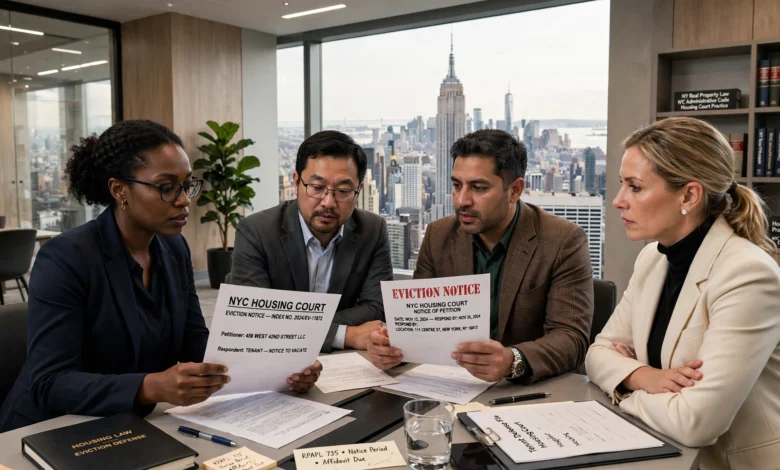
If you own rental property in New York, you’ve probably heard that the eviction process here is one of the strictest in the country. That’s not an exaggeration. Between the Housing Stability and Tenant Protection Act of 2019, the newer Good Cause Eviction Law, and New York City’s own patchwork of local rules, landlords who don’t follow the process to the letter can lose months in Housing Court, or lose the case outright.
New York eviction laws exist to balance two things: a landlord’s right to reclaim their property and a tenant’s right to a fair process before losing their home. The problem is that “fair process” in New York comes with a long list of technical requirements, from how a notice is worded to how it’s physically delivered to the tenant. Miss one step, and a judge can dismiss your case, sending you back to square one.
This guide walks through what landlords can legally do, what they absolutely cannot do, and how the eviction process actually plays out in 2026, including the newer Good Cause Eviction rules that now apply automatically in New York City and optionally elsewhere in the state. Whether you’re dealing with a tenant who stopped paying rent, a lease that’s expiring, or a holdover tenant who won’t leave, this article covers the notice periods, court steps, and legal boundaries you need to know before you act.
Table of Contents
- Legal Grounds for Eviction in New York
- Required Notice Periods Landlords Must Follow
- The Good Cause Eviction Law: What Changed
- Step-by-Step: The New York Eviction Process
- What Landlords Cannot Legally Do
- Self-Help Eviction: Why It’s Illegal and What It Costs You
- Special Protections for Tenants
- New York City vs. the Rest of the State
- How Long Does an Eviction Take in New York?
- Frequently Asked Questions
Legal Grounds for Eviction in New York
Under New York eviction laws, a landlord cannot remove a tenant simply because the lease is inconvenient or the landlord wants a change. There has to be a legally recognized reason, and that reason has to be documented and provable in Housing Court. The most common legal grounds include:
- Nonpayment of rent — the tenant hasn’t paid rent that is due under the lease.
- Lease violations — this includes unauthorized pets, unauthorized subletting, excessive noise complaints, or breaching a specific clause in the written lease.
- Holdover after lease expiration — the tenant stays in the unit after the lease term ends without a renewal.
- Illegal activity — using the unit for criminal purposes, such as drug distribution.
- Nuisance behavior — conduct that substantially interferes with other tenants’ safety or use of the property.
- Property damage — destruction of the unit beyond normal wear and tear.
- Owner or immediate family occupancy — in some rent-stabilized situations, when the landlord intends to move in themselves.
Each of these grounds requires its own type of notice and, in many cases, its own waiting period before a landlord can even file in court. There is no shortcut. A landlord who skips the notice step, even when the tenant is clearly in the wrong, will have their case thrown out.
It’s worth noting that landlords are also expected to keep thorough documentation at every stage, dated photos, written complaints, certified mail receipts, and copies of every notice served. Housing Court judges rely heavily on paper trails, and a landlord without one is at a serious disadvantage even in a legitimate case.
Required Notice Periods Landlords Must Follow
This is where most landlords run into trouble. New York doesn’t use a single, uniform notice period. The required notice depends entirely on why you’re evicting the tenant.
Notice for Nonpayment of Rent
Under New York Real Property Actions and Proceedings Law (RPAPL) § 711(2), a landlord must serve a written 14-day rent demand before filing a nonpayment case in court. This notice must state the exact amount owed and give the tenant 14 days to either pay in full or vacate. This replaced the old 3-day notice that existed before the 2019 Housing Stability and Tenant Protection Act (HSTPA), so if you’re working from outdated information, that’s the first thing to correct.
Notice to Cure a Lease Violation
If a tenant is violating a term of the lease (an unauthorized pet, for example), the landlord typically must serve a 10-day Notice to Cure, giving the tenant a chance to fix the issue. If the violation isn’t corrected, a Notice of Termination (commonly a 30-day notice) follows before an eviction case can be filed.


Notice for Ending a Month-to-Month Tenancy or Non-Renewal
For month-to-month tenancies or a landlord’s decision not to renew a lease, RPL § 226-c, enacted under the HSTPA, sets a tiered notice schedule based on how long the tenant has lived there:
- 30 days’ notice if the tenant has occupied the unit for less than one year.
- 60 days’ notice if the tenant has occupied the unit for one to two years.
- 90 days’ notice if the tenant has occupied the unit for two years or more.
This tiered system applies statewide and is one of the most commonly overlooked rules among smaller landlords who assume a flat 30-day notice still applies.
Notice for Illegal Activity
When a tenant is engaged in illegal activity on the premises, landlords may in some cases proceed without the standard cure period, though this is a narrower exception and still requires proper legal filing. It’s not a green light to skip court entirely.
Notice to Unauthorized Occupants
If someone is living in the unit who isn’t on the lease, a 10-day Notice to Quit is generally the appropriate step before pursuing removal through the courts.
The Good Cause Eviction Law: What Changed
If there’s one development every New York landlord needs to understand right now, it’s the Good Cause Eviction Law. Effective April 20, 2024, and now fully woven into eviction practice statewide, this law changed how non-renewals and rent increases work for many tenancies.
Here’s the practical effect:
- The law applies automatically in New York City and is opt-in for other municipalities across the state that choose to adopt it.
- For covered units, a landlord cannot simply decline to renew a lease or evict a tenant without one of the specific legal grounds listed in the statute (RPL Article 6-A, § 216). These grounds mirror the traditional list above, nonpayment, lease violation, nuisance, and so on, but now apply even at the end of a lease term for units that were previously “at will.”
- Every notice a landlord serves must now include a Good Cause disclosure, stating whether the unit is covered by the law under RPL § 231-c. Leaving this disclosure out can itself derail an eviction case.
- The law also limits how much a landlord can raise rent on a covered unit before that increase itself becomes grounds for a tenant’s legal defense against non-renewal.
There are exemptions. Owner-occupied buildings with a small number of units, certain new construction, and some smaller landlords may fall outside the law’s reach, but the exemptions are narrower than many landlords assume, and eligibility should be confirmed rather than guessed at.
For a landlord, the bottom line is this: the days of a “no-reason” non-renewal in a covered New York City unit are largely over. If you’re managing property anywhere in the state, it’s worth checking whether your municipality has opted into Good Cause protections, since the rules genuinely change what counts as a legal eviction.
Step-by-Step: The New York Eviction Process
Once the proper notice period has expired and the tenant hasn’t complied, cured, or vacated, the formal court process begins. Here’s what that looks like in practice.
Step 1: Serve the Required Notice
As covered above, this is the mandatory first move. Notices generally must be served through personal delivery, or through “nail and mail” service, where the notice is affixed to the tenant’s door and also mailed, if personal service isn’t possible after reasonable attempts. Improper service is one of the top reasons eviction cases get dismissed.
Step 2: File a Petition and Notice of Petition
If the tenant hasn’t paid, cured, or moved out by the deadline, the landlord (or their attorney) files a Petition and Notice of Petition with the local Housing Court. This officially starts the summary proceeding, the legal term for an eviction case in New York.
Step 3: Serve the Tenant with Court Papers
The tenant must be formally served with the petition and notice of petition, along with a court date. Again, proper service matters enormously here; courts are strict about proof of service.
Step 4: Attend the Court Hearing
Both sides appear in Housing Court. The tenant may raise defenses, improper notice, breach of the warranty of habitability, retaliation, or a Good Cause defense if applicable. Many cases settle here through a stipulation, an agreement where the tenant agrees to pay back rent on a schedule or to move out by a certain date.
Step 5: Judgment of Possession
If the landlord prevails, the court issues a Judgment of Possession and typically a Warrant of Eviction.
Step 6: The Marshal or Sheriff Executes the Warrant
This is the part many landlords don’t realize: only a city marshal or county sheriff can physically carry out an eviction, and only after serving the tenant with a 14-day notice of eviction following the judgment. A landlord, property manager, or hired contractor has no legal authority to remove a tenant or their belongings, no matter what the court judgment says.
What Landlords Cannot Legally Do
This is the section that matters most, because violating it can expose a landlord to lawsuits, fines, and even criminal liability. New York takes self-help eviction extremely seriously.
Landlords cannot, under any circumstances:
- Change the locks on a tenant without a court-ordered eviction carried out by a marshal or sheriff.
- Remove the tenant’s belongings from the unit without a lawful warrant of eviction.
- Shut off utilities — water, electricity, heat, or gas — to pressure a tenant to leave.
- Remove doors or windows, or otherwise make the unit uninhabitable to force someone out.
- Threaten or harass a tenant into vacating.
- Retaliate against a tenant for exercising legal rights, such as filing a complaint with a housing agency or joining a tenant association. Under New York law, an adverse action taken within one year of a tenant’s protected activity creates a rebuttable presumption of retaliation, meaning the burden shifts to the landlord to prove there was a legitimate, non-retaliatory reason.
- Evict based on discrimination — race, religion, national origin, sex, disability, familial status, source of income (including housing vouchers), and several other protected categories under both state and federal fair housing law.
- Skip the required notice period, regardless of how confident the landlord is that the tenant is in the wrong.
- File for eviction without legal grounds in units covered by the Good Cause Eviction Law.
Any of these actions can result in the tenant suing for damages, and in some cases can lead to the eviction case itself being dismissed or turned against the landlord.
Self-Help Eviction: Why It’s Illegal and What It Costs You
It’s worth spending a little more time here because it’s the single most common way well-meaning landlords get themselves into serious legal trouble. “Self-help eviction” refers to any attempt to remove a tenant outside the formal court process, locking them out, cutting off utilities, or physically removing their possessions.
Even if a tenant hasn’t paid rent in months, even if the lease has clearly expired, even if the landlord owns the building outright, none of that grants the right to bypass the courts. New York law requires a judgment of possession and a warrant of eviction, executed only by a marshal or sheriff, in every case. Landlords who go around this process can face:
- Civil lawsuits for wrongful eviction, often resulting in statutory damages on top of actual damages.
- Treble (triple) damages in some cases involving intentional unlawful eviction.
- Potential criminal charges for harassment or unlawful eviction under local housing codes, particularly in New York City.
- Loss of the underlying eviction case, since courts view illegal self-help unfavorably and it can undercut the landlord’s credibility entirely.
The safest, and ultimately fastest, path is always the formal court process, even when it feels slow.
Special Protections for Tenants
Beyond the general notice and process rules, several categories of tenants have extra layers of protection landlords need to be aware of:
- Servicemembers. Under the federal Servicemembers Civil Relief Act, active-duty military members have additional procedural protections in eviction proceedings, including the ability to request a stay of proceedings in some circumstances.
- Rent-stabilized and rent-controlled tenants. These units carry additional restrictions on both rent increases and grounds for non-renewal, layered on top of the standard eviction rules.
- Tenants exercising legal rights. As noted above, any adverse action taken shortly after a tenant reports a housing violation or exercises a legal right invites a presumption of retaliation.
- Domestic violence survivors. New York law includes specific protections limiting how landlords can use domestic violence incidents as grounds for eviction.
Landlords managing larger portfolios should also know that under recent Good Cause-related disclosure rules, they may be required to identify the beneficial owners of the property in nonpayment proceedings, a transparency requirement aimed at closing loopholes used by shell-company landlords.
New York City vs. the Rest of the State
One of the most confusing aspects of New York eviction laws is that the rules genuinely differ depending on where the property sits.
New York City has the Good Cause Eviction Law applying automatically to most units, plus its own additional local housing regulations, a large volume of rent-stabilized housing, and a notoriously backlogged Housing Court system that can extend timelines significantly.
Outside New York City, the Good Cause Eviction Law only applies if the local municipality has formally opted in. Many upstate and suburban municipalities have not, which means market-rate tenancies there are still generally governed by the standard notice-and-cure framework without the added Good Cause layer. That said, statewide protections like the HSTPA notice tiers, the 14-day rent demand requirement, and the ban on self-help eviction apply everywhere in New York, regardless of whether Good Cause has been adopted locally.
Before starting any eviction, it’s worth confirming directly with the local Housing Court or an attorney whether Good Cause applies in that specific municipality, since it materially changes what counts as valid grounds for eviction.
How Long Does an Eviction Take in New York?
There’s no fixed timeline, and that’s often the hardest part for landlords to accept. A straightforward nonpayment case with no defense raised might move from notice to judgment in two to three months. A contested case, particularly one where the tenant raises a Good Cause defense, a habitability claim, or procedural objections, can take six months to a year or longer, especially in New York City given ongoing court backlogs.
Factors that extend the timeline include:
- Improperly served notices requiring the process to restart.
- Tenant defenses and counterclaims, including habitability complaints.
- Court congestion in high-volume boroughs.
- Settlement negotiations and stipulated payment plans.
- Appeals following a judgment.
Landlords who want to minimize delays should focus on doing the paperwork correctly the first time. According to legal resource Nolo, procedural mistakes are among the most common reasons eviction cases stall or get dismissed entirely, which is a strong argument for having an attorney review notices before they’re served, especially for landlords unfamiliar with Housing Court procedure. For the official forms and step-by-step guidance New York courts expect landlords to follow in nonpayment cases, the New York court system publishes a landlord’s guide directly through the NY Courts website.
Frequently Asked Questions
Can a landlord evict a tenant without going to court in New York? No. New York law requires a court judgment and a warrant of eviction executed by a marshal or sheriff. Self-help eviction is illegal regardless of the circumstances.
How much notice does a landlord have to give before eviction in New York? It depends on the reason. Nonpayment requires a 14-day rent demand. Non-renewal or ending a month-to-month tenancy requires 30, 60, or 90 days depending on how long the tenant has lived there. Lease violations typically require a 10-day notice to cure.
What is the Good Cause Eviction Law? It’s a New York law, effective since April 2024, that requires landlords of covered units to have a specific legal reason before ending a tenancy or declining renewal. It applies automatically in New York City and is optional elsewhere.
Can a landlord raise rent without limit in New York? For units covered by rent stabilization or the Good Cause Eviction Law, rent increases above certain thresholds can themselves become grounds for a tenant’s legal defense against eviction.
Can a landlord evict a tenant for having an unauthorized pet? Generally yes, if the lease prohibits pets, but the landlord must first serve a 10-day notice to cure, giving the tenant a chance to remove the pet or resolve the issue before termination proceedings continue.
Conclusion
Evicting a tenant in New York is rarely quick, and it’s never something a landlord can handle informally, no matter how justified the reason feels. The law lays out exact notice periods for every situation, from a 14-day rent demand for nonpayment to a tiered 30-, 60-, or 90-day notice for ending a tenancy, and the newer Good Cause Eviction Law adds another layer of required justification for many units, particularly in New York City.
What landlords can legally do is follow that process precisely: serve the correct notice, document everything, and let the court issue a judgment before a marshal or sheriff carries it out. What landlords cannot do is take matters into their own hands, changing locks, shutting off utilities, or removing belongings, since any of those actions can turn a legitimate case into a costly legal liability. Understanding these New York eviction laws before a dispute arises is the single best way for landlords to protect both their property and their standing in court.