Strata Title Disputes in Queensland: Common Issues and Legal Solutions
Strata title disputes in Queensland cost owners time and money. Learn the common causes and the legal solutions that actually work.
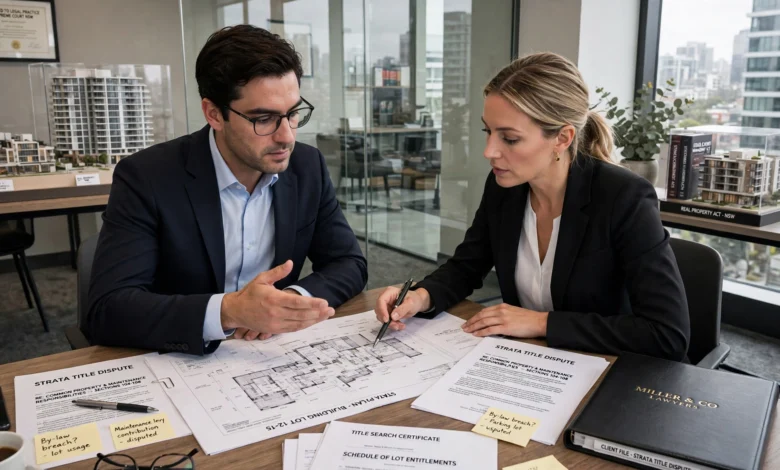
Strata title disputes in Queensland are one of the most common headaches for unit owners, investors, and body corporate committees alike. Whether you live in a two-lot duplex on the Gold Coast or a 200-lot high-rise in Brisbane, sharing common property with other owners almost guarantees that disagreements will pop up sooner or later. Unpaid levies, by-law breaches, leaking balconies, noisy neighbours, and disputes over who’s responsible for fixing a shared roof are all part of everyday life in a community titles scheme.
The good news is that Queensland has a well-established legal framework for dealing with these problems. The Body Corporate and Community Management Act 1997 (BCCM Act) sets out clear rules for how bodies corporate must operate, and it also provides several avenues for resolving conflict, ranging from informal conversation to binding adjudication and, in more complex cases, the Queensland Civil and Administrative Tribunal (QCAT).
This article walks through the most frequent strata disputes Queensland owners run into, explains the legal solutions available at each stage, and offers practical guidance on how to protect your interests before a disagreement turns into a drawn-out and expensive fight. If you’re currently caught up in a dispute, or simply want to understand your rights as a lot owner, this guide should give you a clear picture of where you stand and what to do next.
What Is Strata Title in Queensland?
Strata title, known formally in Queensland as community titles scheme ownership, is a form of property ownership where individuals own their own lot (an apartment, townhouse, or unit) while sharing ownership of common property such as driveways, gardens, lifts, pools, and stairwells with other lot owners. This shared ownership is managed by a body corporate, which is made up of all the lot owners in the scheme.
A body corporate is not a company. It’s a legal entity that comes into existence automatically the moment land is subdivided under the BCCM Act. It exists purely to manage and maintain common property and enforce the scheme’s by-laws, not to make a profit. Every owner is automatically a member, and most schemes elect a committee to handle day-to-day decisions on behalf of the wider group.
Because so many people are relying on the same shared spaces and infrastructure, and because everyone has a financial stake in how the scheme is run, strata disputes are almost inevitable. Understanding the common triggers is the first step toward resolving them quickly and cost-effectively.
Common Strata Title Disputes in Queensland
1. By-Law Breaches and Enforcement Disputes
By-laws are the rules that govern how owners and occupiers use their lots and the common property. They can cover everything from noise restrictions and pet ownership to renovations, parking, and the use of balconies. By-law disputes are probably the single most common type of strata title conflict in Queensland.
Typical examples include:
- An owner renovating their lot without getting the required approval
- Short-term letting (like Airbnb) in a scheme where it’s restricted or banned
- Owners hanging washing, storing items, or installing air conditioning units on common property without consent
- Disagreements over whether a by-law is even enforceable in the first place
By-laws must be reasonable and cannot conflict with the BCCM Act. Bodies corporate sometimes try to enforce by-laws that go too far, and owners sometimes ignore by-laws they simply don’t like. Both situations can end up before an adjudicator.


2. Body Corporate Levy and Unpaid Fee Disputes
Every lot owner has to contribute to the body corporate’s admin and sinking funds through body corporate levies. These levies pay for insurance, maintenance, common property upkeep, and long-term capital works. When an owner falls behind on payments, the body corporate can charge penalty interest and eventually pursue debt recovery action, which can include court proceedings.
Levy disputes often arise because:
- An owner believes the levy amount was set incorrectly or unfairly
- There’s a disagreement about how levy contributions were calculated across different lot entitlements
- An owner disputes penalty interest charged on a late payment
- A body corporate hasn’t followed the correct process before pursuing debt recovery
These disputes can escalate quickly because unpaid levies affect the financial position of the entire scheme, not just the individual owner.
3. Common Property Maintenance and Defect Disputes
Who’s responsible for fixing what is one of the most contested issues in strata living. Common property disputes frequently involve:
- Water leaks that originate in common property but damage a private lot (or vice versa)
- Building defects in newer developments, including waterproofing failures and structural issues
- Disagreements over whether a repair falls under the body corporate’s maintenance obligations or the individual owner’s responsibility
- Delays in carrying out necessary repairs, particularly where funding hasn’t been budgeted for
Under the BCCM Act, the body corporate is generally responsible for maintaining common property in good condition, but the line between “common property” and a lot owner’s exclusive-use area can get blurry, especially with balconies, courtyards, and car parks.
4. Committee Decision-Making and Governance Disputes
Body corporate committees are made up of volunteer owners who make decisions on behalf of the wider scheme. Governance disputes tend to surface when:
- A committee makes a decision without following proper procedures, such as failing to give adequate notice of a meeting
- Owners feel excluded from decisions that affect their property or finances
- There are allegations that a committee member has a conflict of interest
- Records or minutes aren’t made available to owners who request them
Poor governance is one of the fastest ways to erode trust within a scheme, and it’s a common trigger for formal complaints to the Office of the Commissioner for Body Corporate and Community Management.
5. Noise, Nuisance, and Neighbour Disputes
Living close to others inevitably creates friction. Noise complaints, disputes over pets, arguments about smoking on balconies, and general nuisance behaviour are extremely common in higher-density schemes. While these disputes are often personal in nature, they usually get resolved (or escalated) through the by-law enforcement process rather than as standalone neighbour disputes.
6. Parking and Car Space Disputes
Parking is a perennial source of tension, particularly in older schemes where car spaces are limited or where lot entitlements don’t clearly allocate specific bays. Parking disputes commonly involve visitors using resident spaces, disputes over shared or unallocated bays, and disagreements about whether a body corporate can introduce new parking by-laws through a special resolution.
7. Building Manager and Caretaking Contract Disputes
Larger schemes, especially those with onsite management, often have a caretaking agreement with a building manager or letting agent. Caretaker contract disputes can be some of the most complex and high-value disputes in the strata world, involving questions about contract terms, remuneration reviews, and whether a body corporate can terminate an agreement early. These cases frequently end up before QCAT rather than being resolved through standard adjudication, because they often involve genuine legal and factual complexity.
The Legal Framework Governing Strata Disputes in Queensland
Queensland’s strata sector is governed primarily by the Body Corporate and Community Management Act 1997, supported by several regulation modules depending on the type and size of the scheme:
- Standard Module – the most common, used for general residential schemes
- Accommodation Module – for schemes with a significant letting component
- Commercial Module – for commercial and retail schemes
- Small Schemes Module – for schemes with a limited number of lots
- Specified Two-Lot Schemes Module – for straightforward two-lot arrangements
Each module sets out slightly different rules around meetings, voting thresholds, and by-law enforcement, so it’s worth knowing which module your scheme falls under before you go too far down the path of resolving a dispute.
Legal Solutions for Strata Title Disputes in Queensland
The good news is that Queensland doesn’t force owners straight into court. There’s a structured, tiered process designed to resolve strata title disputes as efficiently as possible, starting with the least formal options.
Step 1: Direct Negotiation
Many disputes can be resolved with a straightforward conversation or a written request. Before escalating, it’s worth putting your concerns in writing to the committee or the other party involved, clearly setting out what the issue is and what outcome you’re seeking. A calm, well-documented approach often resolves the matter without needing outside involvement at all.
Step 2: Conciliation Through the BCCM Office
If direct negotiation doesn’t work, the next step for most disputes is conciliation through the Office of the Commissioner for Body Corporate and Community Management (the BCCM office). Conciliation is a free, informal process where a trained conciliator helps both parties reach a voluntary agreement. It’s not binding, but it’s often quicker and far less stressful than formal adjudication, and in most cases you’re required to attempt it before applying for adjudication.
Step 3: Adjudication
If conciliation fails or isn’t appropriate, owners and bodies corporate can apply for adjudication. An adjudicator reviews the written application and submissions from all affected parties and then makes a binding decision. The process typically requires no physical attendance, with decisions made purely on submitted documentation, and the application fee is relatively modest compared to court proceedings. This makes adjudication an accessible option for most lot owners who don’t want to take on the cost and complexity of a tribunal hearing.
You can find detailed guidance on how to apply, including the required forms, through the Queensland Government’s official adjudication application process, which sets out eligibility requirements, timeframes, and how interim orders work for urgent matters.
Step 4: QCAT
Some disputes fall outside an adjudicator’s jurisdiction and must be dealt with by the Queensland Civil and Administrative Tribunal. QCAT considers specific categories of body corporate and community management disputes set out in the BCCM Act, including complex disputes involving body corporate managers or caretaking service contractors, and applications for the adjustment of lot entitlement schedules. These matters tend to be more legally complex, and QCAT’s process can involve directions hearings, evidence, and a formal hearing before a decision is handed down.
For a full breakdown of which disputes QCAT can hear and how the process works, the QCAT body corporate and community management disputes page is a useful starting point.
Step 5: Appeals
If a party is unhappy with an adjudicator’s decision, they have the right to appeal to the QCAT Appeal Tribunal, but only on a question of law, and generally within six weeks of receiving the order. This isn’t an opportunity to re-argue the facts of the case; it’s specifically for challenging a legal error in how the adjudicator reached their decision.
Practical Steps to Take When a Strata Dispute Arises
If you find yourself in the middle of a strata title dispute, here’s a practical sequence to follow:
- Review the by-laws and CMS – Check the community management statement and current by-laws to understand exactly what’s required or prohibited.
- Document everything – Keep copies of emails, letters, photos, and meeting minutes relevant to the dispute.
- Raise the issue formally – Write to the committee or body corporate manager outlining the problem and your desired resolution.
- Attempt conciliation – Contact the BCCM office to start the conciliation process if direct communication doesn’t resolve things.
- Apply for adjudication if needed – Lodge a formal application if conciliation fails or isn’t suitable.
- Get legal advice for complex matters – If the dispute involves significant money, a caretaking contract, or lot entitlement issues, speak to a lawyer experienced in strata law before proceeding to QCAT.
How a Strata Title Lawyer Can Help
While plenty of strata disputes can be resolved without a lawyer, there are situations where legal advice makes a real difference:
- Interpreting ambiguous or poorly drafted by-laws
- Preparing submissions for adjudication or QCAT to give your case the strongest possible footing
- Negotiating or reviewing caretaking and letting agreements
- Advising on lot entitlement disputes, which can have long-term financial consequences for every owner in the scheme
- Handling debt recovery matters where levies remain unpaid despite repeated requests
A lawyer who regularly works in this space understands not just the BCCM Act itself, but also how adjudicators and QCAT members tend to approach particular types of disputes, which can save you significant time and money in the long run.
Tips to Avoid Strata Title Disputes in the First Place
Prevention is almost always cheaper and less stressful than resolution. A few practical habits go a long way:
- Read the by-laws before you buy into a scheme, not after you move in
- Attend annual general meetings and vote on decisions that affect your lot
- Raise concerns early, before frustration builds into a formal complaint
- Keep levies up to date and query anything you don’t understand straight away
- Get written approval before undertaking any renovations or changes affecting common property
- Encourage your committee to keep clear, accessible records of decisions and finances
Schemes with engaged owners and transparent committees tend to have far fewer serious disputes, simply because small issues get addressed before they snowball.
How Much Do Strata Title Disputes Cost in Queensland?
Cost is often the deciding factor in how far an owner is willing to take a dispute, so it’s worth understanding roughly what each stage involves financially.
- Direct negotiation and conciliation are free. The BCCM office doesn’t charge for conciliation services, which is one of the main reasons owners are encouraged to try this route first.
- Adjudication applications carry a modest lodgement fee, which is significantly lower than court filing fees. This keeps adjudication accessible even for owners who aren’t willing or able to fund expensive legal proceedings.
- QCAT applications involve their own filing fees and, depending on the complexity of the matter, may require legal representation, expert reports (particularly for building defect disputes), and preparation time that adds to the overall cost.
- Legal fees vary widely depending on the complexity of the dispute. A straightforward by-law question might only need an hour or two of advice, while a caretaking contract dispute or a defect claim involving multiple experts can run into tens of thousands of dollars if it proceeds all the way through QCAT.
One of the reasons Queensland’s tiered dispute resolution system works well is that it filters out straightforward disputes early, through free or low-cost conciliation and adjudication, and reserves the more expensive QCAT process for matters that genuinely need it. Owners who understand this structure from the outset are far better placed to manage their costs and expectations.
Frequently Asked Questions About Strata Title Disputes in Queensland
Do I have to attend conciliation in person? No. Conciliation conferences can often be conducted over the phone or online, which makes the process more accessible for owners who don’t live locally or who find in-person conflict resolution stressful.
Can I skip straight to QCAT without trying adjudication first? Generally, no. Most body corporate disputes must go through the BCCM office’s dispute resolution process, including an attempt at conciliation, before an adjudication application can be lodged. QCAT is reserved for the specific categories of complex disputes set out in the BCCM Act, such as those involving caretaking contracts or lot entitlement adjustments.
How long does an adjudication decision take? Timeframes vary depending on the complexity of the application and how many submissions are received from affected parties, but adjudication is generally designed to be faster than a full QCAT hearing, since it’s based on written material rather than in-person proceedings.
What happens if I ignore an adjudicator’s order? Adjudicator orders are legally binding. Ignoring one can expose an owner or body corporate to enforcement action, and failing to comply can also be used as evidence against you if the dispute escalates further.
Can a body corporate change the by-laws whenever it wants? No. Changing by-laws generally requires a special resolution at a general meeting, meaning at least 66.67% of the votes cast must be in favour. By-laws also can’t be unreasonable or conflict with the BCCM Act, which is a common ground for challenging them through adjudication.
Conclusion
Strata title disputes in Queensland are a normal part of shared property ownership, but they don’t need to spiral into costly, drawn-out battles. From by-law breaches and unpaid levies to maintenance disagreements and complex caretaking contract disputes, most conflicts can be resolved through Queensland’s structured process of negotiation, conciliation, adjudication, and, where necessary, QCAT. Understanding your rights under the BCCM Act, documenting issues properly, and knowing when to bring in a lawyer are the keys to resolving disputes efficiently and protecting both your investment and your peace of mind as a lot owner.