Grandparents’ Rights in Illinois: When Can Courts Grant Access to Grandchildren?
Grandparents' rights in Illinois are limited by law. Learn when courts grant visitation, who qualifies, and how the process works. (149 characters)
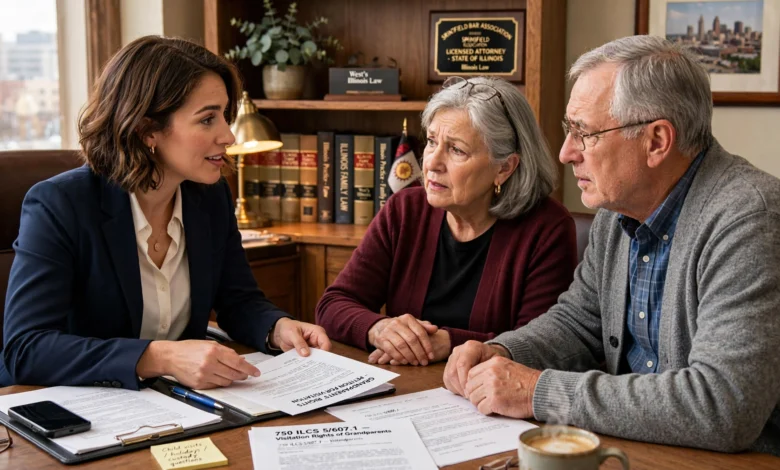
Grandparents’ rights in Illinois are not automatic, and that surprises a lot of people who come to this topic for the first time. If you’re a grandparent who has been cut off from a grandchild, or a parent trying to understand what a grandparent can and can’t demand, the law here is narrower than most people assume. Illinois courts start from the position that fit parents get to decide who spends time with their kids, and grandparents have to clear a real legal hurdle before a judge will even look at their case.
This article walks through grandparent visitation rights in Illinois under the controlling statute, 750 ILCS 5/602.9, including who is allowed to file a petition, the specific circumstances that have to exist before a grandparent has standing, and the legal standard a grandparent must meet to win. We’ll also cover how courts weigh these cases, what happens after a visitation order is granted, and the practical steps involved in filing a petition.
Whether you’re a grandparent considering legal action or a parent trying to understand your rights, this guide breaks down a complicated area of family law into something you can actually use. Illinois law in this area was shaped directly by a U.S. Supreme Court decision, and understanding that background helps explain why the rules are written the way they are.
What Are Grandparents’ Rights in Illinois?
Grandparents’ rights in Illinois refer to the limited legal ability of a grandparent to ask a court for visitation with a grandchild when a parent has cut off or restricted contact. The term is a little misleading, because grandparents don’t have an inherent right to see their grandchildren the way a parent has a right to raise their own child. Instead, Illinois law creates a narrow legal pathway that grandparents can use under specific conditions.
It helps to be clear about what this law does and doesn’t cover:
- It applies to visitation, not custody or guardianship. A grandparent granted visitation does not gain any decision-making authority over the child.
- It does not give grandparents a say in how the child is raised, educated, or disciplined.
- It only applies once the child is at least one year old.
- It can include in-person time, and in some cases electronic communication like phone calls or video chats.
So when people search for “grandparents’ rights in Illinois,” what they’re usually really asking is: can I go to court and force visitation with my grandchild? The honest answer is: only in specific situations, and only if you can meet a fairly demanding legal standard.
The Legal Foundation: 750 ILCS 5/602.9
The controlling law is found in the Illinois Marriage and Dissolution of Marriage Act, specifically 750 ILCS 5/602.9. This section spells out who can petition for visitation, when they’re allowed to, and what they have to prove once they’re in court. It doesn’t just apply to grandparents. The statute also covers great-grandparents, step-parents, and siblings who want visitation with a child they’re not legally raising.
This is important because the law is really a “non-parent visitation” statute, and grandparents are just one category of people who can use it. The rules are the same regardless of which category applies to you.
Troxel v. Granville and the Presumption Favoring Parents
To understand why Illinois grandparent visitation law is written so narrowly, you need to know about Troxel v. Granville, a 2000 U.S. Supreme Court decision. In that case, the Court struck down a Washington State law that let essentially anyone petition for child visitation at any time. The Court held that fit parents have a constitutionally protected right to decide who has access to their children, and that courts can’t override those decisions just because a judge thinks more visitation would be nice for the child.


Illinois rewrote its grandparent visitation law after Troxel to comply with that ruling. As a result, 750 ILCS 5/602.9 builds in a strong presumption that favors parents from the start. The statute states that there is a rebuttable presumption that a fit parent’s decisions about grandparent visitation are not harmful to the child. The burden falls entirely on the grandparent (or other petitioner) to prove otherwise. This is the backbone of the entire law, and it shapes everything else that follows.
Who Can Petition for Grandparent Visitation in Illinois?
Under the statute, the following people may file a petition for visitation with a child:
- Grandparents
- Great-grandparents
- Step-parents
- Siblings (including half-siblings and step-siblings in some circumstances)
Filing a petition is only the first step. Being eligible to file doesn’t mean you’ll win. It just means a court will agree to hear your case. The real fight happens over the qualifying circumstances and the legal standard, both of which are covered below.
When Can Courts Grant Grandparent Visitation? The Qualifying Circumstances
This is the heart of the statute, and it’s where most petitions succeed or fail before the merits are even discussed. A grandparent generally cannot petition for visitation if the child’s parents are married, living together, and both fit. Illinois law does not allow courts to interfere with an intact, two-parent household.
To have standing to file, a grandparent must show two things:
- A parent has unreasonably denied visitation, and that denial has caused, or is likely to cause, undue mental, physical, or emotional harm to the child, AND
- At least one of the following circumstances applies:
- The child’s other parent is deceased or has been missing for at least 90 days.
- A parent has been found legally incompetent.
- A parent has been incarcerated for more than 90 days before the petition was filed.
- The child’s parents are divorced or legally separated, and at least one parent agrees to the visitation.
- The child was born to unmarried parents who are not living together, and paternity or parentage has been legally established.
Notice that these circumstances all involve some kind of disruption to the family unit: death, incapacity, incarceration, separation, or a parent-child relationship established outside of marriage. If none of these apply, a grandparent generally doesn’t have a path into court at all, no matter how strained the relationship has become.
The Legal Standard: Proving Undue Harm
Even after clearing the standing requirement, a grandparent still has to win on the merits. This is where the rebuttable presumption from Troxel comes back into play. Illinois law presumes that a fit parent’s decision to limit or deny visitation is not harmful to the child. To overcome that presumption, the grandparent must present clear and convincing evidence that denying visitation will cause the child undue mental, physical, or emotional harm.
This is a high bar on purpose. Courts are not supposed to grant visitation simply because it would be nice for the grandparent, or even because it would be mildly beneficial for the child. The grandparent has to show real, demonstrable harm from being cut off, not just an absence of benefit. A few things this standard is not:
- It is not enough to show that the grandparent has a loving, close bond with the child.
- It is not enough to argue that visitation would be “fair” or that the parent is being unreasonable in a personal or emotional sense.
- It is not enough to disagree with how a parent is raising the child.
Courts distinguish between a parent who has a legitimate, child-centered reason for limiting contact, such as documented safety concerns, and a parent who is withholding access out of personal conflict or spite. Only the latter is likely to be viewed as an “unreasonable denial” under the statute.
What Courts Consider When Deciding Grandparent Visitation Cases
Once a case gets past standing and the presumption, the judge looks at the full picture. Illinois courts typically weigh factors such as:
- The quality of the prior relationship between the grandparent and the child, including how much time they spent together before contact was cut off.
- The reason the parent is denying visitation, and whether that reason is grounded in a genuine concern for the child.
- The mental and physical health of both the child and the grandparent.
- The child’s wishes, depending on their age and maturity.
- Whether granting visitation would interfere with the parent-child relationship or with the child’s schedule, school, and other family obligations.
- Any history of abuse, neglect, or substance use involving the grandparent.
- The distance between the grandparent’s home and the child’s home, and how that would affect a workable visitation schedule.
Judges tend to look closely at the credibility of both sides. If a grandparent raises safety concerns about a parent’s conduct, such as substance use, and the parent denies it, that disagreement often becomes central to the case. The parent’s fitness, and the good faith of their decision-making, sits at the core of how these disputes get resolved.
Grandparent Visitation vs. Custody and Guardianship
It’s worth being direct about this distinction because people often confuse the three:
- Visitation means scheduled time with the child. It does not give the grandparent any legal authority over decisions in the child’s life.
- Custody (referred to in Illinois as allocation of parental responsibilities) involves decision-making authority over things like education, medical care, and religion.
- Guardianship typically arises when both parents are unable to care for the child, and a court appoints someone else, often a grandparent, to take on parental responsibilities.
A grandparent visitation petition under 750 ILCS 5/602.9 is strictly about visitation. If a grandparent wants custody or guardianship, that’s a separate and generally more difficult legal process, usually requiring proof that the parents are unfit or unable to care for the child at all.
Electronic Visitation and Other Remedies
Illinois law recognizes that in-person time isn’t always practical, especially when a grandparent lives far away or when a parent has concerns about supervised contact. The statute allows courts to order electronic communication in addition to, or instead of, in-person visitation. This can include:
- Phone calls
- Video conferencing (such as FaceTime or Zoom)
- Email or text messaging, in appropriate circumstances
Courts have some flexibility to craft a visitation schedule that fits the family’s situation, rather than applying one rigid format to every case.
Modifying or Terminating a Grandparent Visitation Order
A visitation order isn’t necessarily permanent, but it also isn’t easy to reopen. Under 750 ILCS 5/602.9, a party generally cannot petition to modify a visitation order until two years have passed since it was entered. There’s an exception for urgent situations: if there’s reason to believe the child’s current environment may seriously endanger their health, a party can ask the court to intervene sooner.
Even after the two-year waiting period, modifying an order requires clear and convincing evidence that:
- Circumstances have substantially changed since the original order, or important facts were unknown at the time, and
- Modifying the order is necessary to protect the child’s wellbeing.
The law also includes a provision addressing serious misconduct. Courts must revoke visitation rights for anyone convicted of certain sex offenses against a minor, and for anyone convicted of first-degree murder of the child’s parent, grandparent, great-grandparent, or sibling.
Situations Where Grandparents’ Rights Don’t Apply
It’s just as important to understand where this law offers no path forward. Grandparents generally cannot get court-ordered visitation when:
- Both parents are married, fit, and living together, and neither one consents to visitation. Illinois law respects the decisions of an intact family unit, in line with the Troxel decision.
- None of the five qualifying circumstances (death, incompetency, incarceration, divorce/separation, or unmarried parents) apply.
- The child is under one year old.
- The grandparent cannot show that the denial of visitation is causing, or will cause, undue harm to the child, even if a qualifying circumstance technically exists.
If your situation falls into one of these categories, a court is unlikely to hear your petition, and it may be worth consulting a family law attorney before filing to avoid an early dismissal.
How to File a Petition for Grandparent Visitation in Illinois
If you believe your situation meets the statutory requirements, the general process looks like this:
- Confirm you meet a qualifying circumstance. Review the five categories above and gather documentation, such as a death certificate, incarceration records, or a divorce decree.
- Document the denial of visitation. Keep records of communication attempts, dates, and any responses from the parent. This helps establish that the denial was unreasonable.
- Consult a family law attorney. Given the high legal standard and strict standing requirements, most grandparents benefit from experienced legal guidance before filing.
- File the petition in the county where the child resides, typically in the circuit court that handles family law matters.
- Prepare for mediation or a hearing. Some counties require mediation before a contested visitation case proceeds to trial.
- Present evidence of undue harm. This is the most demanding part of the case, and it typically requires testimony, and sometimes expert input from a therapist or counselor familiar with the child.
Tips for Grandparents Pursuing Visitation
A few practical points worth keeping in mind if you’re considering this path:
- Document everything. Text messages, emails, and any record of attempted contact can matter later.
- Avoid involving the child in the conflict. Courts pay close attention to whether a grandparent has put the child in the middle of an adult dispute.
- Focus on the child’s wellbeing, not your own feelings. The legal standard is about harm to the child, not the grandparent’s sense of loss, even though that loss is real and often painful.
- Consider mediation first. Many family conflicts can be resolved without a contested court battle, and judges generally view a genuine effort at reconciliation favorably.
- Get a consultation early. An attorney can tell you quickly whether you have standing before you invest time and money in a petition that may not survive a motion to dismiss.
Frequently Asked Questions
Do grandparents have automatic visitation rights in Illinois?
No. Grandparents’ rights in Illinois are not automatic. A grandparent must file a petition, prove they meet one of the statutory qualifying circumstances, and then prove that denying visitation causes the child undue harm.
Can grandparents get visitation if the parents are still married?
Generally, no. If both parents are married, fit, and living together, Illinois law does not provide a path for grandparents to force visitation, consistent with the Troxel decision protecting intact families.
What counts as “unreasonable denial” of visitation?
It means a parent is withholding contact without a legitimate, child-centered reason, as opposed to a parent who has genuine, documented concerns about safety or fitness.
How long does a grandparent visitation order last in Illinois?
Once granted, an order generally cannot be modified for at least two years, except in cases involving a serious risk to the child’s health or safety.
Can grandparents get custody instead of visitation?
Custody and guardianship are separate legal processes from visitation and typically require showing that the parents are unfit or unable to care for the child, not just that visitation was denied.
Conclusion
Grandparents’ rights in Illinois exist, but they are deliberately narrow, shaped by the U.S. Supreme Court’s decision in Troxel v. Granville and codified in 750 ILCS 5/602.9. A grandparent can only petition for visitation if a parent has unreasonably denied contact and at least one specific circumstance applies, such as a parent’s death, incapacity, incarceration, divorce, or the child being born outside of marriage. Even then, the law presumes a fit parent’s decision is not harmful to the child, and the grandparent carries the burden of proving otherwise with clear and convincing evidence.
Understanding these rules, and the standard courts actually apply, is the first step for any grandparent considering legal action, and it’s just as useful for parents who want to know where their own decision-making authority stands. Because these cases are fact-specific and the legal bar is high, speaking with a family law attorney is generally the best way to find out where you stand before filing.