International Child Custody Disputes in London: The Hague Convention Explained
International child custody disputes in London are resolved fast under the Hague Convention. Here's how the process actually works.
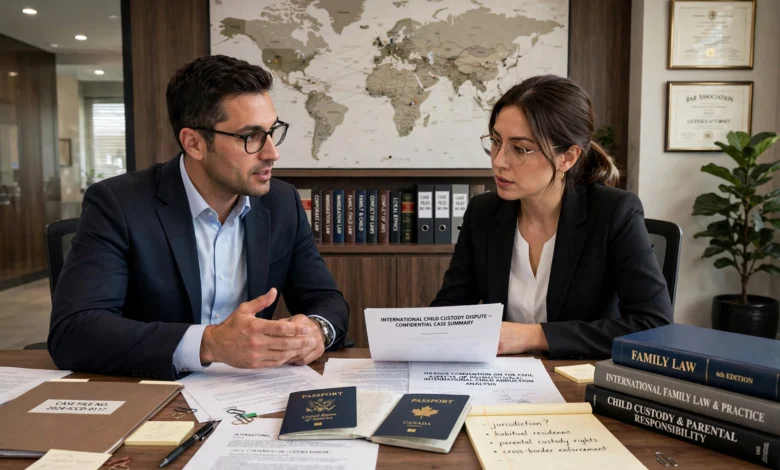
International child custody disputes have become far more common as families spread across borders through work, marriage, and relocation. When a parent removes a child from London without the other parent’s consent, or refuses to bring them back after a holiday abroad, the situation can feel impossible to untangle. Which country’s courts have jurisdiction? Can the child be brought back quickly? What if the other parent claims the child is now settled somewhere new?
This is where the Hague Convention on the Civil Aspects of International Child Abduction comes in. Signed in 1980 and now covering over 100 countries, it gives parents a legal route to seek the prompt return of a child who has been wrongfully removed or kept away from their country of habitual residence. In London, these cases go through the High Court’s Family Division, one of the busiest and most experienced courts in the world for this type of dispute.
This article walks through how the Convention actually works in London, who handles these cases, what defences the other parent might raise, and what parents should do the moment they suspect a wrongful removal has happened. Whether you’re facing this situation directly or trying to understand your rights before a trip abroad turns into a dispute, this guide breaks down the process in plain terms.
What Is The Hague Convention And Why Does It Matter In London
The Hague Convention is not about deciding who should have custody of a child long term. That’s a common misunderstanding. Instead, it’s built around one simple idea: a child should normally be returned to their country of habitual residence so that the courts there, the ones with the fullest picture of the child’s life, can decide custody matters properly.
London plays an outsized role here because the High Court in the Royal Courts of Justice handles nearly all Hague applications for England and Wales. The judges sitting in the Family Division deal with these cases constantly, and the court has built a reputation for moving quickly, which is exactly what the Convention demands.
For the Convention to apply, both the country the child was taken from and the country they’ve been brought to must be signatory states. If one of the countries hasn’t signed the treaty, the case falls outside the Hague framework entirely and has to be handled through other, often slower and less predictable, legal channels.
Key features of the Convention include:
- It applies to children under the age of 16
- It requires the removal or retention to be “wrongful” under the law of the child’s home country
- It focuses on return of the child, not on who wins custody
- It’s meant to work quickly, ideally within six weeks of an application being filed
The Role Of The ICACU As Central Authority
Every country that signs the Hague Convention appoints a Central Authority to act as the point of contact for these cases. In England and Wales, that role belongs to the International Child Abduction and Contact Unit, usually just called the ICACU.
If your child has been wrongfully brought to England, or wrongfully taken from England to another Hague country, the ICACU is where the process starts. They don’t decide the case themselves, but they:


- Receive and forward the application to the relevant Central Authority abroad, or accept incoming applications from other countries
- Help locate the child if their whereabouts aren’t known
- Connect the applicant parent with a solicitor experienced in this area
- Liaise with the Foreign, Commonwealth and Development Office where enforcement issues arise outside the jurisdiction
- Coordinate with the 1996 Hague Convention on parental responsibility where relevant, since this now sits alongside the 1980 Convention as the UK’s main framework for cross-border parental responsibility matters following its departure from the EU
Only a select panel of law firms is approved to handle ICACU referrals, and for good reason. These cases move fast, often within days of the application landing, and the solicitor needs to be ready to act immediately once instructed.
Wrongful Removal And Retention Explained
At the centre of every Hague case is a single legal question: was the removal or retention wrongful? This isn’t just about whether a parent disagreed with the move. It has a specific legal meaning under Article 3 of the Convention.
A removal or retention is generally considered wrongful when:
- It breaches the rights of custody attributed to a person, institution, or body under the law of the child’s habitual residence
- Those rights of custody were actually being exercised at the time of the removal, or would have been but for the removal itself
In practice, this usually plays out in two common scenarios:
Wrongful removal happens when one parent takes the child abroad, often under the guise of a holiday, and simply doesn’t return. Wrongful retention happens when a child travels abroad with the agreed consent of both parents, perhaps for a summer visit, but the parent with the child then refuses to send them back once the agreed period ends.
Habitual residence is often the most contested issue in these cases. Courts look at where the child’s life was actually centred before the removal, not just where they were born or where their passport was issued. Factors like schooling, friendships, medical care, and the stability of the arrangement all come into play.
The High Court Process For Hague Applications In London
Once an application reaches the ICACU and a solicitor is instructed, the case moves to the High Court in London. The Family Division has dedicated procedures for Hague cases precisely because speed matters so much.
Here’s roughly how the process unfolds:
- Application lodged – The applicant parent, through their solicitor, files the application with supporting evidence, including proof of habitual residence and custody rights.
- Location order, if needed – If the child’s whereabouts aren’t confirmed, the court can issue an order requiring disclosure of their location.
- First hearing – This is often listed within days. The court sets a timetable, and may make interim orders such as preventing the child’s removal from the jurisdiction or requiring the surrender of passports.
- Evidence and defences – The respondent parent has the chance to raise a defence (more on these below). Both sides file evidence, though full oral evidence and cross-examination are unusual in Hague cases, which are meant to be dealt with on a summary basis.
- Final hearing – The judge decides whether the child should be returned. If a defence is upheld, the court has discretion whether to order the return anyway or refuse it.
- Enforcement – If a return is ordered, the court will set out how and when it happens, sometimes with safeguards in place for the travelling parent or child.
The Article 12 deadline is worth flagging here. If proceedings start within one year of the wrongful removal or retention, the court must order the child’s return unless a defence applies. After a year, the court still has that power, but it also has to weigh whether the child has become settled in their new environment.
Defences Under Article 13 That Can Prevent Return
The Convention isn’t a rubber stamp for automatic return. Article 13 sets out specific defences a parent can raise to resist a return order, though the bar is deliberately high so the exceptions don’t swallow the rule.
The main defences include:
- Consent or acquiescence – The applicant parent actually agreed to the removal or retention, or later accepted it, even if reluctantly.
- Grave risk of harm – Returning the child would expose them to physical or psychological harm, or otherwise place them in an intolerable situation. This is the defence most often argued, and also the hardest to prove, since courts are wary of it being used simply to relitigate custody arguments.
- Child’s objection – The child themselves objects to being returned and has reached an age and level of maturity where their views should be taken into account. Courts in London have become increasingly willing to hear directly from older children through a Cafcass officer.
- Settled in new environment – Applies only if more than a year has passed since the wrongful removal, and the child has demonstrably settled into their new home, school, and community.
- Human rights and fundamental freedoms – A rarely used defence where return would breach fundamental principles relating to human rights.
Even where a defence is technically made out, the judge retains discretion. Proving a defence doesn’t automatically mean the child stays. The court still has to weigh the purpose of the Convention against the individual circumstances of the child.
Practical Steps For Parents Facing A Custody Dispute
If you suspect your child has been wrongfully taken from or kept away from London, time matters more than almost anything else in these cases. Here’s what tends to make the biggest difference:
- Contact the ICACU immediately rather than waiting to see if the situation resolves itself. Early action gives the courts more options, including preventative orders before a child even leaves the country.
- Gather documentation on custody arrangements, the child’s habitual residence, passport details, and any prior agreements about travel.
- Instruct a solicitor from the ICACU panel, since these firms understand the procedural speed the court expects and won’t need time to get up to speed on the framework.
- Consider a port alert or passport order if you fear an imminent removal, since preventing a child from leaving the jurisdiction is often far easier than securing their return afterward.
- Keep records of communication with the other parent, including any messages that touch on travel plans, consent, or refusal to return the child.
- Avoid taking matters into your own hands. Self-help remedies, like travelling to retrieve the child without a court order, can backfire badly and undermine your position in later proceedings.
For parents on the other side, facing an application for their child’s return, it’s just as important to get specialist advice quickly. Genuine defences exist for a reason, but they need to be raised properly and supported with real evidence rather than general objections to the other parent.
Brexit And The Shift From Brussels IIa To The 1996 Convention
For families with connections to the EU, the legal landscape changed meaningfully after the UK left the bloc. Brussels IIa, which used to work alongside the 1980 Hague Convention to streamline cross-border custody matters between the UK and EU member states, no longer applies to the UK.
In its place, the 1996 Hague Convention on parental responsibility now provides the framework for jurisdiction and recognition of parental responsibility decisions between the UK and EU countries, alongside the 1980 Convention’s return mechanism. This shift means practitioners in London now rely more heavily on the 1996 Convention for questions around jurisdiction and mutual recognition of orders, since the automatic recognition and enforcement mechanisms that Brussels IIa provided are gone.
Parents involved in disputes with an EU country connection should be aware that the process may look slightly different from disputes involving non-EU Hague signatories, particularly around how quickly a UK order will be recognised abroad.
Non-Hague Countries And What Happens Then
Not every country has signed the Hague Convention, and when a child is taken to one of these jurisdictions, the process becomes considerably harder. Without a treaty framework, there’s no automatic mechanism compelling return, and enforcement often depends on the willingness of local authorities and courts to cooperate.
In these situations, the Foreign, Commonwealth and Development Office (FCDO) can play a supporting role, liaising with foreign officials and consular staff, though it cannot force a foreign court to act. Parents may need to pursue proceedings directly in the local courts of the country where the child now is, working alongside local counsel and sometimes London-based solicitors who specialise in cross-border cases.
This is one of the strongest reasons to act early if there’s any risk a child might be taken to a non-Hague country. Preventative measures, such as court orders restricting travel or requiring consent for a child’s passport to be issued, are far more effective before a removal happens than after.
Conclusion
International child custody disputes involving London families sit at the intersection of urgency and complexity, and the Hague Convention exists precisely to cut through that by prioritising a child’s swift return to their country of habitual residence rather than relitigating custody from scratch. The High Court’s Family Division, supported by the ICACU as the Central Authority for England and Wales, has built a process designed to move quickly, though defences under Article 13 mean outcomes are never automatic.
Since Brexit, the 1996 Hague Convention has taken on a larger role for cases connected to the EU, and disputes involving non-Hague countries remain considerably harder to navigate without treaty protection. Whatever side of the dispute a parent finds themselves on, early legal advice from a solicitor experienced in this specific area of family law makes the single biggest difference to how these cases unfold.