Child Custody Laws in California: What Judges Actually Consider in 2026
Child custody laws in California explained: the factors judges weigh in 2026, what's changed, and how courts decide custody.
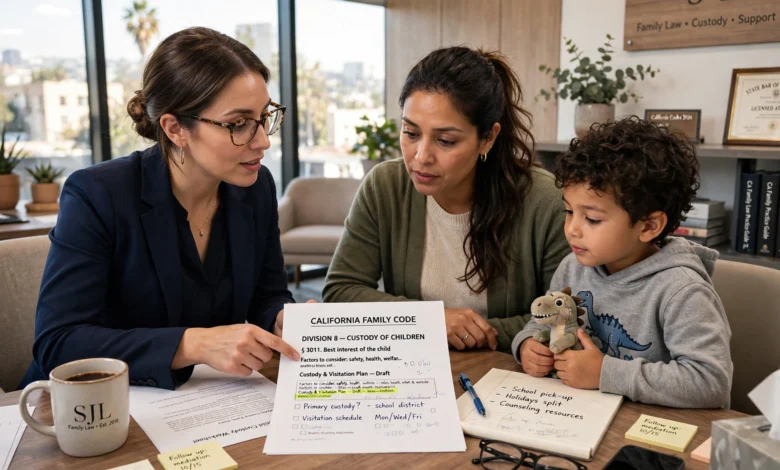
Child custody laws in California don’t work the way most people assume. There’s no rule that says parents automatically split time 50/50, and there’s no rule that says mothers get an edge. Every decision comes down to one legal standard: what’s best for the child. That sounds simple in theory and gets complicated fast in practice, because “best interest” isn’t one factor. It’s a whole list of them, and judges are required to weigh all of them before signing off on a parenting plan.
If you’re heading into a divorce, a paternity case, or a custody modification in 2026, you’re probably wondering what a judge actually looks at when deciding where your kids will live and who gets to make decisions for them. This guide walks through the real legal framework: the California Family Code sections that control custody decisions, the specific factors courts weigh, how domestic violence and substance abuse affect a case, and how the process actually plays out from mediation to a courtroom hearing.
None of this replaces advice from a licensed family law attorney who knows the details of your case, but it should give you a clear, accurate picture of how California child custody laws work right now, so you’re not walking into court guessing.
California’s Legal Standard: The “Best Interest of the Child”
Every custody decision in California starts and ends with the same question: what arrangement serves the child’s health, safety, and welfare? This is called the best interest of the child standard, and it’s the only standard that matters. Judges aren’t trying to be fair to the parents. They’re trying to figure out what’s good for the kid, even when that means one parent doesn’t get the outcome they wanted.
The Governing Family Code Sections
Three sections of the California Family Code form the backbone of every child custody case in the state:
- Family Code § 3011 lays out the specific factors a court must consider, including the child’s health, safety, and welfare, any history of abuse, the nature and amount of contact with each parent, and habitual or continual substance abuse by either parent.
- Family Code § 3020 declares it the public policy of California to ensure a child’s health, safety, and welfare are the court’s primary concern, while also encouraging frequent and continuing contact with both parents when it’s safe to do so.
- Family Code § 3040 sets out the order of preference the court follows when no agreement exists between the parents, without giving either parent a built-in advantage.
You can read the full text of these statutes directly through the California Legislative Information website, which publishes the current Family Code online.
What Judges Are Legally Barred From Considering
California law is specific about what can’t factor into a custody decision. A judge may not base a ruling on a parent’s:
- Sex, gender identity, or gender expression
- Sexual orientation
- Disability, unless it directly and demonstrably affects the ability to parent safely
This matters because it shuts down a lot of outdated assumptions people still bring into custody disputes. The court isn’t picking a “better” parent based on stereotypes. It’s evaluating actual parenting capacity and the actual needs of the child in front of it.
Legal Custody vs. Physical Custody: Know the Difference
Before getting into the factors judges weigh, it helps to understand the two types of custody California recognizes, because a lot of confusion in custody disputes comes from mixing these up.


Legal custody is the right to make major decisions for your child, things like schooling, medical care, religious upbringing, and general welfare decisions. Most California cases result in joint legal custody, meaning both parents share this decision-making authority even if the child doesn’t split time evenly between homes.
Physical custody determines where the child actually lives day to day. This can be:
- Sole physical custody — the child lives primarily with one parent, and the other typically has scheduled visitation.
- Joint physical custody — the child spends significant time living with both parents, though this doesn’t have to mean an exact 50/50 split.
A common misconception is that joint legal custody automatically means joint physical custody. It doesn’t. Parents can share every major decision about a child’s life while that child still lives primarily in one household. Judges treat these as two separate questions, and a custody arrangement can mix and match depending on what actually works for the family.
The Core Factors Judges Weigh in 2026
This is the part most parents actually want to understand: what does a judge look at, specifically, when deciding a child custody case in California? Under Family Code § 3011 and related case law, the following factors carry the most weight.
Health, Safety, and Welfare
This is the anchor factor, and it’s listed first in the statute for a reason. Courts want to know whether each parent can provide a stable, secure home where the child is physically safe and emotionally supported. Judges look at living conditions, supervision, routines, and whether either parent’s conduct puts the child at risk.
History of Abuse or Domestic Violence
Any credible, corroborated history of abuse by either parent gets serious weight in a custody decision. This isn’t limited to abuse directed at the child. Domestic violence between the parents, or violence directed at other family members, is also considered, because courts recognize that exposure to violence in the home harms children even when they aren’t the direct target.
Substance Abuse
Habitual or continual abuse of alcohol or controlled substances by a parent is a statutory factor under California law, and it typically requires corroborating evidence, not just an accusation from the other parent. Courts take this seriously because it goes directly to a parent’s ability to provide consistent, safe supervision.
The Nature and Amount of Contact With Each Parent
Judges want to see the actual history of the relationship, not just who’s asking for more time now. A parent who has been the primary caregiver, handling school pickups, doctor’s appointments, and daily routines, is going to be evaluated differently than a parent who has had minimal day-to-day involvement, regardless of what either parent says they want going forward.
Co-Parenting Ability
California courts strongly favor custody arrangements that keep both parents actively involved in a child’s life, unless safety concerns say otherwise. That means judges pay close attention to which parent is more willing to support the child’s relationship with the other parent. A parent who consistently interferes with visitation, badmouths the other parent to the child, or tries to alienate the child from the other household can seriously damage their own custody position. Courts see this kind of behavior as contrary to the child’s best interest, not as evidence of superior parenting.
Stability and Continuity
Kids generally do better with consistency, so judges weigh how much disruption a proposed custody change would cause. This includes school continuity, existing relationships with siblings and extended family, and how long a current arrangement has been in place. This is part of why “who has physical custody right now” can carry real influence during a modification case, even though it isn’t supposed to be the deciding factor on its own.
The Child’s Preference
Children age 14 and older have a right to address the court and express a preference about custody, and younger children’s wishes can be considered too, depending on their age and maturity. That said, a child’s preference is one input among many, not a veto. A judge can, and sometimes does, rule against what an older child says they want if the judge believes a different arrangement genuinely serves the child better.
What’s New in 2026: Recent Changes Parents Should Know
California child custody laws aren’t static, and a few legislative changes are actively shaping how cases are handled this year.
SB 343: Updated Child Support Calculations
Senate Bill 343 revised the guideline formula used to calculate child support, factoring in each parent’s earning capacity, income, the number of children involved, and the actual amount of parenting time each parent has. Because parenting time directly affects the support calculation, custody and support cases are more intertwined than ever, which is one more reason a proposed parenting schedule needs to reflect reality, not just what looks good on paper.
AB 495: The Family Preparedness Plan Act
This law, effective January 1, 2026, lets parents designate a temporary guardian for their children, often a relative, without giving up their own parental rights. It’s aimed largely at protecting children in situations where a parent might face sudden separation from their kids, including immigration enforcement actions, and it gives families a legal tool to keep children out of the foster care system during a crisis. It’s not a custody order in the traditional sense, but family law attorneys are increasingly folding it into broader custody and guardianship planning.
Mandatory Mediation Requirements
California continues to require Child Custody Recommending Counseling (CCRC), sometimes just called mediation, before most contested custody matters go in front of a judge. The idea is to get parents to a workable agreement without a full court hearing whenever possible. If mediation fails to produce an agreement, the case proceeds to a contested hearing where a judge makes the final call.
The Domestic Violence Presumption Under Family Code § 3044
One of the more consequential rules in California child custody laws is the rebuttable presumption created by Family Code § 3044. If a court finds that a parent has committed an act of domestic violence against the other parent, the child, or the child’s siblings within the previous five years, the law presumes that awarding sole or joint custody to that parent is not in the child’s best interest.
That presumption can be overcome, but the burden falls on the parent who committed the abuse to prove otherwise, typically through evidence like completed batterer intervention programs, compliance with a protective order, sobriety if substance abuse was involved, and a demonstrated period of safe, appropriate conduct. This is a significant departure from the general “no thumb on the scale” approach to custody, and it reflects how seriously California treats domestic violence as a factor in these cases.
Move-Away (Relocation) Cases
Custody disputes get more complicated when one parent wants to relocate with the child, whether that’s across the state or out of it entirely. California’s framework for these “move-away” cases comes largely from two landmark California Supreme Court decisions: In re Marriage of Burgess and In re Marriage of LaMusga.
The general rules break down like this:
- A parent with sole physical custody generally has the right to relocate with the child, unless the other parent can prove the move would be harmful to the child.
- A parent with joint physical custody who wants to relocate typically has to show that the move actually serves the child’s best interest, since there’s no existing presumption in their favor.
Judges weigh the reason behind the move (a new job, family support, a remarriage), the distance involved, how the relocation would affect the child’s relationship with the parent staying behind, and whether there’s a legitimate, good-faith reason for the move as opposed to an attempt to limit the other parent’s access to the child.
How the Custody Process Actually Works
Understanding the factors judges weigh only helps if you also understand the process that gets you in front of one. Here’s the typical path for a child custody case in California:
- Filing — One parent files a petition requesting custody orders, either as part of a divorce, a paternity action, or a standalone custody case.
- Response — The other parent generally has 30 days to file a response. If they don’t respond, a judge can make orders without their input.
- Mediation (CCRC) — Contested cases go through mandatory mediation before a hearing. A neutral counselor meets with both parents to try to reach an agreement.
- Temporary orders — If the case is urgent or mediation doesn’t fully resolve things, a judge may issue temporary custody orders while the case continues.
- Court hearing — If parents still can’t agree, the case goes to a contested hearing where each side presents evidence, and the judge applies the best interest factors to make a final ruling.
- Modification — Custody orders aren’t necessarily permanent. Either parent can request a modification later if there’s been a significant change in circumstances affecting the child’s welfare.
For official, up-to-date guidance on this process, including required forms, the California Courts Self-Help Center is the most reliable public resource and is maintained directly by the state judicial branch.
Common Myths About Child Custody Laws in California
A lot of bad decisions in custody cases come from believing things that simply aren’t true. A few worth clearing up:
- “California defaults to 50/50 custody.” It doesn’t. There’s no statutory presumption favoring equal time. Some courts lean toward it when both parents are fit and cooperative, but it’s not the legal starting point.
- “Mothers automatically win custody.” Gender isn’t a legal factor at all. Courts are explicitly barred from considering it.
- “If my child says they want to live with me, that settles it.” A child’s preference is one factor among many, and it’s weighed against everything else, not treated as the final word.
- “A parent who cheated will lose custody.” Infidelity, on its own, generally has no bearing on custody unless it directly connects to the child’s welfare, such as exposing the child to an unsafe situation.
- “Whoever files first gets an advantage.” Filing order doesn’t determine outcomes. The best interest factors do.
Practical Tips for Parents Preparing for a Custody Case
If you’re heading into a child custody case, a few practical steps can make a real difference in how your case is presented and understood by the court:
- Keep records. Document your involvement in your child’s daily life: school events, medical appointments, extracurriculars. Courts respond to evidence, not just claims.
- Don’t badmouth the other parent in front of your child. Judges notice, and it can work against you regardless of how justified you feel.
- Follow existing orders exactly, even temporary ones, while your case is pending. Non-compliance reflects poorly on your credibility.
- Prioritize mediation in good faith. Courts favor parents who show a genuine willingness to cooperate over those who show up only to fight.
- Get a family law attorney involved early, especially if domestic violence, substance abuse, or relocation is part of your situation. These cases carry real legal complexity, and the stakes for your relationship with your child are too high to navigate alone.
Conclusion
Child custody laws in California revolve around a single, consistent principle: what genuinely serves the child’s health, safety, and welfare, evaluated through a specific set of statutory factors rather than assumptions about gender, fault, or who filed first. In 2026, that framework includes updated child support calculations under SB 343, new guardianship protections under AB 495, a strong presumption against awarding custody to a parent with a recent history of domestic violence, and a well-defined process that runs through mandatory mediation before any contested hearing.
Understanding how judges actually weigh these factors, and knowing which myths to ignore, puts parents in a far stronger position to advocate for an arrangement that genuinely works for their child, whether that means negotiating an agreement out of court or preparing for a full custody hearing.