Cargo Spill Truck Accidents in Illinois: Multiple Defendants and Shared Liability
Cargo spill truck accidents in Illinois often involve several liable parties. Here is how shared fault, joint liability, and evidence shape your claim.

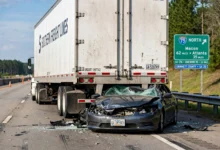
Cargo spill truck accidents in Illinois are some of the messiest cases in personal injury law, both on the road and in the courtroom. A semi loses a load of steel coils on I-55, a flatbed drops lumber across the Kennedy Expressway, or a tanker rolls and releases chemicals near a small town. Drivers behind it get a few seconds to react, and many don’t get even that.
What sets these crashes apart from a typical truck accident is how many people touched the load before it hit the pavement. The driver, the trucking company, the shipper, a third-party loader, the freight broker, and even the company that made a failed tiedown strap can all play a part. When several parties share the blame, Illinois has specific rules for how fault gets divided and who has to pay what.
This guide walks through how cargo spill truck accidents in Illinois happen, who can be named as a defendant, and how shared liability works under the state’s modified comparative fault and joint and several liability rules. It also covers the federal cargo securement rules that often decide these cases, the evidence that matters most, and the filing deadlines you can’t afford to miss. If you or someone close to you was hurt, this should give you a clear picture of what a claim really involves before you sit down with a lawyer.
7 Essential Facts About Cargo Spill Truck Accidents in Illinois
If you only have a minute, these are the points that shape almost every claim.
- Most cargo spills start with how the load was packed and secured, not only with how the truck was driven.
- More than one party is usually at fault, so a strong claim names every responsible company, not just the driver.
- Illinois bars your recovery if you are found more than 50% at fault for your own injuries.
- A defendant found 25% or more at fault can be made to pay all of your damages, not just its share.
- Every defendant is jointly responsible for your medical bills, whatever its percentage of fault.
- Federal cargo securement rules in 49 CFR Part 393 set the safety standard, and a violation is powerful evidence.
- You generally have two years from the crash to file an injury lawsuit in Illinois.
What Causes Cargo Spill Truck Accidents?
Most cargo spill truck accidents in Illinois come down to a handful of repeat problems. Knowing the cause matters because it points straight at who is responsible.
Improper Loading and Weight Distribution
A trailer loaded heavy on one side or toward the rear handles badly in curves and on ramps. Freight stacked too high raises the center of gravity and makes rollovers more likely. Whoever planned and physically loaded the trailer owns that decision, and that is often not the driver.
Failed or Insufficient Tiedowns
Chains, straps, and binders have rated limits. Using too few, using worn ones, or attaching them to weak anchor points lets cargo slide, shift, or fly off. This is the classic falling cargo scenario on flatbeds hauling steel, lumber, pipe, or machinery.
Overloaded Trailers
Illinois generally caps gross vehicle weight at 80,000 pounds on interstates without a special permit. An overloaded truck takes longer to stop, wears out brakes and tires faster, and puts more stress on every securement device. Overloading often reflects pressure from the carrier or shipper to move more freight per trip.
Rollovers and Sudden Maneuvers
Speeding on a curve, hard braking, or a sharp swerve can turn a properly secured load into a hazard. A shifting load also feeds a rollover, since moving weight pushes the trailer past its tipping point. These cases often mix driver error with loading problems.

Equipment and Trailer Defects
A cracked trailer floor, broken side rails, a faulty tailgate latch, or defective tiedown hardware can release cargo even when everyone followed procedure. That brings maintenance shops and product manufacturers into the picture.
Hazardous Material Releases
Tankers and box trucks carrying chemicals, fuel, or gases create a second danger after the crash: toxic exposure, fire, and evacuations. The 2023 anhydrous ammonia tanker crash near Teutopolis, which killed five people, showed how a single spill can hurt people far beyond the vehicles directly involved. Hazardous material spill cases also follow some different liability rules, covered below.
Multiple Defendants in Cargo Spill Truck Accidents in Illinois
In most cargo spill truck accidents in Illinois, the list of multiple defendants is longer than people expect. Each one below can carry part of the blame, and each usually has its own insurance policy.
The Truck Driver
Drivers must inspect their cargo and securement before the trip and at set intervals along the way. A driver who skips those checks, speeds through a curve, or drives fatigued can be personally negligent. In practice, though, the driver’s employer usually pays.
The Motor Carrier
Under the doctrine of respondeat superior, a trucking company is responsible for the negligence of drivers acting within the scope of their jobs. Carriers can also be directly liable for negligent hiring, poor training, bad supervision, skipped maintenance, or pushing drivers to haul overweight loads. Federal rules also make the carrier responsible for operating safely, even when the driver is an owner-operator leased to it.
The Shipper
Shipper liability comes up when the company sending the goods loaded and sealed the trailer itself. Courts often follow a long-standing rule from the federal case United States v. Savage Truck Line: the carrier is usually responsible for securement, but the shipper can be liable when its loading defect was hidden and the driver could not reasonably spot it. A sealed trailer the driver was never allowed to open is a common example.
Third-Party Loaders and Warehouses
Many loads are packed by a separate warehouse, distribution center, or logistics contractor. A third-party loader that stacks freight unevenly, overloads a trailer, or uses the wrong blocking and bracing can share fault directly. These companies are easy to miss if nobody pulls the bill of lading and loading records early.
Freight Brokers
Brokers arrange shipments but don’t haul them. Injured people have sued brokers for hiring carriers with obvious safety problems, a theory called negligent selection. Federal courts covering Illinois have held that federal law blocks many of these claims, and the issue has been before the U.S. Supreme Court, so freight broker negligence claims need a current look at the law before you count on them.
Equipment and Parts Manufacturers
If a strap, chain, binder, trailer component, or latch failed because of a design or manufacturing defect, the maker can face a product liability claim. Illinois product cases can use strict liability, meaning you don’t have to prove the manufacturer was careless, only that the product was unreasonably dangerous when it left their hands.
Maintenance Contractors
Outside repair shops that service trailers, tires, and brakes can share fault when shoddy work contributes to a crash. Their records often reveal deferred repairs the carrier knew about.
Government Entities and Road Contractors
A badly designed curve, a missing warning sign, or a huge pothole can contribute to a rollover. Claims against Illinois local governments run through the Local Governmental and Governmental Employees Tort Immunity Act, which has shorter deadlines and its own immunities. Claims against the State go to the Illinois Court of Claims.
Other Drivers
A car that cuts off a loaded truck or a driver who rear-ends a vehicle stopped for debris can share fault too. Illinois counts every party’s share, including drivers who aren’t trucking businesses.
How Shared Liability Works in Cargo Spill Truck Accidents in Illinois
Shared liability in Illinois rests on two sections of the Illinois Code of Civil Procedure: Section 2-1116 on comparative fault and Section 2-1117 on joint and several liability. Together they decide whether you recover, how much, and which defendant you can collect it from.
Modified Comparative Fault and the 51% Bar
Illinois uses modified comparative fault. If a jury finds you were 50% or less at fault, your damages are reduced by your percentage. If you were more than 50% at fault, you recover nothing.
Say a jury values your case at $200,000 and finds you 20% at fault for following the truck too closely. You would recover $160,000. At 51%, you would recover zero. This is why defendants in cargo spill cases often argue that the injured driver should have seen the debris or stopped sooner.
Joint and Several Liability and the 25% Rule
Joint and several liability means you can collect the full judgment from one defendant, and that defendant then chases the others for their shares. Illinois limits this with a 25% threshold:
- A defendant found 25% or more at fault is jointly and severally liable for all of your damages.
- A defendant found less than 25% at fault is only responsible for its own percentage of your non-medical damages.
- Every defendant, at any percentage, is jointly and severally liable for your medical expenses.
The 25% is measured against the total fault of you, the defendants you sued, and any third-party defendants (other than your employer). That is why who gets added to the case can shift the math.
A Worked Example
Imagine a jury awards $500,000: $100,000 in medical expenses and $400,000 in other damages such as lost wages and pain and suffering. It finds the carrier 70% at fault, the third-party loader 20%, and you 10%. Your recovery drops to $450,000.
| Party | Fault | What you can collect from them |
|---|---|---|
| Motor carrier | 70% | Up to the full $450,000 |
| Third-party loader | 20% | $90,000 in medical expenses plus $80,000 of non-medical damages |
| You | 10% | Award reduced by 10% |
If the carrier turns out to be underinsured or bankrupt, the loader’s exposure on non-medical damages stays capped at its 20% share. That gap is exactly why identifying every responsible party early matters so much.
The Hazardous Substance Exception
Section 2-1118 carves certain cases out of the 25% rule, including actions based on the discharge of pollutants or hazardous substances. In some chemical or fuel spill cases, that can mean every liable defendant is jointly and severally liable regardless of its percentage. Whether a particular hazardous material spill fits the exception depends on how the claim is pleaded and the facts, so it is worth raising with a lawyer early.
Contribution Between Defendants
Under the Illinois Joint Tortfeasor Contribution Act, a defendant who pays more than its fair share can seek repayment from the others. If one defendant settles with you in good faith, it is released from contribution claims, and your recovery against the remaining defendants is reduced by the settlement amount. Settling with one party while litigating against others is common in multiple defendants cases, but the timing and terms need care.
How Insurance Limits Fit In
Federal rules require interstate carriers hauling general freight to carry at least $750,000 in liability coverage, $1 million for oil, and up to $5 million for certain hazardous materials. Serious injury cases can blow past those numbers. Additional defendants with their own policies, such as shippers, loaders, and manufacturers, are often what makes full compensation possible.
Federal Cargo Securement Rules That Shape Liability
The cargo securement rules in 49 CFR Part 393 are the yardstick for almost every falling or shifting load case. The FMCSA cargo securement rules apply to commercial trucks in interstate commerce, and Illinois has adopted federal motor carrier safety rules for most intrastate carriers as well.
Some of the core requirements:
- Cargo must be contained, immobilized, or secured so it can’t leak, spill, blow off, fall, or shift in a way that affects the truck’s stability.
- The combined working load limit of all tiedowns must equal at least half the weight of the cargo they hold.
- Minimum tiedown counts depend on the length and weight of each article, with more tiedowns required for longer and heavier items.
- Tiedowns and hardware must be in good working order, with no knots, cuts, or damaged links that weaken them.
- Specific rules apply to logs, dressed lumber, metal coils, paper rolls, concrete pipe, intermodal containers, vehicles, heavy machinery, and large boulders.
Drivers have their own duties under 49 CFR 392.9. They must check the cargo and securement within the first 50 miles of a trip, then again at every change of duty status, or after three hours or 150 miles, whichever comes first. A missed check is often the first thing a lawyer looks for.
In Illinois, violating a safety regulation designed to protect the public is generally treated as prima facie evidence of negligence. That doesn’t win a case on its own, but it shifts the conversation fast. FMCSA regulations also give a roadmap for which party had which job, which helps divide fault among multiple defendants.
Evidence That Proves Fault in Cargo Spill Truck Accidents in Illinois
Because fault gets split among several parties, evidence decides who pays. Much of it sits with the trucking company and can disappear quickly, so a lawyer will usually send preservation letters within days.
- Electronic control module and ELD data: speed, braking, throttle, and hours of service in the moments before the spill.
- Bills of lading and load records: who packed the freight, what it weighed, and whether the trailer was sealed.
- Securement photos and inspection logs: many carriers require drivers to photograph loads before departure.
- Scale tickets and weigh station records: proof of overloading or uneven axle weights.
- Police and Illinois State Police reports: including crash reconstruction on serious cases.
- Dashcam and nearby traffic camera footage: often overwritten within days or weeks.
- Driver qualification and training files: showing whether the carrier trained drivers on securement.
- Maintenance and repair records: for trailers, tiedown hardware, and anchor points.
- The spilled cargo and failed equipment itself: broken straps and chains should be kept for expert testing.
- Witness statements: other drivers often see the load move before it falls.
If evidence is destroyed after the company knew a claim was coming, Illinois courts can impose sanctions or let the jury hear about the loss. That only helps if someone asked for it to be preserved in the first place.
Damages You Can Recover
Illinois lets injured people recover both economic and non-economic losses, and there is no general cap on damages in Illinois truck accident cases.
- Past and future medical expenses, including surgery, rehab, and long-term care
- Lost wages and reduced earning capacity
- Pain and suffering, emotional distress, and loss of normal life
- Disfigurement and permanent disability
- Property damage to your vehicle and belongings
- Costs tied to toxic exposure or evacuation in hazardous spills
When a crash is fatal, family members can bring claims under the Illinois Wrongful Death Act and Survival Act. Punitive damages are possible in rare cases where a company acted with willful and wanton disregard for safety, such as knowingly sending out overloaded trucks again and again.
Illinois Deadlines You Need to Know
The statute of limitations is strict, and missing it usually ends the case for good.
- Personal injury: two years from the date of the crash
- Wrongful death: generally two years from the date of death
- Property damage: five years
- Claims against local governments: generally one year under the Tort Immunity Act
- Minors: the clock usually doesn’t start until the child turns 18
In practice, the real deadline is much sooner. Truck data, camera footage, and the failed equipment can be gone within weeks.
What to Do After a Cargo Spill Crash
- Get to safety and call 911. Stay away from any leaking liquid or unusual smell, since some cargo is toxic.
- Get medical care right away, even if you feel fine. Some injuries and exposures show up later.
- Photograph the scene, the spilled cargo, the truck, its tiedowns, and the company name and DOT number on the cab.
- Get names and contact details for witnesses.
- Make sure the police report mentions the cargo spill.
- Don’t give a recorded statement to the trucking company’s insurer before getting advice.
- Talk to an Illinois truck accident lawyer quickly so preservation letters go out before evidence disappears.
Frequently Asked Questions
Can I sue more than one company after a cargo spill?
Yes. Illinois allows claims against every party whose negligence contributed to the crash. In many cargo spill truck accidents in Illinois, the carrier, shipper, and loader are all named in the same lawsuit.
What if the cargo fell off and I hit it, but the truck kept going?
You may still have a claim against the carrier if it can be identified through witnesses, cameras, or the cargo itself. Your own uninsured motorist coverage may also apply when the truck can’t be found.
Does it matter if the driver was an independent contractor?
It can affect the paperwork, but federal rules generally make the carrier operating under its own DOT authority responsible for that truck. Leasing arrangements rarely get a carrier fully off the hook.
How long do these cases take?
Cases with multiple defendants usually take longer because each party blames the others. Many settle within one to three years, while complex or catastrophic cases can run longer.
Conclusion
Cargo spill truck accidents in Illinois rarely have a single cause or a single defendant, since the driver, trucking company, shipper, third-party loader, broker, and equipment makers can all share responsibility for a load that ends up on the road. Illinois sorts out that blame through modified comparative fault, which bars recovery above 50% fault, and a joint and several liability rule that makes any defendant at 25% or more responsible for the full judgment while holding every defendant to the medical bills, with special treatment for some hazardous substance spills.
Federal cargo securement rules usually show who had which job, and the evidence that proves it, from ELD data to broken straps, can vanish within weeks. With a two-year filing deadline for most injury claims and much shorter windows for preserving proof, acting early and identifying every responsible party is the surest way to protect your right to full compensation.