Overloaded Truck Accidents in Edinburgh: Safety Regulations and Legal Claims
Overloaded truck accidents in Edinburgh cause serious harm. See UK weight limits, who is liable, and how to make a compensation claim under Scots law.

Overloaded truck accidents are some of the most preventable crashes on Scottish roads, yet they keep happening. A lorry carrying more weight than it was built for takes longer to stop, struggles on bends and puts extra strain on its tyres and brakes. When something gives, the people around it usually come off worst.
Edinburgh sees a steady flow of heavy goods traffic. Lorries move between the Port of Leith, the A720 City Bypass, the M8 and M9, and the many building sites across the city. Add narrow historic streets, steep gradients and busy junctions like Sheriffhall, and a heavy vehicle has very little room for error.
If you or someone close to you has been hurt in one of these crashes, you probably have two questions. Was the truck breaking the rules? And can you claim compensation? The short answer to the second question is often yes, but the details matter.
This guide walks through how overloaded truck accidents in Edinburgh happen, the UK weight limits and road haulage regulations that are meant to stop them, and who can be held responsible. It also explains how a lorry accident claim in Edinburgh works under Scots law, including time limits, evidence and what compensation can cover. The aim is to give you a clear picture so you can make good decisions about what to do next.
Why Overloaded Truck Accidents Are So Dangerous
A heavy goods vehicle is designed, tested and plated for a specific maximum weight. Every component, from the brakes to the suspension, is built around that figure. Once a lorry goes over it, the safety margins start to disappear, and that is why overloaded truck accidents tend to be so severe.
Longer Stopping Distances
More weight means more momentum. An overloaded lorry needs more distance to stop, and its brakes heat up faster on long descents. Brake fade, where the brakes lose grip because they are too hot, is a real risk on routes with steep sections. In stop-start city traffic, a few extra metres can be the difference between a near miss and a rear-end collision.
Rollovers and Loss of Control
Extra load, especially if it is stacked high or placed unevenly, raises the vehicle’s centre of gravity. That makes the truck more likely to tip on roundabouts and sharp bends. Edinburgh has plenty of both, from Sheriffhall and Hermiston Gait to the tight turns around Leith and the Old Town.
Tyre Blowouts and Mechanical Failure
Tyres have a load rating. Push past it and they run hotter, wear faster and are more likely to burst at speed. Axles, wheel bearings and suspension parts also take more stress. A blowout on the City Bypass at 50 mph can send a lorry across lanes in seconds.
Shifting and Falling Loads
Overloading often goes hand in hand with poor load security. When a driver has packed in more than the trailer should carry, straps and restraints may not hold. Loads can shift during braking, which changes how the truck handles, or fall into the path of other road users.
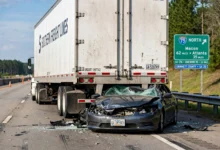

Damage to Roads and Bridges
Overweight lorries also wear down road surfaces and put stress on bridges. Potholes, rutting and damaged edges then become hazards for cyclists, motorcyclists and car drivers. So the harm from overloading is not limited to the moment of a crash.
Who Gets Hurt
The people most at risk in HGV accidents are those with the least protection:
- Pedestrians and cyclists, who have no shell around them at all
- Motorcyclists, who can be thrown into the path of other traffic
- Car drivers and passengers, especially in side impacts or underrun collisions
- The lorry driver, who may be injured if the vehicle rolls or jackknifes
Injuries in these crashes are often serious. Fractures, spinal injuries, head and brain injuries, internal injuries and, sadly, fatalities are all common outcomes.
UK HGV Weight Limits and Safety Regulations
Edinburgh follows the same vehicle weight rules as the rest of Great Britain. These rules are the starting point for any case involving overloaded truck accidents, because a proven breach is strong evidence that someone was careless.
The Main Laws
Two sets of regulations do most of the work:
- The Road Vehicles (Construction and Use) Regulations 1986, which set technical standards and weight limits for vehicles on public roads.
- The Road Vehicles (Authorised Weight) Regulations 1998, which set the maximum authorised weights most UK lorries now run at.
The Road Traffic Act 1988 makes it an offence to use, or cause or permit someone else to use, a vehicle that breaks these limits. That wording matters, because it means the operator can be liable as well as the driver.
Gross Vehicle Weight, Axle Weight and Train Weight
A truck can be overloaded in more than one way. The Government’s HGV maximum weights guidance explains that a vehicle counts as overloaded if it goes over the limits on its manufacturer’s or ministry plate, whether on an axle, the gross weight or the train weight.
- Gross vehicle weight (GVW): the maximum the vehicle and its load can weigh together.
- Axle weight: the maximum load on each individual axle. A lorry can be under its total limit and still illegal if the load is badly distributed.
- Gross train weight: the maximum combined weight of a tractor unit or rigid vehicle plus any trailer it tows.
Headline Maximum Weights
The exact limit depends on the number of axles, the type of suspension and the vehicle’s plate. As a rough guide, these are the common maximums:
| Vehicle type | Typical maximum weight |
|---|---|
| 2-axle rigid lorry | 18 tonnes |
| 3-axle rigid lorry | 26 tonnes |
| 4-axle rigid lorry | 32 tonnes |
| 5-axle articulated lorry | 40 tonnes |
| 6-axle articulated lorry | 44 tonnes |
The plate on the vehicle always wins. If a lorry is plated lower than these figures, the lower figure is its legal limit.
Local Weight Restrictions in Edinburgh
On top of vehicle limits, the City of Edinburgh Council can put weight restrictions on particular roads and bridges. You will see signs for 7.5 tonne, 18 tonne or other limits, often to protect older structures or residential streets. A lorry that ignores these signs may be breaking the law even if it is not overloaded.
Load Security Rules
Weight is only half the picture. Operators and drivers also have a duty to make sure loads are properly secured so they cannot move or fall. DVSA publishes a load securing code of practice, and a poorly secured load can be a separate offence. In practice, overloading and bad load security often show up together in the same crash.
Driver and Operator Duties
Everyone in the chain has a role in HGV safety compliance:
- Drivers should check the plated weights, look at how the load is placed and refuse to drive a vehicle they believe is overweight.
- Operators must hold an operator licence and keep their vehicles roadworthy and within legal limits. They need systems for weighing, loading and checking.
- Loaders and consignors must give accurate weights and load the vehicle safely.
- Maintenance providers must keep brakes, tyres and suspension in proper working order.
How Overloading Is Enforced in Scotland
Several bodies police lorry weights in and around Edinburgh. Their records can become valuable evidence after overloaded truck accidents, so it helps to know who they are.
DVSA Roadside Checks
The Driver and Vehicle Standards Agency (DVSA) runs roadside checks and weighs vehicles at fixed and mobile sites. Officers can stop a lorry, weigh it and check its paperwork, tachograph and condition. Its guide to HGV overloading sets out the risks and the ways operators are expected to prevent it.
Police Scotland
Police Scotland’s road policing officers can also stop and inspect goods vehicles. After a serious collision, they will investigate the scene, and specialist collision investigators may examine the lorry, its load and its weight. Their findings often form the backbone of a civil claim.
DVSA Overloading Penalties
Fines for overloading rise with the size of the excess. The graduated fixed penalties generally work like this:
| Amount over the limit | Usual outcome |
|---|---|
| Under 10% | Fixed penalty of around £100 |
| 10% to under 15% | Fixed penalty of around £200 |
| 15% to 30% | Fixed penalty of around £300 |
| Over 30% | Usually reported for prosecution in court |
Officers can also issue a prohibition notice. That stops the vehicle from moving until the excess load is removed, which can mean the lorry is immobilised at the roadside.
The Traffic Commissioner for Scotland
Overloading is not just a matter of fines. The Traffic Commissioner regulates operator licences and can call an operator to a public inquiry. Repeated overloading, poor maintenance or weak compliance systems can lead to a licence being curtailed, suspended or revoked. A transport manager can also lose their good repute.
Why Enforcement Records Matter for Your Claim
If an operator has a history of overloading offences, prohibition notices or public inquiries, that history can help show a pattern of careless practice. Your solicitor can request or obtain this information as part of building the case.
Who Is Liable for Overloaded Truck Accidents in Edinburgh?
One of the big differences between a lorry crash and an ordinary car collision is the number of people who might share the blame. In Scotland, a civil claim is based on negligence or breach of statutory duty. You need to show that someone owed you a duty of care, failed in that duty, and caused your injuries as a result.
The Lorry Driver
The driver is responsible for the safe operation of the vehicle. If they knew, or should have known, that the truck was overweight, they may be at fault. Speeding, driving while tired or taking a corner too fast with a heavy load can add to their share.
The Haulage Company or Operator
In most cases the claim is made against the operator rather than the driver personally. Employers are generally vicariously liable for the negligence of employees acting in the course of their work. The company may also be directly liable if it pressured drivers to carry too much, ignored weight checks or failed to train staff.
The Loading Company or Consignor
Sometimes the firm that loaded the lorry is a different business entirely. If a warehouse, quarry or supplier gave the wrong weight or loaded the vehicle unevenly, it may share responsibility.
Maintenance Contractors and Manufacturers
Where an overloaded vehicle also had worn brakes or faulty tyres, the business that maintained it could be partly at fault. In rare cases, a defective part may point to the manufacturer.
Contributory Negligence
The other side may argue that you were partly to blame, for example if you were not wearing a seatbelt. If a court agrees, your compensation can be reduced by a percentage. It does not usually stop a claim altogether.
Insurance Behind the Claim
Commercial vehicle operators must carry motor insurance. In practice, your HGV accident compensation will normally be paid by the operator’s insurer, not out of the driver’s pocket. Large haulage firms often have specialist insurers and solicitors, which is one reason it makes sense to get your own legal advice early.
7 Essential Steps After Overloaded Truck Accidents
What you do in the hours and weeks after a crash can make a real difference to your recovery and to any claim. These seven steps give you a solid footing.
- Get medical help first. Call 999 if anyone is badly hurt. Even if you feel fine, see a doctor or go to A&E at the Royal Infirmary of Edinburgh or your nearest unit. Some injuries, like whiplash or concussion, take hours or days to show. Medical records are also the main evidence of your injuries.
- Report the accident to Police Scotland. Serious crashes involving lorries are usually attended by police. If they were not, report it by calling 101. Ask for an incident reference number and keep it safe.
- Collect evidence at the scene if you can. Only do this if it is safe. Useful things to gather include:
- Photos of the lorry, its load, any spilled cargo and the road layout
- The lorry’s registration number, the company name on the cab or trailer and any fleet number
- Names and contact details of witnesses
- Dashcam footage from your car or from other drivers nearby
- Write down what happened. While it is fresh, note the time, weather, road conditions, how the lorry was moving and anything the driver said. Small details can matter later.
- Keep a record of your losses. Save receipts for travel, prescriptions, physiotherapy and damaged property. Keep payslips that show lost earnings. A simple diary of your pain, sleep and daily struggles can help show how the injury has affected your life.
- Be careful with insurers. The lorry operator’s insurer may contact you quickly with an offer. Early offers are often low and may not reflect your full losses. Avoid signing anything or giving a recorded statement before you have taken advice.
- Speak to a road traffic accident solicitor in Scotland. Look for a firm with experience of lorry accident claims in Edinburgh and of Scottish court procedure. A specialist can arrange the evidence that private individuals cannot easily get, such as tachograph data, weighbridge records, maintenance logs and police collision reports.
Evidence That Proves Overloading
Showing that the truck was overweight is often central to these claims. Helpful evidence includes:
- Weighbridge tickets and delivery notes showing the load weight
- Police or DVSA weighing records taken after the crash
- The vehicle’s plate showing its legal limits
- Tachograph and telematics data on speed and braking
- Loading records from the depot, quarry or warehouse
- Expert reports from accident reconstruction or vehicle engineers
Making a Personal Injury Claim in Scotland
Scotland has its own legal system, so a claim here works a little differently from one in England. If your accident happened in Edinburgh, Scots law will usually apply.
The Time Limit
You generally have three years to raise court proceedings for a personal injury claim in Scotland. This comes from the Prescription and Limitation (Scotland) Act 1973. The clock normally starts on the date of the accident, or the date you became aware of the injury and who caused it.
There are some important exceptions:
- Children: time does not run until they turn 16, so they have until 19 to raise a claim.
- Fatal accidents: relatives usually have three years from the date of death.
- People who lack capacity: the time limit may be paused.
Three years can sound like a long time, but evidence fades fast. Lorry data can be overwritten and witnesses move on, so earlier is better.
How the Claim Usually Runs
- Your solicitor sends a letter of claim to the operator or its insurer.
- The insurer investigates and decides whether to admit liability.
- Medical evidence is gathered and your losses are valued.
- The two sides negotiate. Most cases settle at this stage.
- If they cannot agree, court proceedings are raised.
In Scotland, the person making the claim is called the pursuer and the party being sued is the defender. Many personal injury cases from across the country are heard in the All-Scotland Sheriff Personal Injury Court, which sits in Edinburgh. Higher value or complex cases may go to the Court of Session.
Funding Your Claim
Most people worry about legal costs. In practice, many road traffic accident solicitors in Scotland work on a no win, no fee or success fee basis. Scotland also has qualified one-way costs shifting for personal injury cases, which generally protects pursuers from paying the other side’s expenses if they lose, as long as they have acted reasonably. Ask any firm to explain its fees in writing before you sign up.
What Compensation Can Cover
Compensation, often called damages, is split into two parts.
Solatium covers the pain, suffering and loss of enjoyment of life caused by your injuries. The amount depends on how serious they are and how long they last.
Patrimonial loss covers your financial losses, such as:
- Lost earnings, now and in the future
- Medical treatment, rehabilitation and therapy costs
- Care and assistance from family or professionals
- Travel to medical appointments
- Adaptations to your home or vehicle
- Repair or replacement of damaged property
Where someone has died, close relatives may claim for their own grief and for the financial support they have lost.
Frequently Asked Questions
How do I know if the lorry was overloaded?
You often will not know at the scene. Police, DVSA and your solicitor’s experts can check weighbridge records, delivery notes and post-crash weighing. That is one reason to get advice early.
Can I still claim if the truck was not overloaded?
Yes. Overloading is just one form of negligence. A claim can also be based on speeding, poor driving, tiredness, bad maintenance or an insecure load.
I was a cyclist hit by a lorry. Does that change anything?
No. Cyclists and pedestrians have the same right to claim as drivers. Their injuries are often more serious, so the compensation can be higher.
How long does a claim take?
Simple cases where liability is admitted can settle within a year. Serious injury claims take longer, because doctors need to understand your long-term outlook before the claim can be valued properly.
Will I have to go to court?
Most claims settle without a full hearing. Even when proceedings are raised, many cases still settle before the proof, which is the Scottish name for a civil trial.
Conclusion
Overloaded truck accidents in Edinburgh are rarely bad luck. They usually come down to someone choosing to carry too much, load badly or skip the checks that HGV weight limits and road haulage regulations require, and the result is longer stopping distances, rollovers, blowouts and serious injuries for the people nearby. UK law sets clear limits on gross, axle and train weights, and DVSA, Police Scotland and the Traffic Commissioner all enforce them, which means a breach can be strong evidence in a civil case.
If you have been hurt, get medical care, report the crash, gather what evidence you safely can and speak to a solicitor who knows Scots law, keeping the three-year time limit in mind. Liability may rest with the driver, the haulage company, the loader or others, and a well-prepared lorry accident claim in Edinburgh can cover both your pain and suffering and your financial losses, helping you focus on getting your life back on track.